Species information
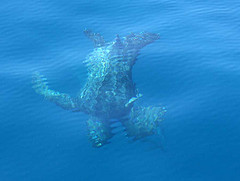
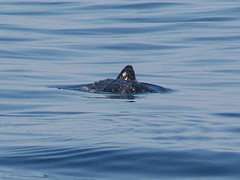
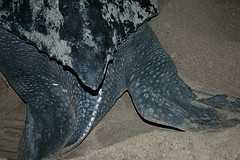
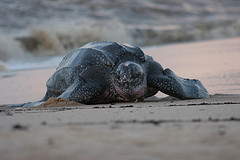
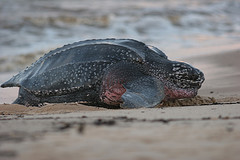
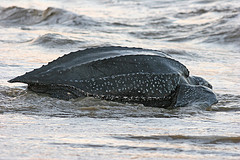
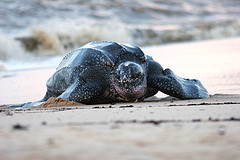
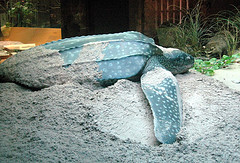
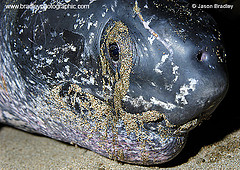
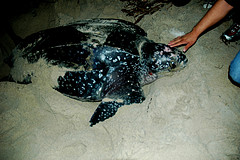
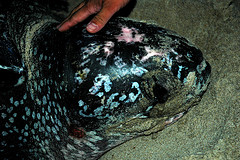
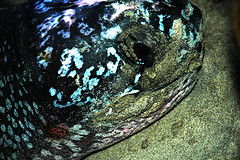
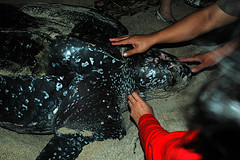
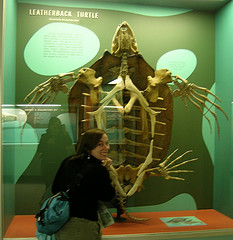
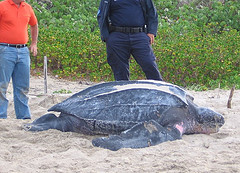
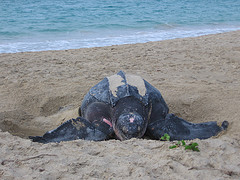
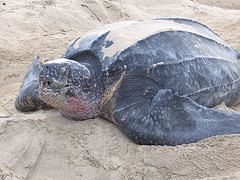
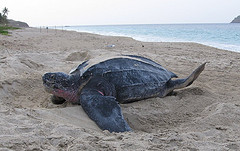
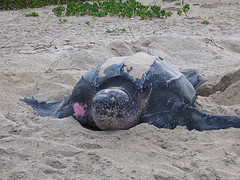
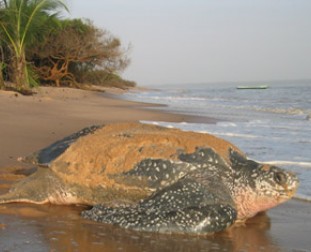
Leatherbacks are the largest, longest lived and deepest diving of all the Turtles. They travel thousands of miles across the earth’s oceans and they are the only Turtle - and reptile - that is capable of surviving the cold waters of the Northern Atlantic and indeed Britain.
The Migration
The Leatherback Turtle ranges further than any other reptile, with individual Turtles travelling across entire ocean basins. Leatherbacks can be found in the waters of the Atlantic, Pacific and Indian Oceans.
Although not much is known about the migration of these enigmatic creatures it is thought by some scientists that they travel from their nesting beaches in tropical waters to rich feeding grounds in temperate and boreal waters. Scientists also believe that Turtles travel back and forth to specific feeding grounds and as such have specific migration corridors. This is important when considering conservation measures.
Time and Distance
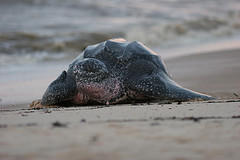
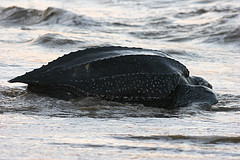
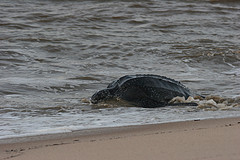
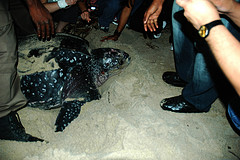
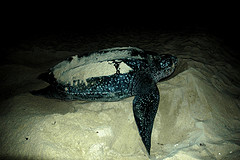
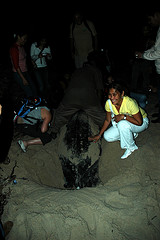
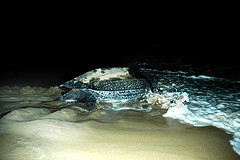
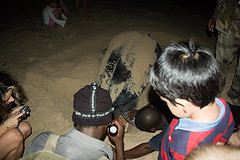
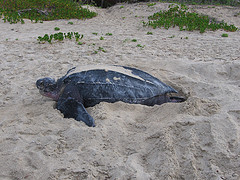
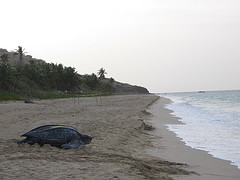
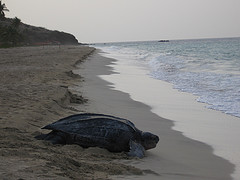
Leatherbacks in the Atlantic can travel huge distances over 6000 km between nesting sites and foraging grounds. The population we hope to follow have their nesting beaches in places such as French Guiana and Suriname. May is the time that the females come ashore to lay their eggs. The males don’t come ashore but mate with the females in the waters just off the beach.
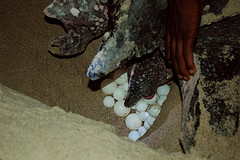
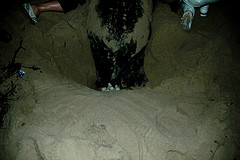
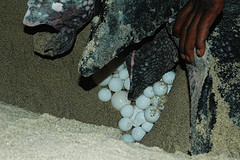
During the nesting season (Mar-Jul – this is approximate and will vary slightly with latitude) Leatherbacks lay approximately 6 clutches of eggs spending 10 days at sea between nesting events. Each clutch contains approximately 80 eggs.
After the nesting period males and females head to feeding grounds and arrive in the waters of Nova Scotia, Canada or indeed even Irish and British waters in August and September.
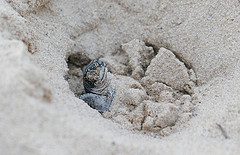
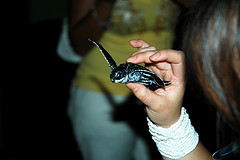
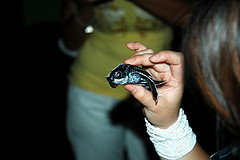
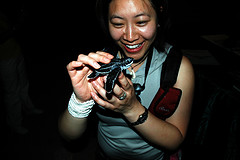
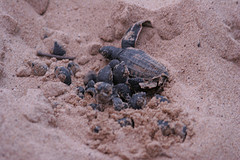
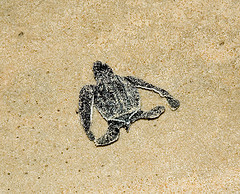
In July the tiny baby Turtles hatch out on the beaches and head out to sea to start their lives in the open ocean.
Energy
Turtles feed on Jellyfish which is mystifying in itself as this is not highly nutritious.
Reasons for Migration
Leatherback Turtles are driven by the need to feed on Jellyfish blooms that occur in the northern cooler waters. Once these food sources have disappeared they return back south.
Conservation
Leatherbacks are listed as Critically Endangered by the IUCN Red List. The risks they face are many fold from egg harvesting (illegal in most countries) to beachfront development to coastal and offshore fishing.
Our Project
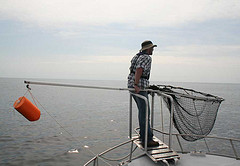
With the help of scientists from the Large Pelagics Research Center (LPRC) at the University of New Hampshire we followed a female Leatherback Turtle named Talulah that had been tagged off Cape Cod.
Many studies of Leatherbacks have covered them while they are at their nesting beaches but the LPRC wanted to locate and tag Turtles in the Atlantic, while they were migrating. Once tagged, the Turtle would be able to provide us with daily updates of where they are and what they are doing. We would also be able to find out what nesting beaches the Turtles were coming from and what foraging grounds they were going to.
This study is particularly important as it should provide valuable information about male Turtles whose behaviour remains a mystery because they live all their lives out at sea.
What happened in 2008?
In March we joined the LPRC team off the coast of Georgia as they tried to tag Leatherback Turtles as they were migrating north.
Unfortunately, as you'll find out in this report, they were unsuccessful: Leatherback Turtles Part 3.
However, over the summer the team successfully tagged 12 Leatherbacks off Cape Cod, Massachusetts including one female that we were going to follow named Talulah (after the child whose parents had cruelly given her the name Talulah does the Hoola from Hawaii): Leatherback Turtles Part 5.