Species information
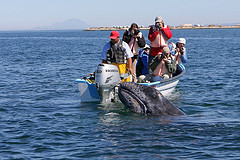
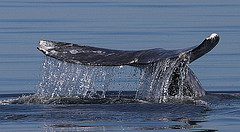
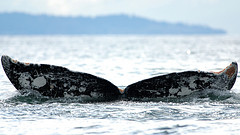
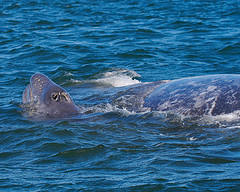
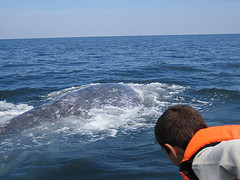
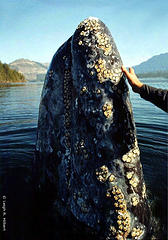
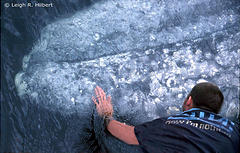
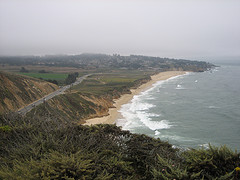
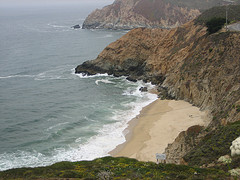
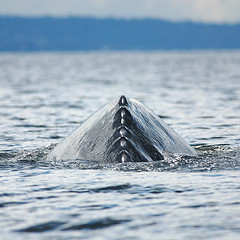
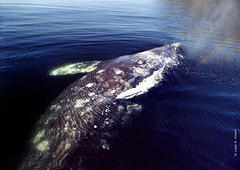
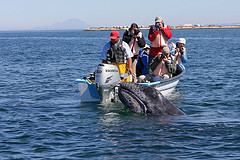
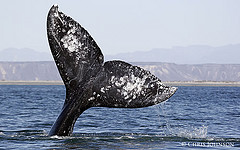
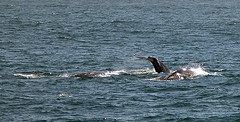
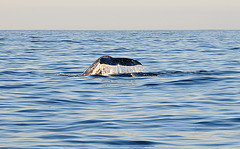
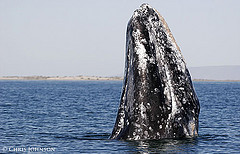
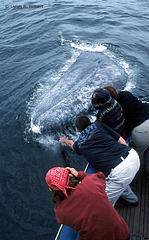
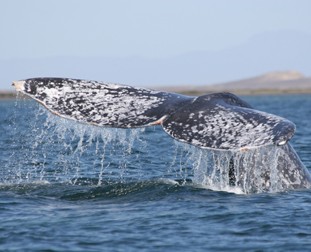
The Pacific Gray Whale migration is one of the longest known for any mammal. It’s also one of the easiest migrations to watch from the shore as the whales hug the coast of Mexico, the US, and Canada to northern Alaska.
The Migration
Hugging the west coast of America, the eastern north Pacific population of Gray Whales swim from the winter breeding grounds in Baja California, Mexico, to the summer feeding grounds in the rich waters of the Bering Sea in the Arctic. And then back again.
Time and Distance
Total annual distance of 10,000-14,000 miles/12,000-20,000km.
Energy
Gray Whales obtain most of their food during the summer months in the Bering and Chuchki Seas of the Arctic.
Reason for Migration
To feed in the rich waters in the Arctic during the summer and then breed in the warm and sheltered lagoons off Mexico during the winter.
Conservation
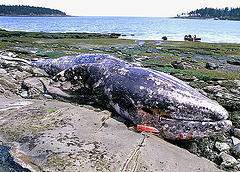
While there has been talk of occurrences of emaciated whales and low calf numbers. Some fear this to be a sign that global warming is wreaking havoc in the whales' Arctic summer feeding grounds, but as yet the precise cause is unknown. Some scientists fear that the Gray Whale population could be facing a new crisis, after being removed from the endangered species list in 1994, having recovered from being hunted to the edge of extinction.
Our Project
For the northbound migration we are in daily contact with Michael H Smith who is the Project Coordinator of the Gray Whale Count. He will be following the Gray Whales as they migrate northward and although he will be keeping us updated every day, you can see his own progress here.
What happened in 2008?
The northbound migration was apparently longer than normal - it seems they had to travel further north to find suitable feeding sites. Oceanographers think this may be a result of climate change as alterations to the currents of the ocean have disrupted the sea bed where the whales find their food.
On their return south, there was no evidence of undue stress, which is certainly a good thing but calf movement was slower and this caused concern as 2007 was not a good year for calves. We were in a La Niña condition, which created cooler water than normal in the Pacific off Mexico. With water colder than they like in the lagoons, the whales pushed further south along the Baja California peninsula and into the Sea of Cortéz.
All this strung out the migration further in distance and thereby the time it took them to get back onto a northern track. Eventually, according to Wayne Perryman, who is the official calf monitor at Point Piedras Blancas, California, the calves made a good showing and it should be considered a successful year.