Species information
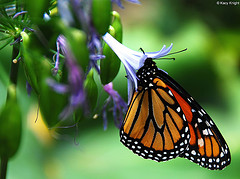
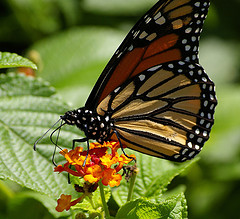
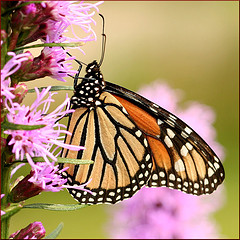
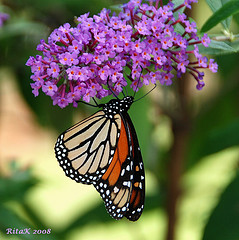
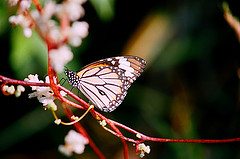
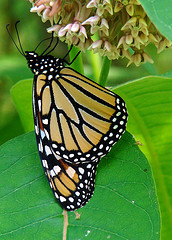
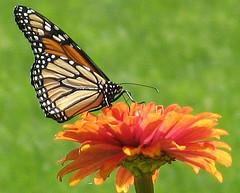
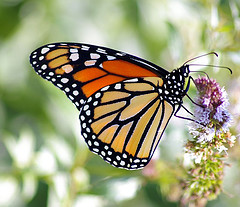
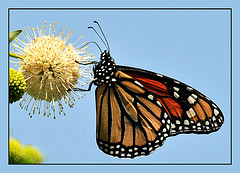
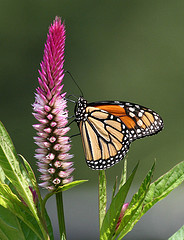
The longest known insect migration in the world. They travel distances that would impress a whale or a seabird but unlike those species the Monarchs only make the journey once. It's their great-grandchildren that make the final leg of the journey. How do they know where to go?
The Migration
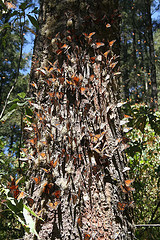
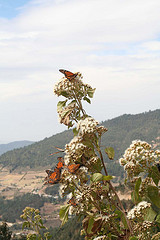
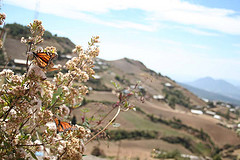
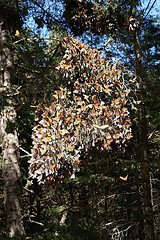
Monarchs overwinter and breed in California and the mountainous forests of central Mexico. They then make their way north to Texas and Oklahoma where they lay their eggs and die. The next generation continues to fly further north where they also lay their eggs and die. The next generation after that can reach as far north as the Great Lakes before breeding and dying. It's a relay-race migration. As summer ends their offspring fly back to California and Mexico in one go.
Time and Distance
4500 km southbound migration in two months.
Energy
Monarchs do not eat in the winter. They slow their metabolism and survive on the fat deposits built up in North America before their southward migration.
Reason for Migration
They cannot survive North American winter.
Conservation
The Mexican government has pledged to put a stop to the illegal logging and water extraction that threaten the over-wintering sites in the Sierra Madre mountains
What happened in 2008?
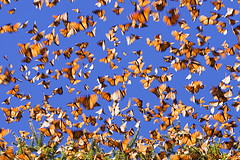
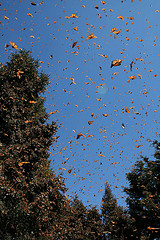
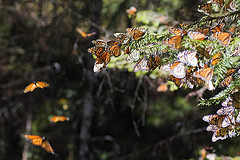
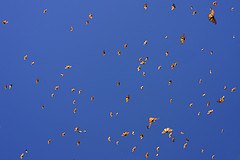
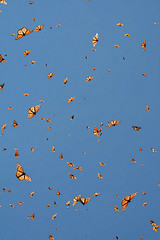
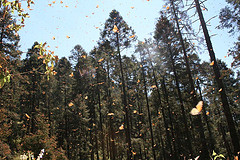
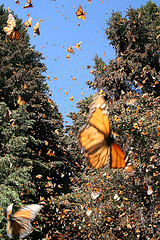
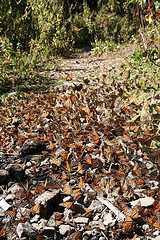
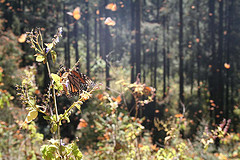
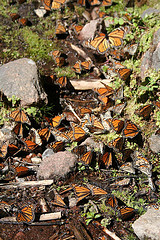
At the beginning of March we joined Professor Chip Taylor of the University of Kansas in the forests of Cincua, Mexico to witness the first Monarchs set off. One of the highlights was being enveloped by a Blizzard of Monarchs.
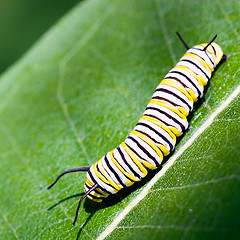
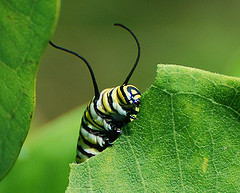
In June, we spoke to Karen Oberhauser who reported that the first generation of Monarchs had bred and produced Monarch Caterpillars. Unfortunately, she also told us that the natural habitat of the Monarch, the Milkweed, was under threat.
In September the Monarchs had reached the end of their migratory range around the Great Lakes but this year's migration was different to normal as you can hear here.
November saw the Monarchs return to Mexico. The return migration was a lot quicker than the northward journey because they don't stop to breed. In Mexico the arrival of the first Monarchs coincides with the festival known as the Dia de los Muertos (Day of the Dead).