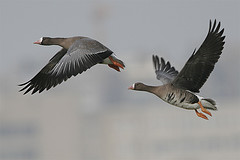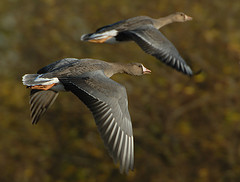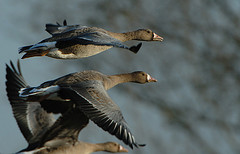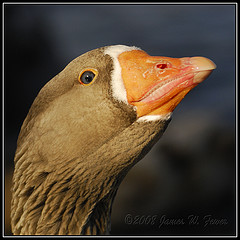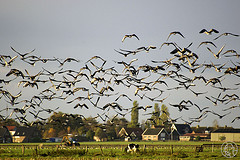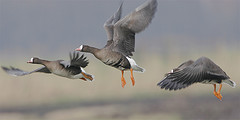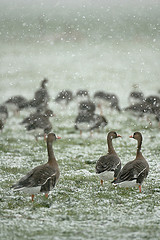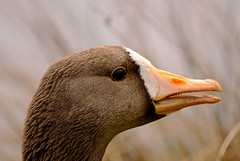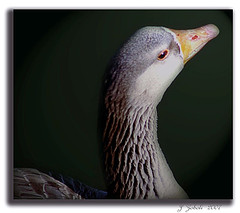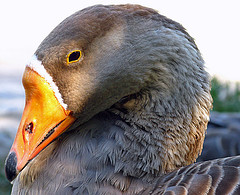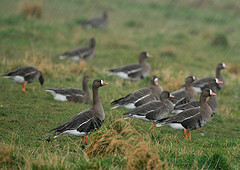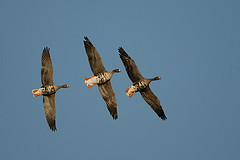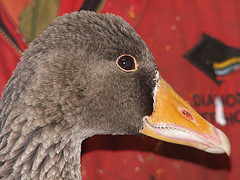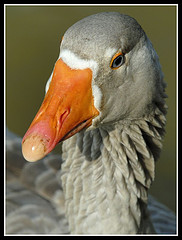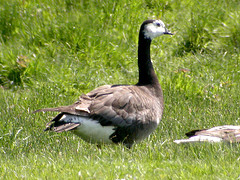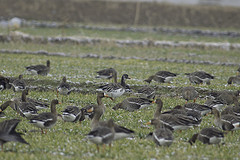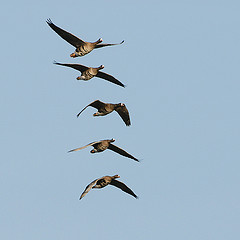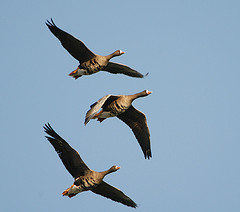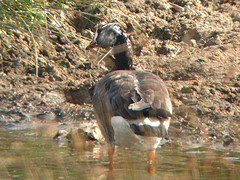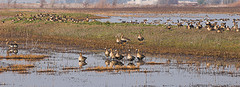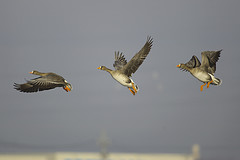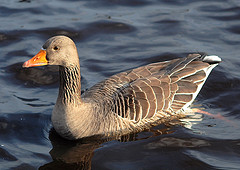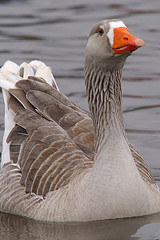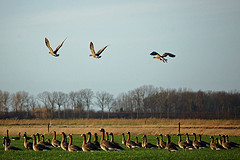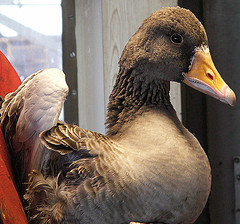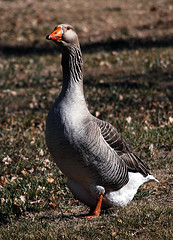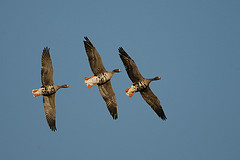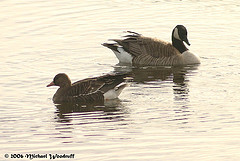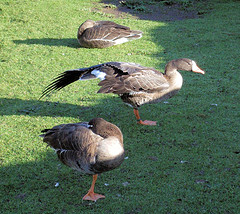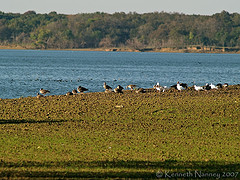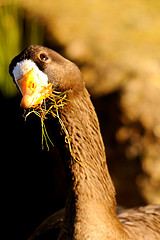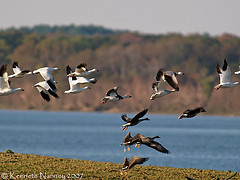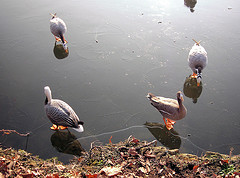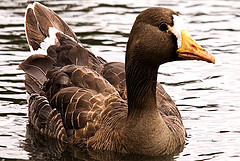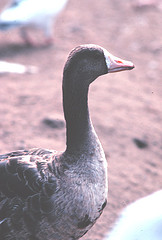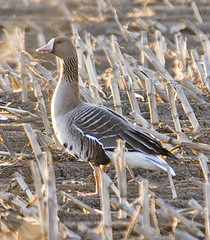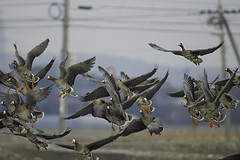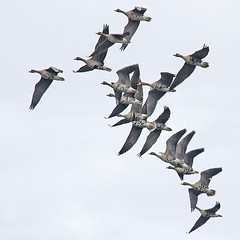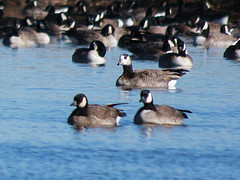
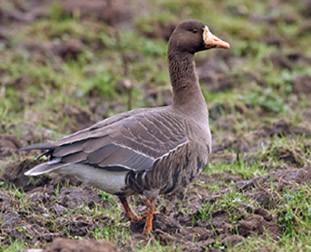
Species information
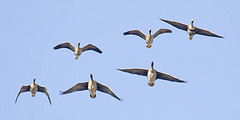
Crossing the 2700m high Greenland ice cap is an astonishing feat of endurance for a large bird. World On the Move is tracking three geese on this perilous journey and will be calculating how much energy they will need to complete this journey, considering the obstacles they meet along the way.
The Migration
In mid to late April they leave their wintering grounds in Ireland and Western Scotland reaching their Greenland breeding grounds in late May.
Time and Distance
They take 1-2 days to fly 1500 km from the Solway in Scotland to south west Iceland, and then another couple of days to fly 1450 km from Iceland to west Greenland where they nest.
Energy
En route to Greenland they fatten up for three weeks in Iceland. There are no feeding opportunities over the ice cap.
Reason for Migration
To breed and lay their eggs in the low predator, relatively disease-free environment of Greenland.
Conservation
Species has declined from 35,500 individuals in 1998 to 25,000 in 2006.
Our Project
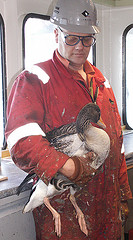
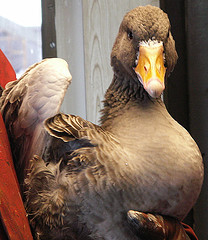
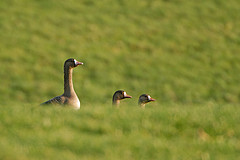
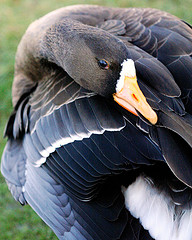
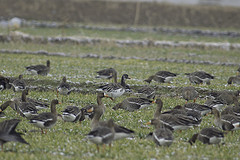
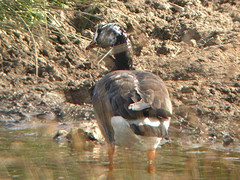
Top Goose - in conjunction with our partners, the Wildfowl and Wetlands Trust, we are tracking 3 Greenland White-fronted Geese, named Lightning, GFG and Miles.
Thanks to our migration guru, Professor Colin Pennycuick, we can see their "virtual fuel reserve", which shows how much fat reserve they have left. This means you can watch their energy levels drop to dangerous levels as the birds tackle the Greenland ice cap.
Top Goose Links
- What are Lighning, Miles and GFG's chances of survival? Check their virtual fuel gauges
- How did they get to Greenland? Read their migration diary.
- Where are they right now? Find out on the Top Goose map.