Species information
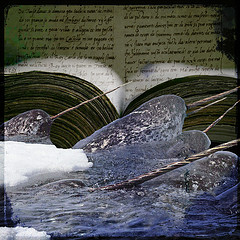
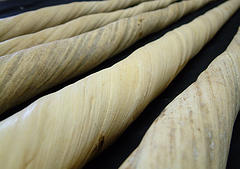
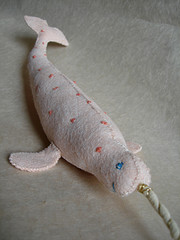
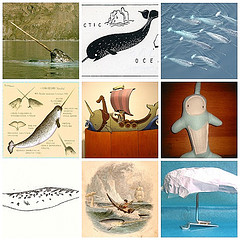
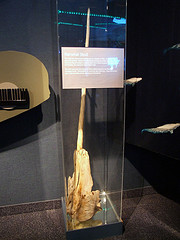
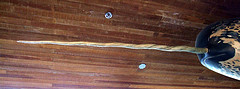
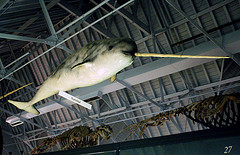
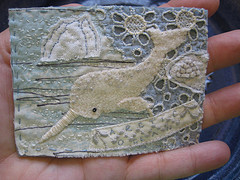
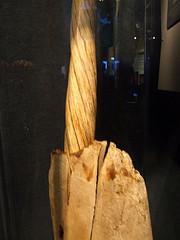
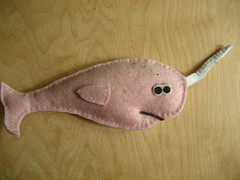
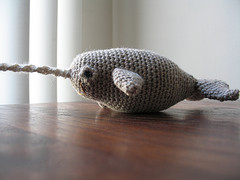
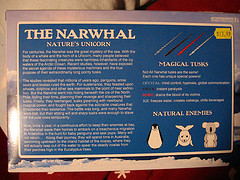
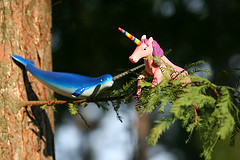
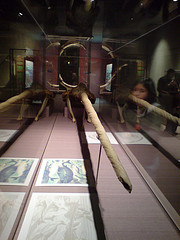
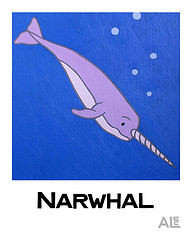
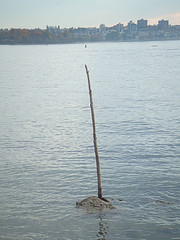
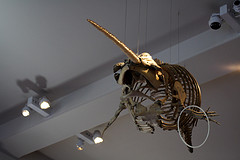
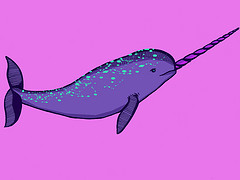
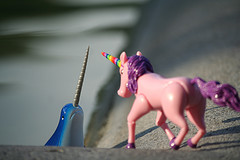
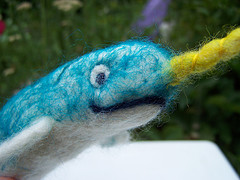
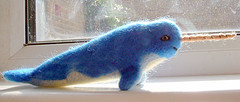
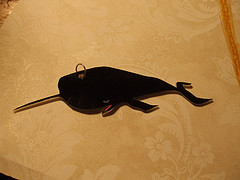
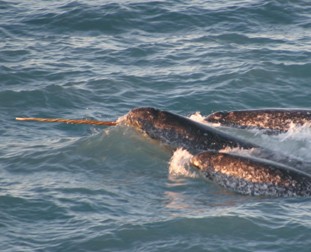
Narwhals are the unicorns of the sea - they can be identified by the sword-like tusk that protrudes from the front of their head. The myth of the unicorn was certainly inspired by the Narwhal's tusk. Tusks taken from the Arctic, perhaps by the Vikings, were sold throughout the world during the Middle Ages - even as far away as Asia. Without a decent explanation of its origins, these tusks led to fantastic stories of extraordinary creatures like the unicorn.
Exactly what they use this tusk for is still a topic of debate. The tusk is actually an incisor that grows through the upper lip of the male Narwhal but is it used for piercing the arctic ice or is it simply used to impress female Narwhals?
Narwhals have been observed rubbing their tusks together (known as "tusking"), which implies that they are competing for dominance. The Narwhal with the largest tuck asserts his dominance by jousting with his rivals. Research has also revealed that the tusk may be used as a sensor. Millions of tiny tubules within the tusk have been seen connected to the Narwhal's central nervous system. This suggests that the tusk could in theory detect water temperature, pressure and salinity.
The Migration
The Narwhal is a light coloured porpoise that resides at the top of the world in the waters between Greenland and Arctic Canada. Narwhals migrate between summer feeding sites off the coast of North West Greenland and their wintering sites in the middle of Baffin Sea. They move up and down the coast of NW Greenland for feeding and mating.
Our Project
Our reporter, Dan Rees, joined a team in North West Greenland that hopes to discover where Narwhals migrate by tagging them with a location transmitter. He met up with Kristin Laidre from the Polar Science Center, University of Washington in the great fjord of Inglefield Bedning. Using a local Inuit hunter in a kayak, a transmitter was attached to a Narwhal and its location will be tracked for the next two months until the transmitter expires.
Links
NOAA (National Oceanic and Atmospheric Administration)'s Tracking Narwhals in Greenland page.