Profile: Joelle David
Joelle has two Hidden Talent films featured on the site.
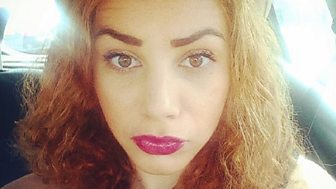
Why did you choose this subject for Fresh?
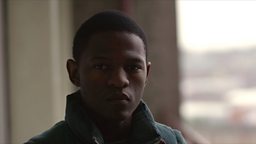
I wanted to motivate young creatives. I think Mike Katende is a fine example of being young and creative in the city, particularly in East London. I wanted to produce a documentary that captivated the audience by telling a truthful story of a creative individual and hopefully inspire them to continue in their creative endeavours as well. His talent deserved to be shared.
I've always felt it necessary to support undiscovered talent... so with Hidden Talent, I wanted to explore something creatives could be inspired by
What motivated you to make this film?
I've always felt it necessary to support undiscovered talent in the UK. So with Hidden Talent, I wanted to explore something creatives could be inspired by, and what's better than having someone else tell their story?
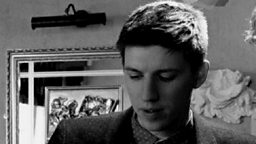
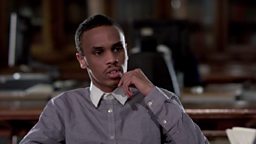
With the Mike Katende film, I discovered Mike on Instagram and became a fan of his work, so I merely contacted him and asked if he would be interested in making a short documentary. We had a great time on set with his support system there and had the chance to view his artwork up close and personal. The advice he gives other artists is invaluable and the calibre of people I want to represent in Hidden Talent are those who have a passion for their craft and a way of supporting others to do the same.
What camera did you use to shoot your film?
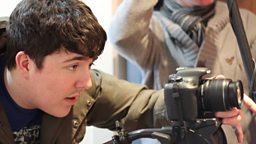
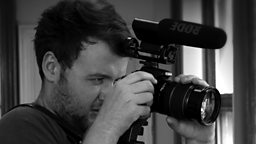
A Canon 60D DSLR.
Tell us about post-production.
I used an editor called Jacob Harbord, who has some documentaries on the BBC Fresh website himself, so it’s great to that us young filmmakers can collaborate and support each other.
Who/what inspires you?
Creatives inspire me. There are so many talented people out there, whether it is playing an instrument, singing, painting, photography or fashion design, they all have an unheard story of struggle and passion. Their hard work and commitment, despite knock backs and uncertainty in the creative industries, is truly inspirational.
What are your plans for the future?
I want to move into longer documentaries, not only for this strand of Hidden Talent, towards films that are even more creative, more informative, and more relatable. I want to explore the impact social media has on different aspects of our lives in hour-long documentaries called Being Twenty Something in 20 Something. This would starting with relationships from both genders' perspectives. 20-somethings are, after all, the first real social media generation. These documentaries will be heavily interview-based, attached to short films/reconstructions.
What is the most important thing you have learned so far?
I've learnt that each creative person's story is different and to cater each episode to them to make it more personal and more relatable instead of a documentary that is the same for everyone. Each episode of Hidden Talent will touch different people in different ways.
I've also learnt the importance of interview questions when filming a documentary. If I don't have the right questions for the right person, important information could be left out. It is better to have too many questions than not enough - that way the editing process is more varied.
Watch: Both Hidden Talent films on BBC Fresh
Related links
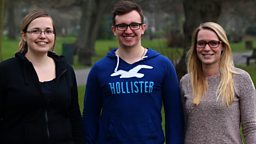
![]() (L-R) Solveig, Jannis & Emma
(L-R) Solveig, Jannis & Emma
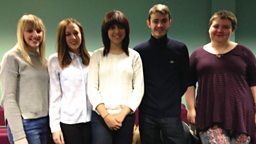


 (L-R) Solveig, Jannis & Emma