Writing the music for Secret Garden
By Will Turner, Composer
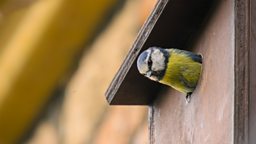
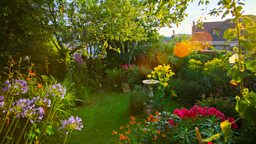
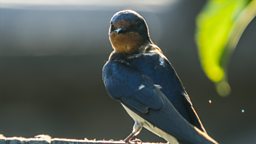
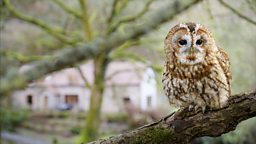
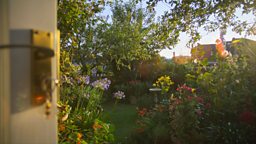
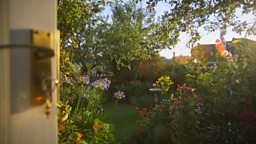
It’s early summer, 5:00 am - dawn chorus - and I’m standing in the garden. In the back-left corner stands a beech tree, well-aged, with great boughs spreading angularly in all directions. At its crown, a blackbird sings melodiously. I listen for a moment. My attention drifts to the right, where I hear the high-pitched tweet of a blue tit. Other birds interject, first a sparrow chirping, then a wood pigeon. The other noises of the garden rise up around the birdsong: a rush of wind through leaves, a hum of insects, close enough that I can hear the buzzing oscillate back and forth near my ear. I close my eyes for a moment.
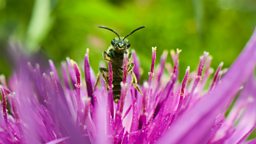
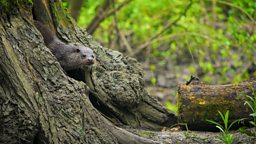
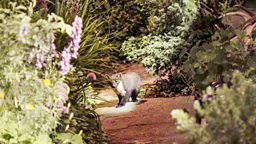
By this point, I’m already deep into watching rushes for Secret Garden. I’ve seen a flurry of different imagery - voles, blue tits, foxes, insects, flies, and hedgehogs. There is so much colour and character that the prospect of distilling it into a thematic identity for the score is becoming a heady challenge. As I listen to these sounds, however, I find something like order breaking through the colorful chaos. You see, what makes the sound of the garden so identifiable is not just the particularities of which animal calls you hear, but the specificity of where they are located, the repetition of their motif, and how the space envelops you as the listener. Each animal has its own unique identity and operates to its own metronome. The garden, then, is a haze of these individual players, performing for whoever will listen. I get an idea and head back into the studio. I don’t, however, sit at the piano to sketch out melodies or rhythms. Instead, I go to my computer and begin writing a script, a programming script. The behavior I want to emulate is this: I press a key and the script randomly generates a note motif, a clustered rhythm completely unique. I’ve set it up to trigger flute samples so I can hear it through a natural sounding instrument. I mess with it for an hour or two until, finally, it does what I hoped.
Right, that’s one ‘animal’.
I repeat the process and modify the script for the rest of the day. Gradually, characters come to life, not merely emulating birdsong but emulating the way birdsong exists in the garden. The texture thickens. Little trills, flurries, and dotted notes begin to fill the speakers, appearing left, right, further back, center. I spend the day perfecting the script so I can increase the density of my little musical animals or hush them to a quiet.
Finally, I sit back and breathe a sigh of relief. It works. I’ve found my way into the film, or at least I’ve managed to paint out the background. I think about all the different spaces across the series: the barren wilds of Scotland, dense woodland in the Wye Valley, and the close thrum of city life in Bristol. Each has its own sonic signature. Each is uniquely open or closed, dense or sparse, and each has its own characters. I set about replicating the process I achieved today so that I have a band of characters for each of these worlds, the first step toward creating a score full of color.
There is something else yet to be found for the score, though. A garden isn’t just the sum of its parts, not really. There is something more to it. I close my eyes again, but this time I’m not listening to the garden, I’m remembering. I remember which moments in the garden are the most visceral. Inevitably, I am transported back to my childhood, and the memory has a nostalgic haze to it with a little fuzziness at the edge. I think I remember seeing something just at the periphery of the garden, disappearing into the undergrowth.
As the cut develops we agree magic is central to the series, subtle and wondrous but definitely there. In fact it becomes a distinctive part in setting the series apart from traditional Natural History story-telling. This then becomes a central tenet of the score itself.
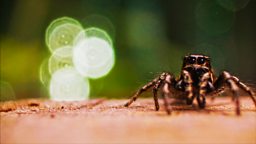
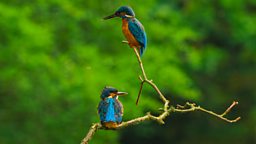
I search all the places I know to get lightness, fragility and intimacy. I record an old piano that I’ve had since I was fourteen, trying to capture the sound of the pedal and the transient of hammer on fabric. I extend the melodies and orchestral moments I’ve built with close recorded violin textures, set wide across the sound image so it feels like you’re being encased by the sound. An old yellow pot I have turns into the rhythmic pulse of a jumping spider when I play with hot rods (little packets of wood sticks tightly bound together). Glockenspiel and celesta bring out the twinkle of moonlight and the reflections of the river. I spend a good day trying to figure out what the musical sound of a kingfisher is, turns out it’s the tines of a waterharp for angularity, harp for colour and weight, and flute flurries for motion - who knew.
I get a call from the line producer. Sir David Attenborough will be narrating the show. Repressing the heightened anxiety of having to score music under one of the most famous voices on the planet, I try instead to give in to the joy of the moment. A conversation with my series producer confirms that the score still works. The main difference is that there is now a little more scope to carry emotional gravitas across the show, which if anything is a joy for me. I’m to be let off the reins a little.
Four months pass and the scenes begin rolling in. What is the sound of underwater? What does it feel like? How does the rustling of trees muffle the sound of wrens and wood pigeons? Do I muffle my score to match, or do I sit proudly opposed to instead draw out the magic of light bouncing on the leaves? There are different shot sizes, different animal sizes, open expanses over hills and mountains, and macro-lens photography inside the dens of mice. I have to constantly shift and transform the score to match the range of color and space. I get to work on a beautiful moment where a mayfly fades away into the water after living a full life for just one day.
I know that when Sir David narrates moments like these, they will become universal. The scenes keep rolling by, the volume increasing, until finally - like the blue tit coming home to its place of rest - the show safely comes in to land. Sir David’s voiceover is in place, the sound design - the natural sounds of the environment - arranged by the dubbing mixer, perfectly captures the atmosphere, and the score - hopefully - threads a little magic.