Filming garden wildlife
Filming familiar animals in a relatively domesticated space may seem simple... but to produce the quality of visuals and level of stories expected in a BBC natural history series, the Secret Garden team set out to use all of the kit that you’d normally employ on a shoot to the Serengeti, the Amazon and beyond - opening our eyes to some amazing animal behaviours.
Even with this general approach, there were still a lot of choices to be made - because we never knew what species would turn up on any particular day. So we tended to take a whole shed-load of equipment to our gardens, and I think our garden-owners (our “gardeners”) were often shocked by the number of cases that would stream out of our filming vehicles.
So here’s a breakdown of the key equipment and how we used it…
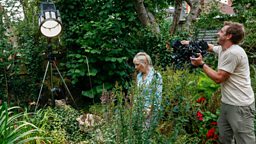
Long-lens
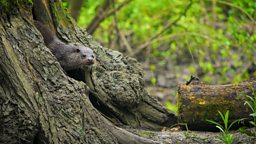
Long-lenses (attached to various cameras) are the workhorses of natural history film-making. We took a 50-1000mm lens as standard on most shoots, meaning our cinematographers could sit quietly in a hide, in a shed or on the patio and film secretive species such as otters or kingfishers from tens of metres away as they quietly went about their daily lives.
Garden animals are often reasonably comfortable with people, so this worked well for the bigger species - although sometimes in a small garden (like our Bristol garden) the animals were too close. And we needed to get a bit more specialist if we wanted to gain further insight into our characters’ lives...
Super slow-mo
Most professional cameras film at 25 frames per second (fps), but can be cranked up to 250. When played back at a normal rate, this slows down the action by 10 times - which allows us to see what’s happening in much more detail.
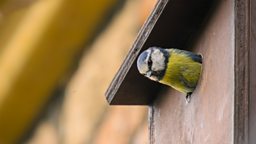
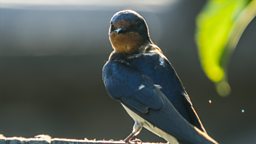
But sometimes we needed to film things in super slow motion - for example mayflies dancing, swallows hunting or blue tits taking their first flight. A high speed camera can film at 1000 fps, slowing down the action by up to 40 times. The results can be revelatory… and breathtaking.
Drones
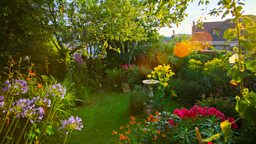
To give the clearest picture of our gardens’ layout or show them in the context of their landscape, drones are a fantastic, easy-to-deploy, cost-effective tool. No need for a helicopter these days.
But to see our gardens from the point of view of a speeding bird, we used First Person View (FPV) drones, piloted by highly skilled, specialist operators. By wearing what look like VR goggles that allowed them to make instinctive, precision moves over, under and around garden obstacles such as trees, bridges and outhouses, our pilots gathered amazingly immersive shots that make you feel like you’re a kingfisher darting down a river or a swallow swooping through the Lake District.
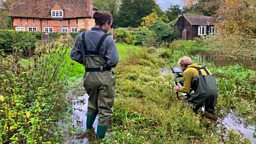
Night filming
To reveal the secret world of our gardens’ nocturnal animals, we needed to film after sunset, when most cameras struggle to “see”. Traditionally we would use artificial lights to illuminate our subjects, but these tend to put more secretive animals off their natural behaviour.
Fortunately a new generation of ultra lowlight cameras can film by the glow of a fullish moon or, in a garden, by the light spilling from a bedroom window or nearby streetlight. These cameras were good for filming foraging foxes, nomadic newts and flirtatious field mice without disturbing them.
When there’s no moon (or the bedroom curtains have been shut) there isn't enough light even for these technological marvels. At this point, thermal imaging cameras come into their own. These work by picking up the heat signature of their subject in incredible detail. This sounds a bit confusing, but they’re actually just sensing a different wavelength of light that we (and most cameras) can’t see - far infra-red, which is emitted by every object, whether alive or inanimate.
The results - even on the darkest night - are extraordinary. In Oxfordshire, cinematographer Sam Oakes was able to film bats hunting for insects in incredible detail. And in the Wye Valley, Robin Smith managed to film a badger digging up his lawn. Thankfully Robin let the behaviour play out, rather than stopping the action to protect his grass.
Macro filming
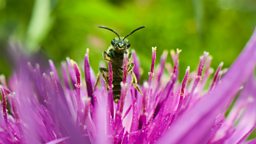
The most numerous (and some of the most fascinating) garden residents are the tiny ones - insects, spiders and the like. To film them requires macro lenses and very fine control of the moving camera.
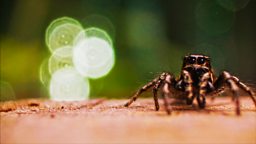
Zebra jumping spiders are smaller than a grain of rice, yet in our Lake District episode, their faces fill the screen. Cinematographer Katherine Hannaford used the latest generation of probe lenses to get up close and personal and reveal these larger-than-life characters.
Probe lenses are - as their name suggests - long, tubular lenses that allow you to get extremely close to the subject at their eye level (even if it's just a millimetre or so off the ground), combining macro detail with a wide-angle perspective. The results are beautiful and immersive - you really feel like you are in the spider’s world.
Katherine filmed the jumping spiders in the garden’s greenhouse, where a lot of bugs take advantage of the artificial warmth. But not all animals are so easy to film in their natural habitat.
To reveal what happens inside a bumblebee’s nest, we had to work with a bumblebee scientist so as not to disrupt their natural behaviour. She helped us to create an artificial nest with filming windows (and an entrance/exit hole to the garden) so that we could pick out the intimate details of the bumblebees’ private lives without disturbing them. The bumblebees carried on as normal and successfully brought up the next generation... but without our expert’s skill and experience there’s no way we could have told their remarkable story.
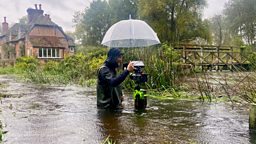
Remote cameras and camera trapping
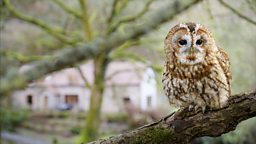
Viewers of Springwatch are familiar with the remotely-operated “nest cams” that give such incredible insight into the lives of nesting birds. We used these too - to follow the fortunes of our Bristol blue tits, our Wye Valley tawny owls and our Western Highland barn owls. These remote cameras have the advantage that they can be panned and tilted from side to side, up and down. But, unless you leave them running and recording terabytes of footage, they need someone operating them 24/7.
Camera traps can be left to themselves. Put simply, they consist of a filming camera in a waterproof box that is triggered by something breaking the infra-red sensor beam. There are plenty of off-the-shelf versions that people use to record secretive animals in their gardens, but to get broadcast quality cameras to do the same thing is rather more complicated.
According to our camera trap guru Matt Kingdon, “camera trapping can feel unforgiving. There are so many things that can go wrong, and you often don’t find out until weeks later. But when it pays off, it’s incredibly rewarding - you’re witnessing moments that feel genuinely private, and that’s what makes the risk worthwhile.”
His tips for improving the hit rate? “You can’t eliminate failure entirely, but you can reduce it. Careful testing, regular checks where possible, and combining technical knowledge with local insight gives you the best chance of success.”
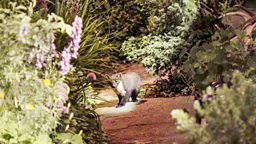
Thankfully we had excellent local insight - our gardeners. In the Western Highlands, garden-owner Matt (we had lots of Matts) has been keeping an eye on his pine martens for around forty years, and thanks to his observations our team was able to film pine martens hunting sand martins at night for the first time.
Crew
Of course, all that high-end kit means nothing without the people who use it, innovate with it and squeeze the best possible results out of it. We were lucky enough to work with cinematographers who have filmed everything from penguins to peacock butterflies, everywhere from the Antarctic to the Arctic, and have been rewarded with BAFTAs for their work.
While each garden had one or two primary camera people, by the end of filming over twenty cinematographers had contributed to the series. Some did a couple of days, some spent weeks in the field, but I can say with confidence that they all enjoyed turning their various cameras, lenses and drones on British wildlife - the often overlooked animals and plants that exist right on our doorsteps.