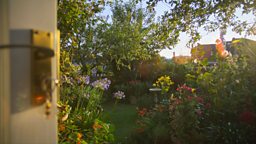
Are our gardens really biodiversity hotspots?
Our series begins with the claim that our gardens are almost as diverse as a patch of tropical rainforest. Rainforests are famously the most bountiful natural habitats on Earth, so can this be true?
Of course we’re talking about density - “species per square metre” - rather than total species, otherwise a small urban garden couldn’t possibly compare with the mighty Amazon. But given gardens have so many micro-habitats packed into a small space…?
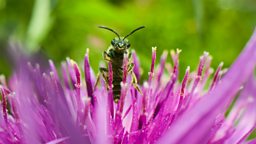
How many different sorts of animal can be found in an average British garden?
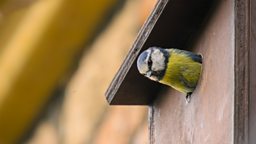
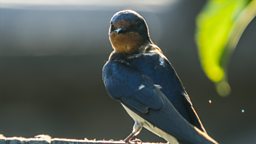
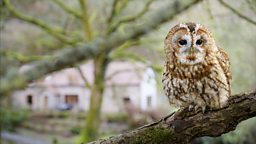
If we look at the most obvious indicators, we might still be left wondering. According to the RHS, around 140 species of bird have been recorded in British gardens, and the RSPB’s Big Garden Birdwatch usually records over 80. But only around 30 species are regular garden visitors.
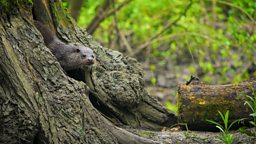
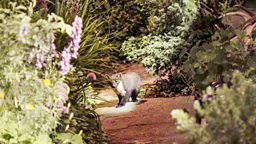
Native mammals are far less commonly seen in gardens than birds as they’re less numerous, more secretive and often nocturnal. Forty-three of our fifty-eight terrestrial mammal species have been recorded in gardens nationwide, but only a handful are regularly seen - foxes, hedgehogs, grey squirrels, mice, voles and “bats” (we have 18 species, but they’re hard to identify without specialist equipment and knowledge).
Those with garden ponds will probably have two or three amphibians - up to three of our native newt species (great crested, smooth and palmate), probably common frogs and maybe common toads. Various gardens are now home to introduced European species suchas alpine newts and midwife toads.
If you’re lucky you may get a couple of reptiles - again, those with ponds may be visited by grass snakes; those with compost heaps could see slow worms (actually legless lizards).
What about the smaller ones, such as insects? And plants?
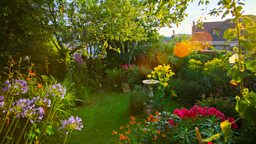
Now we’re talking. No discussion of garden biodiversity in British gardens can be had without referring to the pioneering work carried out by Jennifer Owen in Leicester between 1971 and 2001. Jennifer was a trained zoologist, a passionate gardener... and had incredible staying power. She realised that her “normal”, modest suburban garden (it wasn’t a “wildlife garden” but she did avoid using pesticides - or being too neat) could be an important habitat for native wildlife. So she started counting, using every trick in her zoology book.
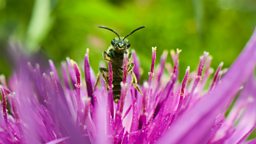
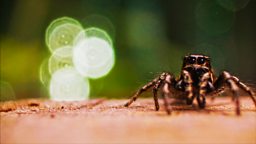
Over three decades, Jennifer recorded 2,673 species including 1,997 insects (a third of all British butterflies, large moths and hoverflies and 56% of all bumblebee species), 138 other invertebrates (e.g. spiders, woodlice and slugs) and 64 vertebrates (including 54 species of bird). She had help in identifying parasitoid wasps, a notoriously difficult group (recording 533 species, including seven new to Britain and four new to science) but didn’t attempt to ID some other large and difficult-to-distinguish insect groups, such as flies. So scientists think 2,673 is only the tip of the iceberg. In fact, they believe that there may have been 10,000 species of insect in Jennifer’s garden.
Why so many? Well, the answer is plants. Gardeners tend to bring together a remarkable assortment of species - part native, part exotic, from all sorts of countries - and cram them into an unnatural mosaic of micro-habitats. Jennifer Owen recorded 474 species of plant in her garden over 30 years... and these support all sorts of bugs and other animals further up the food chain.
Was Jennifer Owen’s garden representative of gardens across Britain?
A team from Sheffield University ran a British Urban Garden Survey (aka BUGS) of 61 gardens to find out. Although BUGS was carried out over a much shorter period, their results were heading in the same direction, indicating that Owen’s garden was not unusually diverse.
So, are British gardens really more diverse than tropical rainforests?
Not many surveys have been carried out in rainforests on similarly-sized areas - but Dr Ken Thompson, one of the scientists who ran BUGS and author of No Nettles Required: The Reassuring Truth about Wildlife Gardening, has analysed the closest.
“For plants, the statement is certainly correct, because gardens contain so many different 'habitats' crammed into a small space, the plants are mostly small, meaning there's room for more of them, and their interactions are 'policed' by gardeners. In an average year, Owen’s garden contained about 250 species of plants. Compare that to 50 hectares [an area 675 times larger than Owen’s garden] of Barro Colorado Island in Panama, with 1400 different plants. We don't know how many plants you would find in an area similar to Owen's garden,but it would be less, since many of those Panama species are trees, i.e. much bigger.”
“For the animals, it depends what you look at. Twenty-three species of butterflies turned up in Owen's garden, while a study of rainforest in Cameroon found about 50 species of butterflies in two hectares [an area 13 times larger], which is nearly as many as in the whole of Britain. Owen's Malaise trap caught 398 species of beetles, while the same trap in the Cameroon study caught 358 species, plus about as many that couldn't be assigned to any known species.”
“[British] gardens are very diverse, by temperate standards. But any comparison with tropical forest is up against the very steep gradient in diversity of nearly everything from the poles (low) to the equator (high).”
So, it depends what you’re looking for. The overall biodiversity of tropical rainforests is far greater, but when scientists compare results over a small scale, the number of species found can be surprisingly similar. And it’s in our power to create and manage these hubs of biodiversity - refuges, steppingstones and corridors for a large number of species that are otherwise struggling in the British countryside.