The blue tit trap: why our cities are failing garden birds
By Euan McDonald Smith, Producer/Director of the Bristol episode
Blue tits are one of Britain’s most loved birds - especially in winter when they bring a splash of vivid colour to our grey cities.
In Secret Garden, as well as revealing some of the species we rarely see or may not even be aware of, we wanted to look beyond the bright plumage and discover the true story behind some of our more familiar species.
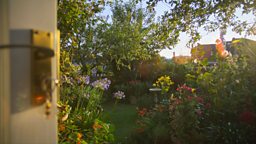
After spending a few weeks observing the comings and goings in the Bristol garden, wildlife cinematographer John Waters noticed a male and a female blue tit were regular fixtures at the bird feeder. They were admirably plucky, always going up against the more bullish goldfinches for their chance to feed.
So we decided to take a closer look at the lives of these charismatic songbirds. What we discovered was eye-opening.
Finding a home in the city
In spring, blue tits fortunate enough to find a partner undertake the challenge of raising a family - a challenge that becomes all the more formidable the closer you look.
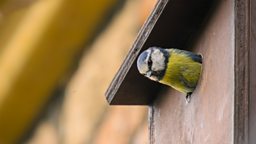
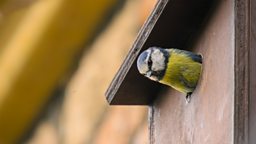
First, our pair needed a safe place in which to make their nest. In woodlands, they’d find a tree hollow, but here in the centre of Bristol, those are in short supply. Fortunately for our blue tits, there were plenty of obliging neighbours around. Many houses on the street where we were filming had nest boxes for one bird or another. The RSPB suggests a spot on a north or east facing wall (to avoid direct sunlight and the worst of the wet weather coming from the west), between 2 and 5 metres from the ground (to avoid cats), and for blue tits, with an entrance hole of about 25mm in diameter.
We installed ours in February, and within minutes, the male blue tit arrived and began inspecting. Shortly after, his mate joined him, and over the next few days, twigs and feathers were brought in by the industrious pair. So far, so good.
Timing is key
In April, a female blue tit will spend much of her time searching for snail shells and pieces of bird eggshell. She needs calcium to produce her own eggs with shells thick enough to survive until hatching.
The laying and hatching of her eggs is then synchronised with the emergence of caterpillars, around late April to early May. The timing here is crucial, as the chicks will be fed on caterpillars, and their appetites are enormous. Each chick will need its parents to bring it 100 caterpillars per day for a period of about 20 days, giving the youngsters the energy they need to grow strong enough to fly the nest. For the blue tit parents, this is the most intense period of activity in their lives.
In early May, ten chicks hatched, and the blue tit parents began their arduous task of roaming the neighbourhood in search of the hundred or so caterpillars each of their chicks need each day. They must find over 20,000 caterpillars in just three weeks if all their chicks are to fledge.
But over the next few weeks, things took a tragic turn. One by one, the chicks began to perish. The blue tits’ regular feeding runs were punctuated by the upsetting sight of the parents struggling to remove lifeless bodies from the nest box.
Why was this happening?
Dr Davide Dominoni is an ecologist at the University of Glasgow, studying how animals colonise, cope with, and adapt to urban environments. He and his team spent nine years observing blue tit populations in cities and the surrounding countryside, comparing how well families fared in each.
What emerged as the key finding was the importance of native trees like oaks.
Where native tree cover was rich, breeding began earlier and more chicks survived. Davide believes this is because trees, especially oak trees, support the caterpillars that blue tit chicks need:
“Something seems to go wrong in spring. Even if the chicks hatch, they don’t get far and often die in the nest. The working hypothesis is, the amount of food and quality of food is suboptimal. In the forest, 80% of food parents bring is caterpillars. In cities it’s 20-30%.”
The parents compensate by bringing other food - spiders, adult insects, even seeds - but these alternatives simply don't provide the protein and fat that growing chicks need.
Davide’s research drives home just how unsuitable our cities are - and how they have become traps for woodland birds like blue tits.
There are several reasons for this. Urban gardeners often favour ornamental plants chosen for their colourful flowers rather than their ability to support insects through all of their life stages. Paved driveways and patios have replaced soil and vegetation. Even when gardens do contain trees and shrubs, they're often non-native species like Leylandii and rhododendrons, which support a fraction of the insect diversity of native oaks or birches.
What's the state of Britain’s blue tit population?
According to the RSPB's Big Garden Birdwatch, blue tits remain one of our most commonly spotted garden birds - regularly ranking in the top five. But these numbers can be deceiving.
While blue tit populations appear stable nationally, this masks a troubling dynamic: urban populations are likely sustained by continuous immigration from countryside populations, rather than successful urban breeding. We get a false impression that city blue tits are thriving, when in reality, many urban territories function as population sinks - places where birds settle but fail to reproduce successfully.
“Blue tits tell us what it takes to be an urban bird. If blue tits show suboptimal reproduction in cities, you can imagine what toll this will have on the less tolerant species” says Dr Dominoni.
“For birds looking for new areas to breed, urban environments could be attractive areas to be in in winter, because of the presence of feeders and fewer predators. The big question is: do these individuals stay in the urban environment and supplement urban populations?”
What happened in the end to our blue tits?
Despite their parents' tireless efforts, only one chick from the brood of ten made it to fledging age. We watched with baited breath as the sole survivor finally took its first flight from the nest box in late May, a bittersweet moment that encapsulated both the surprising wonder of urban wildlife and the harsh reality of wild things in a human world.
The loss of nine chicks wasn't due to neglect - the parents worked ceaselessly, making hundreds of trips each day. But in a neighbourhood lacking in native trees, they simply couldn't find enough caterpillars to sustain their large family. What should have been a triumphant success story instead became a stark illustration of Davide’s research.
What can we do to help?
If we want blue tits and other birds to thrive in our cities, we need more native plants. While flowering plants may be beneficial for pollen and nectar-loving insects, it’s the less colourful plants that are important to our birds. Specifically, we need more food plants that support the caterpillars parent birds need to feed their chicks.
Davide adds: "Among common native trees, oaks seem to be a very effective option. While not everybody can plant a massive oak in their garden, other small trees such as birches and willows can be good alternatives. And larger trees could be planted in community gardens and public parks."
Predation by domestic cats adds another layer of difficulty for urban blue tits. While our nest box was positioned high enough to avoid feline interference, a Mammal Society study in 2003 estimated that cats kill up to 55 million birds in the UK every year - with fledglings, still clumsy and learning to fly, being particularly vulnerable.
And should we put up bird feeders?
The answer is complicated - and the RSPB is currently updating its advice). Hanging bird feeders undoubtedly help blue tits survive harsh winters, when natural food sources are scarce - the spike in garden bird populations during winter months is testament to their value. But certain feeders can have a detrimental effect on other species. Greenfinches and chaffinches have declined by 67% (1967-2023) and 37% (2011-2021) respectively, due to a disease spread through bird tables and bird baths. As a result, greenfinches have been added to the UK Red List of birds of conservation concern.
The RSPB now recommends that gardeners feed in moderation, avoid using flat surface feeders (e.g. bird tables) and only use hanging feeders with good drainage that are cleaned at least weekly with mild disinfectant solution.
In addition, Dr Domioni’s research (backed up by our footage) suggests that feeders may also be luring birds into staying in urban areas that cannot support them during the breeding season.
But there are counter arguments. Feeding and watching garden birds provides a huge benefit for our mental health. And the more people engage with and care about garden birds, the more likely they are to take the steps needed to support them. Moreover, as hedgerows and woodland continue to disappear from the countryside, gardens and urban green spaces may be becoming an increasingly important refuge for birds that have nowhere else to go.
“The key is to combine bird feeding with habitat creation,” says Davide. “Put up feeders - so long as you disinfect them regularly - but also plant native trees and shrubs. Create the caterpillar-rich environment that makes breeding success possible, rather than just offering a winter lifeline”
Our cities were built for people. But they don’t have to be only for people. The sole survivor of our blue tit brood may have flown off into a world that, for now, isn't quite ready for it. But with a few more native plants and a little less paving, that could change.
That flash of blue at the winter feeder is a small, brilliant thing. It would be a shame to lose it.