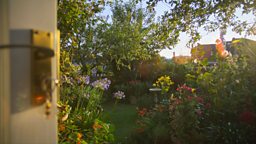
Filming pine martens in the Western Highlands
By Matthew Clements, Producer/Director
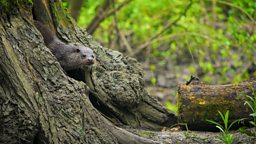
When I took on the Western Highlands episode, the one animal I really wanted to film was the pine marten - a cat-sized mammal related to ferrets and stoats.
Only… few people have ever even seen one.
Once common across British woodlands, pine marten numbers were decimated by forest clearance and predator control - to such an extent that by 1915, they had been more or less exterminated from England and Wales. Fortunately they held on in a few pockets of Scotland and Ireland.
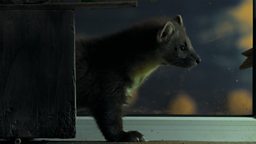
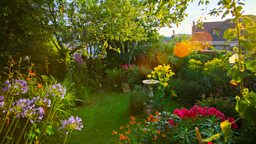
Not surprisingly, they are incredibly shy... but revealing the lives of secretive animals is what this series is all about. And thankfully Matt, the owner of our Scottish garden, has spent forty years encouraging them into his garden.
Pine martens are said to favour mature forests where they can spend the day hiding away in tree hollows and old squirrel dreys, but according to Matt, up in Morvern they den anywhere from the rocky scree in the mountain tops down to the temperate rainforests that run along the coast.
They emerge after sunset to search for voles and mice, birds (more on that later) and their eggs, carrion, berries and nuts. Matt designs, builds and carefully positions pine marten boxes around the house... and there’s plenty of potential marten food in his carefully-planted and managed garden.
But that didn’t mean that the pine martens would be easy to film.
Fortunately we had wildlife cinematographer Simon King on our side. Simon is a legendary naturalist with incredible field craft and a capacity to sit in a hide for hours on end, accompanied by a huge flask of tea and his trusty camera.
And, almost as importantly, he’s been friends with Matt for decades. They first met when Matt spotted a strange figure armed with a camera on a remote Scottish beach and went to investigate. It turned out that Simon was filming otters - and their shared love of nature means they’ve been great friends ever since.
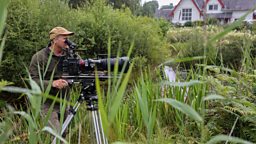
As we planned our filming, Matt was able to tell Simon where the pine martens were most likely to show up. The only problem was that martens notice the slightest change to their environment, so under Matt’s guidance we also deployed a number of unobtrusive, motion-triggered trail cameras to establish their natural routes and patterns around his garden.
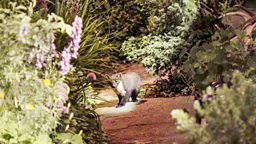
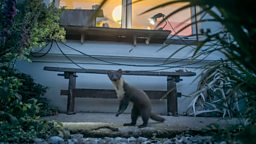
The cameras revealed that the martens were regularly exploring all around the house - not just looking for the peanuts that Matt left on his windowsill, but presumably searching for somewhere warm and dry to den. With activity building, we decided it was time for Simon to put up his hide and ready his camera.
He began cautiously, positioning his hide well away from the martens’ regular paths and leaving it there for days, allowing it to fade into the background. Only then did he enter, armed with an ultra-low-light camera capable of filming by moonlight - or, as it turned out, by the soft glow spilling from Matt’s windows.
Night after night, Simon waited from dusk until dawn. Nothing. We began to suspect that the martens had outwitted us. But then, on a wet Highland night, one finally appeared - a young female, recognisable by the tufts of fur on her ears. Matt named her “Tufty”.
Tufty became increasingly confident, padding around the house, stopping to feed on the peanuts Matt had left out for her. And she wasn’t alone. Tufty was joined in the garden by several more pine martens - including a couple who Matt nicknamed “the terrible two”, likely related and unusually tolerant of one another.
Once Simon had plenty of footage around the house, we set our sights on capturing some pine marten behaviour never filmed before.
At the bottom of Matt’s garden, just over the fence, lies a sun-warmed sandbank - home to a colony of sand martins. These tiny birds (yes, sand martins are birds, pine martens are mammals) arrive from Africa every spring to breed - carving nest tunnels into the sand and feasting on the local insects. And Matt had found evidence that the pine martens hunt them.
To avoid disturbing the nesting colony, we ruled out hides and human presence. Instead, this would be a fully remote operation. Camera-trap expert Matt Kingdon joined the team to help deploy a network of infra-red cameras along the bank.
The camera traps soon captured a fantastic sequence of shots - in the dead of night, a pine marten cautiously quartering the sand bank, then crawling head-first down towards the nest holes. The vertical face of the sandbank offered some protection - even the agile pine marten fell off. But the hungry predator did not give up, and eventually the remote cameras captured the moment when - as adult sand martins fled from their burrows hoping to escape - the pine marten managed to grab one.
This was a moment of wild predation never previously captured on camera. Along with the rest of the footage from around Matt’s house and garden (including Tufty denning down in Matt’s bespoke nest box), it offers an unusually detailed view into the secret world of these highland pine martens.
There’s a coda to this story. After centuries of persecution, pine martens are making a recovery - and not just in Scotland. Since they gained full legal protection in the 1980s their numbers have been increasing and there are now thought to be 4,000 in Britain.
Since 2015, a number of conservation organisations such as the Vincent Wildlife Trust have been working to reintroduce Scottish-born pine martens to their former haunts across Britain, including a number from Morvern. Excitingly, there’s evidence that as pine martens spread they are controlling populations of American grey squirrels, perhaps paving the way for the return of our native red squirrels.
And with recent sightings in places like Exmoor, south Wales (one even turned up in our Wye Valley garden!) and the New Forest in Hampshire, it may not be long before one of these secretive predators turns up in your backyard!