A single swallow does not a summer make
By Alex Minton, Producer/Director of The Lake District episode
“SWALLOW!” I yelled, “Flying towards us over the house, maybe a bit far away… oh, actually, sorry, it’s a pigeon… Ah! There’s one, out there, past the pond - I think it might circle round and fly over the meadow… no, wait, it’s dipped down behind the hedge... THERE! QUICK! No, no, too late, it’s gone...”
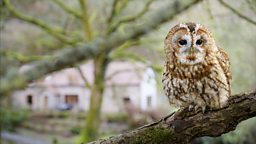
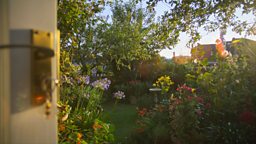
When we first started making plans for filming in the Lake District, it was deep mid-winter, and all we had to go by for how the garden would look in the summer were a few photos and enthusiastic descriptions from Chris and Liz - the resident gardeners. Beyond that, we had to rely on our imaginations for how this incredible place would develop across the seasons. But when it came to the garden's wildlife, we had an ace up our sleeves. Chris (a self-described nerd, in the best possible way) kept a long-term diary of animal and bird sightings, and natural events like the first damson blossom - so we had years of primary data to refer to when predicting this year’s wild calendar.
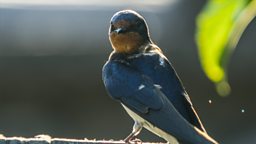
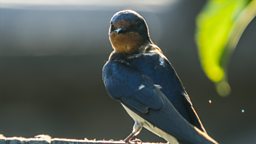
From the start, our team was most excited about the prospect of the swallows returning to their nest sites in the shed. We knew from Chris’s notes that the first sighting of the year was usually early-mid April. Those first birds to arrive tend to be the males, flying the marathon 6000-mile journey home from Africa a little way ahead of the females, so they can secure nest sites and prepare for their mate’s arrival. By late May, in previous years, swallow pairs would be feeding tiny chicks, and those chicks would normally be fledging in late June - all of which we wanted to capture on camera.
When it came to the garden's wildlife, we had an ace up our sleeves.
Cross-referencing the swallow calendar with seasonal info on other garden wildlife, plans were laid, shoot dates were set, camera people were booked in. For the main coverage of the swallows, we had a second ace up the other sleeve: local lad Lindsay McCrae. Not just a world-class, BAFTA-winning cameraman, he’s also an experienced naturalist, with a great understanding of bird behaviour - and he lives just down the road! He’s also a huge fan of these charismatic little birds, so he was thrilled as we were by the prospect of following a pair as they raised a family.
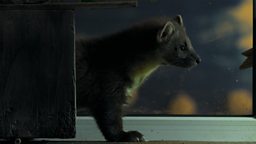
Spring quickly rolled round and our location team swung into action. A male swallow showed up, just a little later than expected, and the excitement amongst the whole crew - not to mention Chris and Liz - was palpable. While Lindsay had his eyes to the sky filming the lone male, camerawoman Katie Mayhew was getting down and dirty filming amorous newts courting in the pond, and assistant producer Alex Godfrey concentrated on covering the escapades of a female field mouse.
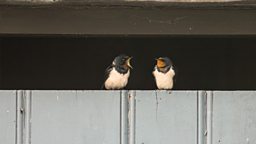
But just when you think you’ve got it figured out, nature has a tendency to defy expectations. As time went on, there was still no sign of the male swallow’s partner. And as days turned into weeks, and Lindsay’s planned shoot days kept being pushed back, we were all getting very worried. Without a female, there would be no eggs, no chicks… no story. A disaster for the film, but also a sad sign of the times - the UK has seen a precipitous decline in swallow numbers over the last decade (down 41.8% between 2013 and 2023 according to the BTO’s Breeding Bird Survey), as the marathon migration gets tougher and tougher. She might have been delayed by a drought, or blown off course by a storm, or simply not been strong enough to go the distance. It was hard not to imagine the worst.
But just when you think you’ve got it figured out, nature has a tendency to defy expectations.
Then, on a grey, drizzly day, huddled together in our production offices in Bristol, drawing up a plan B, a quiet ping signalled the voice note we’d all been hoping for… “She’s here!” Lindsay proclaimed delightedly, “They’re both flying in and out of the shed!” After a tip-off from Liz, he’d rushed down to the garden with his camera and long lens, and captured the joyous reunion of the little lovebirds. Even better, the weather up north in England’s wettest county was, for once, far nicer than down south, and the sun was shining for the crucial shots.
Relief all round - and right away, we knew that the female’s late arrival would form a key emotional part of the swallow family’s on screen story. Now we needed the pair to settle down and crack on with having chicks, under the watchful eye of our remote nest-cams. Then Lindsay could really try to capture the aerobatics of the parents hunting hundreds of insects a day to feed them.
You certainly couldn’t say it all went smoothly from then on - wildlife filmmaking is all about overcoming one obstacle after another. But the swallows played their part, and Lindsay played his, and we came away with some truly spectacular mid-air footage.
He did insist on being left on his own in the filming hide though. For some reason he found it much easier to concentrate!