Di religious devotees wey dey choose death by fasting
Wia dis foto come from, Pranay Modi
- Author, Swaminathan Natarajan
- Role, BBC World Service
- Read am in 7 mins
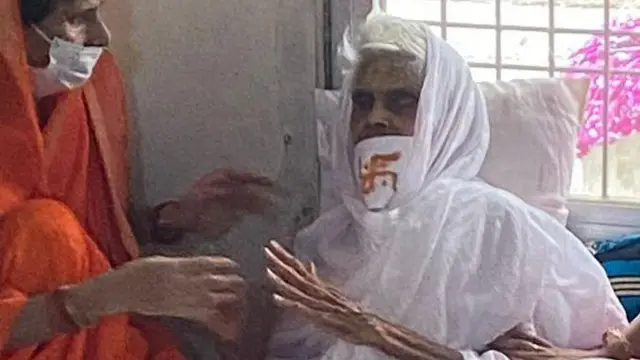
Three weeks afta dem diagnose 88 year old Sayar Devi Modi of cervical cancer, she decide say she no go collect treatment, instead she go fast to death.
"Her biopsy report comot for 25 June and show say di cancer don dey spread. On 13 July 2024, she pray and eat soup. Di next day she call us and tell us about her intention to do santhara" na so her grandson Pranay Modi remember.
Santhara wey dem dey also call sallekhana na practice wey some followers of di Jain religion dey perform. E involve to give up food and water and embrace death.
No be really one fundamental requirement for dia faith, even Indian media report say na only a small minority of Jains about 200 to 500 dey choose to die dis way each year.
Some dey oppose di practice, dem say na suicide, and one petition to ban santhara dey pending for di Supreme Court of India.
Jainism
Wia dis foto come from, Getty Images
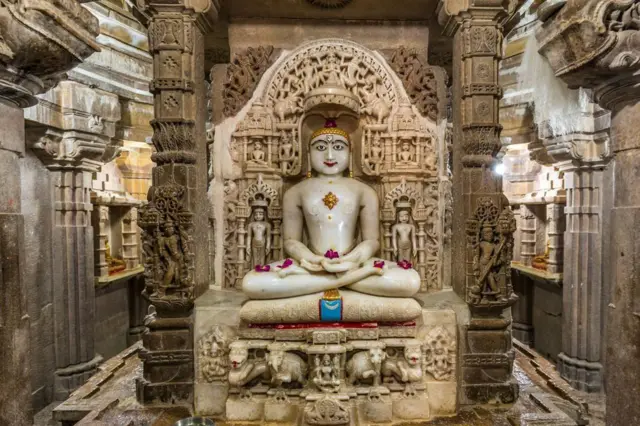
Non violence follow for di core of Jainism, na religion wey don dey for like 2,500 years. No god, but Jains believe in pure permanent, individual and omniscient soul.
Almost all Jains na vegetarians and dem dey lay firm emphasis on moral values and giving up of worldly comforts.
About five million pipo dey practice Jainism for India, and dem dey often dey well educated. US based Pew Research Centre tok say one-third of Jains get university degree, compared to 9% of general Indian Population, and many dey comparatively wealthy.
Pipo dey often honour Jain gurus for wider Indian society. Prime minister Narendra Modi bin ask for dia blessings, and e bin post on X to lament di passing of one particular guru, Acharya Shri Vidyasagar Ji Maharaj. E describe im death as "an irreparable loss for di kontri".
Di respected guru bin die at age 77, afta three days of fasting. Thousands of pipo attend im funeral.
Dis article contain content wey X provide. We ask for una permission before anytin dey loaded, as dem fit dey use cookies and oda technologies. You fit wan read di X cookie policy and privacy policy before accepting. To view dis content choose 'accept and continue'.
End of X post
Jains argue say pipo no suppose compare dis dia process of ending life through fasting to mercy killing or assisted suicide.
"Sallekhana or santhara dey different from assisted suicide, unto say, e no involve di help of a physician and e no involve make dem take or inject anytin wey dey lethal," Steven M. Voss, one assistant professor and expert for Jainism for University of Colorado-Denver tell BBC.
Historical evidence of dis practice wey Prof Vose describe as "letting go of di body" or "allowing di body to wither away" - date back to as early as di 6th century.
Celebrating life
Wia dis foto come from, Pranay Modi
Belief in Karma, soul, rebirth and salvation na key elements of santhara.
Some Jains like Sayar Devi choose dis kain death wen dem realize say dis death dey very certain, or afta dem don dey diagnosed wit incurable illness.
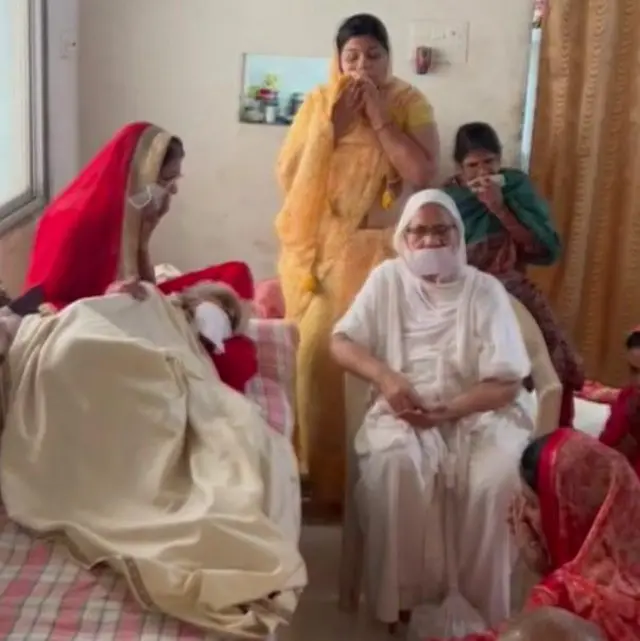
For videos wey dem take during di fast, Sayar Devi wear white sari and cover her mouth wit one square cloth.
"She dey calm, conscious and dey tok till di end," Pranay recall.
Modi say during di final days of im grandmother wey take di fast, pipo for dia ancestral home for Kabridham for central India bin enta festive mood and many pipo attend.
"E no look like place of death. Family members, relatives, friends, neighbours, and many strangers come receive her blessings."
Even during di final days, Devi muster energy to perform Jain prayer wey last 48 minutes.
"I dey sure say she go don dey for plenty pain afta she stop dey take her medication, but she no complain about anything. She look radiant and peaceful,"na wetin modi tok.
Devi children, grandchildren and great grandchildren watch as she pass on.
"E dey hard for me to witness her die dis way,'" Modi tok,
"But I know say she dey for better place. We respect her decision."
Final struggle
Wia dis foto come from, Getty Images
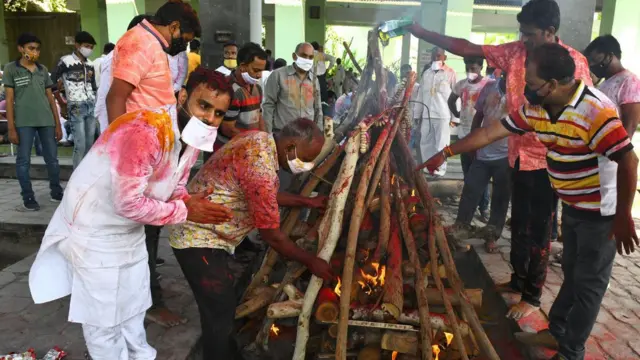
Santhara fit no get peaceful ending. Prof Miki Chase do her PhD dissertation on dis topic and don witness dozens of final fasts.
"One man wey bin get terminal cancer diagnosis do santhara and dey inside lots of pain, although im family dey proud of im vow and dem support am, dem still struggle to see am as im dey suffer," na so Chase wey be assistant professor and Sri Ananthnath Chair for Jain studies, University of Wisconsin-Madison tok.
For anoda case, Chase see woman wey get terminal cancer and how her body dey relax as she start di fasting.
"Her daughter-in-law tell me say dem feel say na dia responsibility as family to encourage her and support her resolve, so dem dey sing devotional songs for her."
Prof Vose believe say pesin wey make such decision go certainly get some amount of struggle.
"E no dey easy to watch pesin die of starvation, and di final moments go dey disturbing.
"Di person fit ask for food or water as di body dey fight to save imsef, but dem fit no give am wetin im dey ask, but dis dey recognized as part of di end," na so e tok.
Theological basis
Wia dis foto come from, Kamal Jain
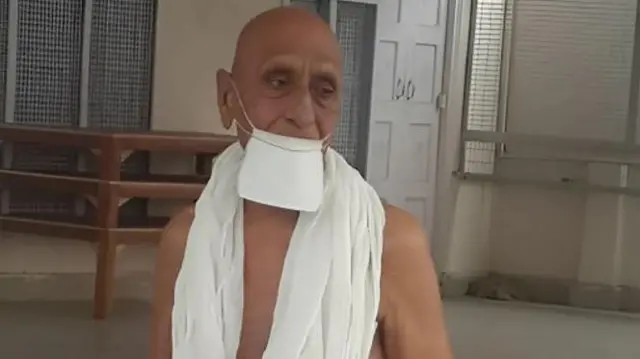
Shri Prakash Chand Maharaj Ji (born 1929) na one of di most senior Jain monks of di Svetambara sect - wey mean to dey covered wit clothes.
E join monastery for 1945. Im papa and younger broda be monk and dem also do santhara.
"E no too worry as I watch my papa and my broda. My mind bin no dey. I no feel say I go become orphan or like say I go dey alone for my life."
Di 95-year-old dey live for one monastery for Gohana city, for northern India. E no dey use phones or laptops. E follow BBC tok through im disciple Ashish Jain.
Di concept of beautiful death na perfect way to end life, and di ideal beginning of di next life dey based on my philosophical, spiritual and religious tenets ," e tell BBC.
E say santhara involve plenty stages, no be sometin wey dey happun suddenly or sometin dem dey force pesin to do.
Pesin wey wan do do am, gatz collect permission from im family and get guidance from spiritual teachers like Maharaj Ji.
Di first stage of santhara na to reflect and accept all your past sins and misdeeds. After dat one, you go need to ask for forgiveness.
"By fasting and embracing death, one go fit cleanse di body and soul and reduce bad karmas, so im go get better spiritual life for im next birth, "Maharaj Ji explain.
E go finally lead to liberation of di soul from di cycle of births and deaths."
Legal challenge
For 2015, one High Court for north-west Indian state of Rajasthan bin ban di practice, but di Supreme Court later stay di ruling.
Former civil servant D. R Mehta na one of di pipo wey carry di mata go court, say dem wan preserve di tradition of Santhara.
"Jains dey see dis as di best form of death. Na conscious, peaceful and dignified acceptance of death.
Spiritual purification and eternal peace na di main motives," Mehta tok. Mehta na di deputy head of India central bank and chairman of di stock market regulatory body.
For 2016, dem ginger opposition to di practice sake of di death of one 13 years old girl from Hyderabad. She bin die afta she fast for 68 days.
However, all oda santhara in recent years na elderly pipo.
Wia dis foto come from, Getty Images
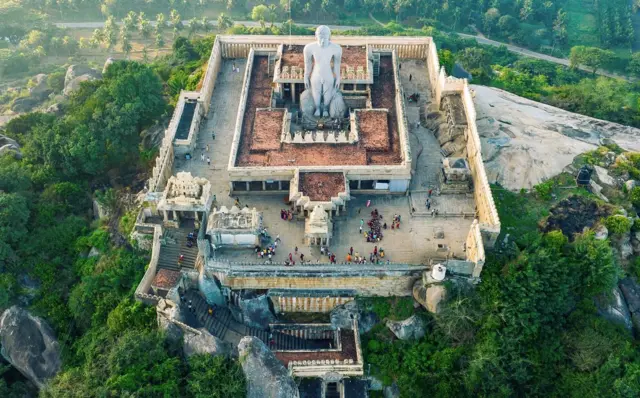
Maharaj Ji start di process of Sanlekhana for 2016, wey be di first part bifor santhara.
First e reduce im food to ten items, and now im dey survive on just two food items, water and medicine. E still dey active though.
"E no dey show sign say e dey weak or sick. E always dey happy. E no dey tok much," im disciple Ashish Jain tok.
Maharaj Ji believe say dis im new lifestyle don help am make spiritual progress.
"My inner soul and mind dey feel very happy. I dey blissful state."