Shot in school uniform: BBC reveal how police order lead to Gen Z protest killings for Nepal
- Author, Subina Shrestha
- Role, BBC Eye Investigations
- Author, Deepak Kharel
- Role, BBC Eye Investigations
- Published
- Read am in 11 mins
One order wey allow di use of fire against thousands of young, unarmed protesters for Nepal bin dey issued by di kontri former police chief, one BBC investigation don reveal.
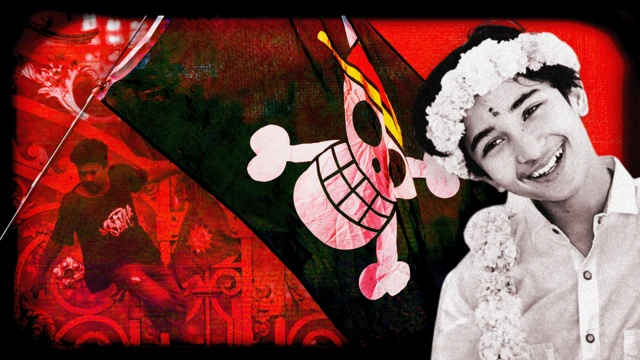
Among di 19 pipo wey kpai for di capital, Kathmandu, on 8 September last year, na one teenager wey wear school uniform, wey im bin dey waka comot from di crowd wen dem shoot am for di back of im head. Dozens of odas bin dey injured.
Di events for di so-called Gen Z demonstrations - wey follow weeks of rising anger about political corruption - spark further protests wey lead to di resignation of Nepal prime minister and di collapse of di govment a day later.
Di BBC World Service team don see one internal police document wey get details of events on 8 September. E reveal someone wey bin dey use di call sign "Peter 1", tell im officers to "deploy necessary force" 10 minutes after curfew bin don come into effect, and after repeated requests by officers on di ground to use deadly force.
Peter 1 bin be di call sign wey Nepal former police inspector general, Chandra Kuber Khapung bin use, na so sources tell BBC Eye Investigations.
Khapung neva deny say e issue di order, but Nepal Police say dis na only after e bin get authorisation by a govment security committee and once all oda forms of force bin don dey used, in line with Nepali law.
Khapung - wey retire for November - neva reply BBC request for comment.
Video evidence wey BBC examine reveal say 17-year-old Shreeyam Chaulagain - di youngest of di 19 victims - bin dey unarmed and bin dey try to leave di scene wen e die.
Di events of 8 September now na something wey one public inquiry dey chook eye inside. So far, dem neva hold anyone accountable - and general elections dey set to take place on 5 March.
BBC don establish di chain of events, detailed by di leaked police log and supported by insider accounts from serving officers, wey lead to di shootings.
By analysing visual evidence, including more dan 4,000 videos and photos, and details from di ones on di streets and for di command centre wia security officials bin dey monitor events , we don piece togeda di most comprehensive account so far of one of di most dramatic and bloody days in Nepal recent history.
Warning: Dis tori contain images of dead bodies
Nepal na young democracy. E become a republic in 2008, after a civil war wey kill more dan 17,000 pipo and last 10 years.
One decade after a new constitution promise a fresh start, many young pipo say those hopes no dey met. By some estimates, about one in five young Nepalis dey out of work.
Dem dey voice most of di frustration online, particularly among Generation Z - those wey currently dey aged between 14 and 29.
Last August, Gen Z activists begin to share terms on social media such as "nepo baby", to describe di privileged children of di Nepalese elite. On 4 September, di govment ban some platforms, including Facebook, YouTube, Instagram and X.
Activists move onto di gaming chat platform Discord, wey become a hub for organising.
For one forum, Youth Against Corruption, members plan di protest outside parliament on 8 September.
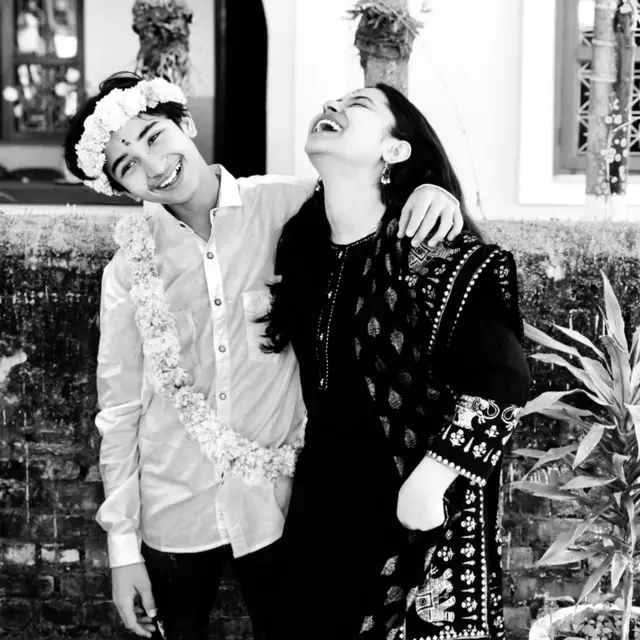
Shreeyam Chaulagain mother bin no want am to go.
"I tell am not to participate. Tins fit hapun for protests," she tell BBC. But Shreeyam bin dey deeply engaged with politics, im father tok. "E say corruption don affect [Nepal]. Im bin dey far more informed dan me."
Shreeyam reassure im mother say di protesters no go dey targeted becos dem dey young, and in school uniforms.
"Im bin dey so curious - e want to know wetin dey go on in di world," she tok.
Di hours wey lead to bloodshed
09:00: Young pipo begin gada for Maitighar Mandala, a busy intersection for central Kathmandu wia demonstrations often dey hold.
A barricade stand several hundred metres from parliament.
Security officials bin "hugely underestimate di crowd", na so Basanta Basnet, editor of Nepal daily online news portal Online Khabar tok. "I tok to security personnel, and also to members of di political class - dem say 'children' don dey join."
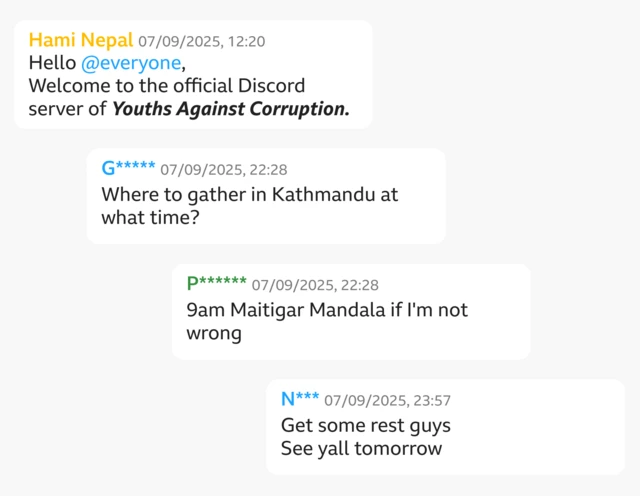
About 30,000 pipo arrive to protest - 10 times di number wey police anticipate.
"We get an expected behaviour pattern [for protests]," one police officer tell BBC anonymously. "But with dis new generation, we no understand dia social media or how dem mobilise on di ground."
Di protesters begin move towards parliament, but di police barricade stop dem.
11:47: A group of demonstrators find a way around di cordon - di police, wey dey taken by surprise, abandon di barricade.
Di crowds push past and protesters reach di gates of parliament.
12:15: One group of protesters breach di walls of di parliament compound. Police fire tear gas and use batons. Di crowd no gree retreat, even as organisers urge pipo on Discord to pull back.
Video footage show Shreeyam outside di gates. E wear a green school jumper and carry a backpack, e hold a banner wey read: "Youths Against Corruption".
Elsewia, di protests don dey become more violent.
Inside di situation room
Senior security officials gada for one control room almost 3km (1.9 miles) away, near a complex of govment offices.
Representatives of di civilian police, army, armed police and intelligence officials dey present. Di security committee dey chaired by di capital chief district officer, senior civil servant Chhabi Lal Rijal.
Within di command centre, officials dey work to obtain live visual feeds from CCTV cameras wey dey positioned around di parliamentary complex. According to one anonymous officer, dem bin get TV but no dedicated internet line, and so wen dem attempt to establish a connection, e bin "no dey stable".
No individual or unit get a comprehensive understanding of di overall situation, according to police officers we tok to wey bin dey dia dat day.
12:30: Di chief district officer impose immediate curfew, making di protests illegal. Officers use loudhailers to order pipo to go home.
Rather dan to obey, some protesters surround one police unit and throw bricks and stones at dem.
About di same time, footage show di parliament gatehouse on fire.
According to multiple police sources and di police log, panicked officers in and around parliament radio di command centre for help. "Some of us bin dey badly hurt. One of us ask for rescue," one anonymous police source tell us.
Dem repeatedly ask dia superiors for permission to use live ammunition, after batons, water cannons and rubber bullets fail to drive away di crowd.
12:40: Dem don give dat authorisation now, according to di log we see, as well as several police sources.
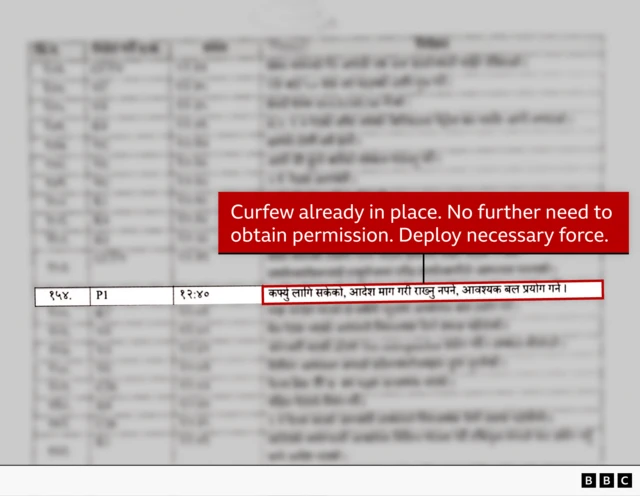
Dem pinpoint di source of di approval to one call sign: Peter 1.
Di instruction from Peter 1 dey recorded for di police log: "Curfew already in place. No further need to obtain permission. Deploy necessary force."
Peter 1 na Chandra Kuber Khapung, di den inspector general of police.
For one filing to di supreme court of Nepal, Khapung later deny responsibility, and Nepal Police tell BBC say di decision to give di order to fire dey made by di committee wey Rijal head. For one letter, di force say Khapung "no issue di order to use force ahead of di committee decision".
In public order situations, na di security committee - rather dan di police - na im get legal authority over decisions concerning escalation of force.
However, di den chair, Rijal, don deny in court say e authorise live rounds.
Some police officers we tok to since don acknowledge failures in intelligence, planning and command. Several say dem bin dey unprepared for a crowd wey bin dey rapidly mobilised on Discord. Odas question why military support no arrive sooner.
Many say dem still dey struggle with di memory of dat day.
"Our officers open fire on dem like say dem be enemies," one tok.
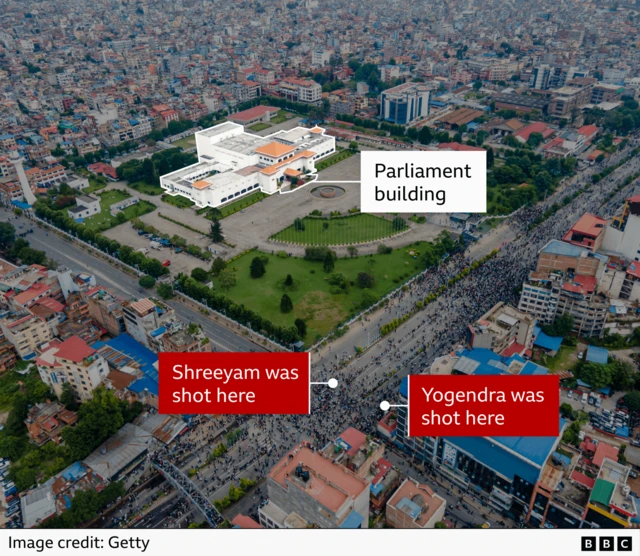
13:15: Di first death from live fire dey recorded by di BBC. Video evidence show one protester, 34-year-old Binod Maharjan, as dem carry am away with a wound to di head. E later die for hospital.
BBC dey able to analyse six shootings after di curfew order. For di footage we examine, we no see any of di victims engaging in violence.
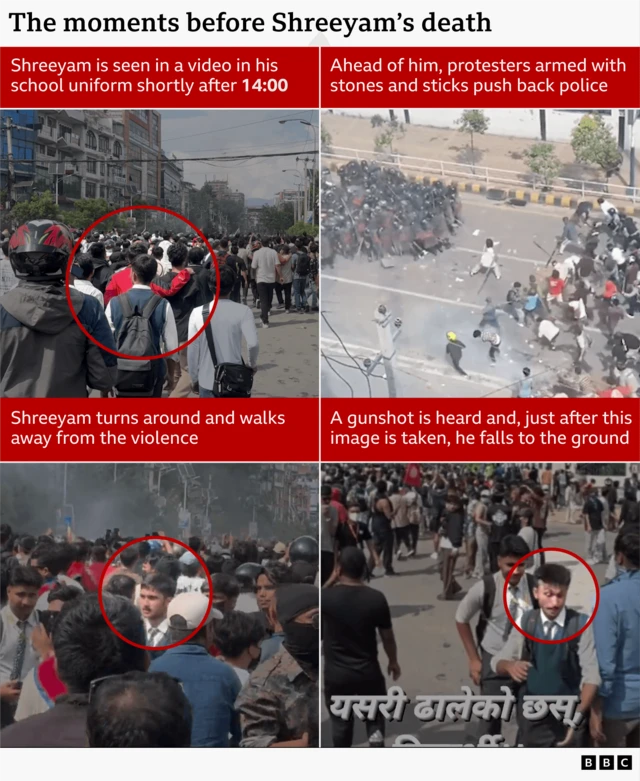
14:09: Shreeyam - di youngest victim of di shootings dat day - dey seen peacefully dey waka comot from di front line, wia oda protesters dey throw police with stones. Still carrying im school bag, e clap im hands - a gesture wey appear calm.
One bullet strike di back of im head, and e fall to di ground.
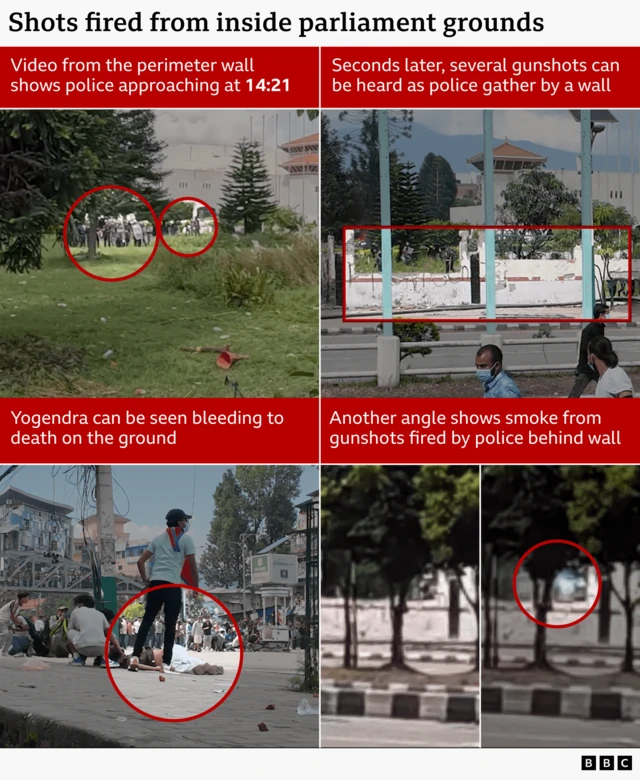
14:21: Video evidence obtain by di BBC shows police dey fire at protesters from inside di parliamentary complex. We dey able to establish say police fire seven shots at di crowd.
Protesters scatter, dem run between buildings and pavement. Some simply cover dia heads for protection. Yogendra Nyaupane, 24, dey hit and dey fatally wounded.
Di last shooting recorded by BBC take place at about 16:00, and di protest outside parliament die down for evening. But smaller sporadic protests continue through di night.
Angered by di killings at di gates of parliament on 8 September, Nepalis of all ages enta streets di following day. Wetin start as protest rapidly harden into mob violence, and police become immediate targets. Police stations dey set ablaze, officers dey assaulted, and three bin dey killed.
Arson attacks on di parliamentary compound dey carried out, di supreme court and oda govment buildings. In total, 77 pipo bin dey killed during di unrest.
Although e dey widely alleged - by politicians, police and protesters - say organised groups and infiltrators acting on behalf of political interests help to drive di destruction, we no find any evidence to substantiate di claim.
At about 14:30 on 9 September, Prime Minister KP Sharma Oli resign and Nepal govment collapse. By nightfall, buildings don dey burn across Kathmandu, and at least 50 more pipo dey reported dead.
Di army take control at 21:00.
No-one don take responsibility for wetin hapun.
Ramesh Lekhak, di den home minister, and former Prime Minister Oli, don deny responsibility as well as Khapung and Rijal.
Nepal Police tell BBC say dem "bin dey faced with an overwhelming situation wia we gatz to respond to multiple incidents simultaneously".
Meanwhile, families of all di victims dey wait for justice. Shreeyam mother, Karki, say she no dey able to cry.
"I no feel like say e don go yet - I still feel say e go come back soon," she tell us. "For my mind, e dey for im school uniform. E go soon return, swinging im bag."