Wia vampire tori come from truly and why?
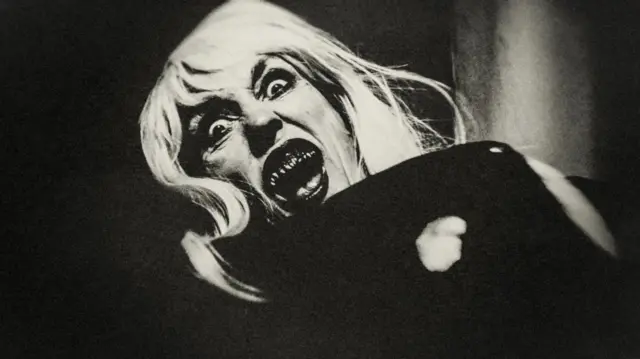
Wia dis foto come from, Getty Images
- Author, Milica Radenković Jeremić
- Role, BBC News Serbian
- Published
- Read am in 7 mins
In di early 18th century, dozens of pipo for Serbia start to die mysteriously, allegedly becos dem dey haunted by dia dead neighbours and dey experience a choking sensation or dey breathe heavily just before dem die.
Two small villages in particular, Medvedja for di south of Serbia and Kisiljevo in di northeast, bin dey for di heart of dis rumoured deaths. Di villages dey 200 kilometres apart but bin report a similar pattern of curious incidents within a decade.
Austrian doctors bin go dia to investigate wetin dey cause dis deaths and dem compile detailed reports on evritin dem discover. Di findings quickly make dia way to di Austrian press and later on to academic circles.
German historian Thomas M. Bohn, author of ‘Vampires: The Origin of the European Myth’, say dat na how di word ‘vampire’ first appear, for one Austrian daily called ‘Wienerisches Diarium’ in 1725.
A vampire na mythical creature wey dey believed to survive by feeding on di blood of di living.
Tori of vampire appearances dey recorded in cultures around di world, but di term ‘vampire’ dey popularised in Western Europe after such reports for 18th century.
‘Devil’s business’
For Kisiljevo, in 1725, nine pipo die within two days. All of dem allegedly tok about a certain neighbour before dia deaths.
Dem say a man called Petar Blagojevic - wey bin don already die earlier - bin come to visit dem for dia dreams and start to choke dem.




End of Di one wey oda users dey read well well
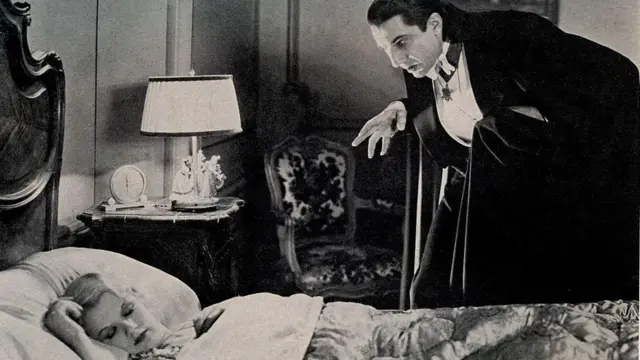
Wia dis foto come from, Universal Pictures
In response, di locals open up Blagojevic grave and find a well-preserved body wey dey perceived as an ‘evidence of di devil’s business’.
“Face, hands, and feet, in fact di whole body, no fit dey better preserved if e bin dey alive,” na so one Austrian official write wey bin dey present for di exhumation.
“In di mouth, to my big surprise, I find fresh blood, wey im, according to di general belief, suck out of those e kill.”
Professor Clemens Ruthner from di Trinity College in Dublin believe say di word ‘vampire’ originate from dis time wen di Austrian doctors bin dey open up graves and tok to di local interpreters to understand wetin bin don take place.
“Di interpreter probably mumble sometin like 'upir', wey be Slovene word for a demon, and in dat misunderstanding, di word 'vampire' dey born,” e tok.
Through di colonial encounter between Austrian officials wey think of demsefs as ‘enlightened’ and local villagers wey dey perceived as ‘primitive’ by Austrians, a new creature come into existence, e add.
In order to stop Petar, villagers allegedly drive a stake through im heart and den burn im body, putting an end to di reports of vampires for di village.
Although dis incidents catch attention, di moment bin no dey ripe yet for ‘vampirism’ – a term wey dem dey use to refer to a belief in vampires - to catch di imagination of a broader public, according to Professor Bohn.
Di spirit of enlightenment for dat period bin no accept anytin wey no fit dey explained rationally.
Vampire or scapegoat?
Seven years later, for January 1732, fear hold di village of Medvedja.
Within three months 17 pipo, some of dem dey young and healthy, die out of no clear reason.
Similar to di incidents for Kisiljevo, some of di deceased complain about a strong sensation of suffocation and fierce chest pains before death.
After following di order to exhume di graves, Doctor Johannes Fluckinger write a report wia e mention a militiaman as di chief perpetrator in di cases of ‘vampirism’.
Im body reportedly still dey undecomposed, and fresh blood bin flow from im eyes, nose, mouth, and ears.
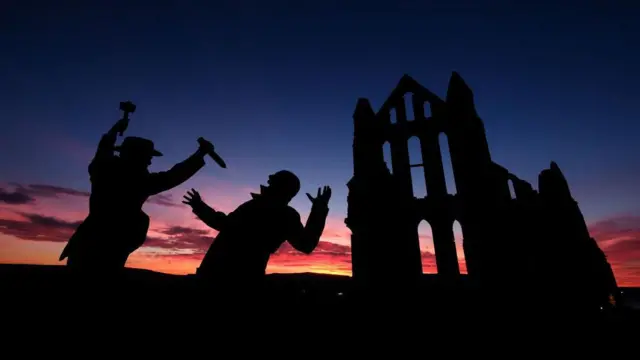
Dis dey seen as a proof by di pipo of Medvedja say im indeed na vampire, wey be why dem drive a stake through im heart and den burn im body, too.
Wia dis foto come from, Getty Images
“Little dey known about di life and fate of dis man, wey die after e fall and di villagers den turn am into a scapegoat,” na so Thomas Bohn write for im book.
E believe say dis man na Arnaut Pavle, one Albanian wey arrive from Kosovo.
“Petar Blagojevic for Kisiljevo and Arnaut Pavle for Medvedja na di first known representatives of di vampire species,” e tok.
Scientific explanation
While di villagers bin dey afraid of di bodies wey no decompose, contemporary pathologists point out say di state wey dem see di eceased no dey uncommon.
“Christian Reiter, prominent Viennese pathologist, think say behind all dis cases na di anthrax epidemic - a usual occurrence in periods during and after wars in di past,” Professor Ruthner tok.
Anthrax na bacterial disease wey dey cross from infected animals to pipo and often result in death.
Ruthner also believe say reports of suffocation prior to death fit dey related to pneumonia.
“If you read di reports carefully, you go see say no one see di vampires with dia own eyes. Di idea say dem suck blood na di interpretation of Austrian doctors,” e tok.
Thomas Bohn also think say di bloodsucking na myth wey dey created by di western public.
Wia dis foto come from, Getty Images
Still di belief in and fear from vampires carry on in di psyche, according to one local historian from Medvedja, Ivan Nesic.
E point out say even long after Petar Blagojevic and Arnaut Pavle die, locals try to protect dia personal space from vampires.
“Serbian vampire [dey believed to resemble] an inflated bubble of skin, filled with blood,” e tok.
“[Dem believe say] e fit deflate like a balloon if punctured anywia. So pipo bin dey put hawthorns on gates, windows or doors for protection.”
Alternative to ‘Turkish threat’
Both Kisiljevo and Medvedja dey located for border areas wey come under di authority of Habsburg Monarchy in di 1700s, after centuries of Ottoman rule.
Professor Ruthner believe say di alleged appearance of vampires catch attention becos dis incidents dey reported in dis territories.
“Di great conflict between Ottoman Empire and di West na important backdrop of dis events,” e tok.
Professor Bohn also point out say after di second unsuccessful Ottoman siege of Vienna in 1683, vampires represent an alternative to di 'Turkish threat’ to Christianity.
In mid 18th century, a new wave of ‘vampire’ sightings come out for Habsburg Monarchy, but all fight against di imagined creatures bin dey forbidden to check superstitious beliefs.
Wia dis foto come from, Getty Images
But di vampires bin dey resurrected soon in a different form.
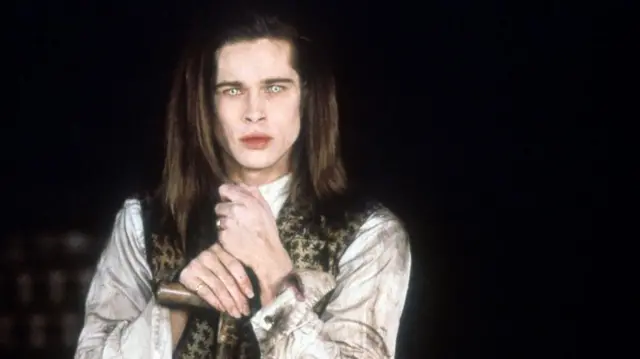
“Vampires in di romantic period na handsome, pale-skinned aristocrats, and not red-faced bloated Serbian villagers,” Ruthner tok.
Di charismatic and sophisticated vampire of modern fiction bin dey born in 1819 with di publication of ‘The Vampyre’ by English writer John Polidori.
Bram Stoker1897 novel Dracula dey celebrated as di quintessential vampire novel and provide to dis day di basis of di modern vampire legend.