UK discover di biggest eva dinosaur footprint site
Wia dis foto come from, BBC/ Kevin Church
- Author, Rebecca Morelle
- Role, Science Editor
- Author, Alison Francis
- Role, Senior Science Journalist
- Published
- Read am in 5 mins
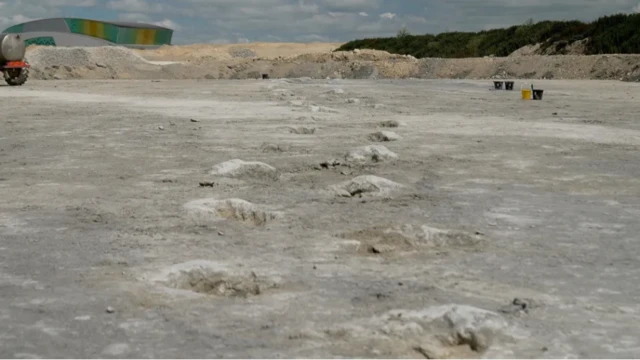
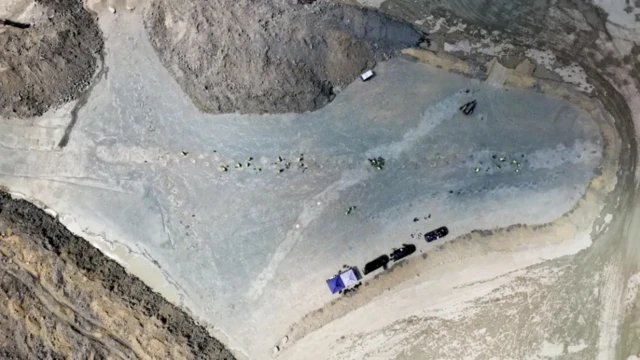
Dem don find di biggest eva dinosaur trackway site for di UK inside one quarry for Oxfordshire.
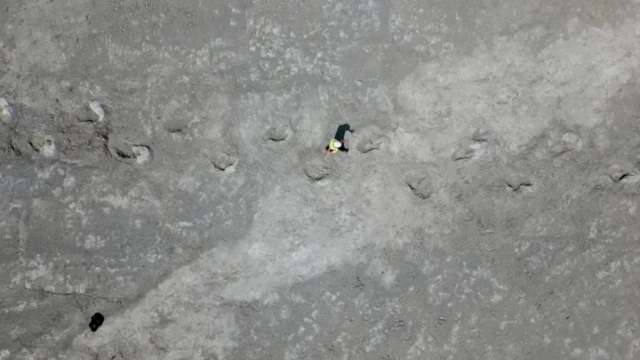
Na like 200 huge footprints wey dem make 166 million years ago, bin dey all ova di limestone floor.
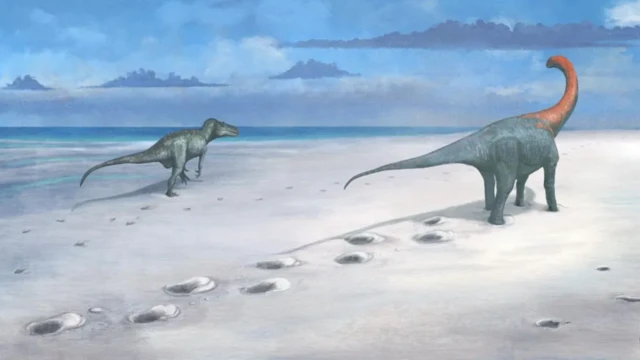
Dem show how two kind of dinosaurs bin dey waka up and down. Dem believe say na di long-necked sauropod wey dem call Cetiosaurus and di smaller meat-eating Megalosaurus.
Di longest trackways na 150m for length but dem fit go far pass so bicos na only part of di quarry dem don excavate.
Prof Kirsty Edgar wey be micropalaeotogolist from di University of Birmingham, tok say, "dis na one of di most ogbonge track sites wey I don eva see, in terms of scale and di size of di tracks".
"You fit step back in time and get idea of wetin e go fit be like wen dis massive creatures dey waka up and down as dem dey carry on with dia own business".
Wia dis foto come from, Emma Nicholls/Oxford University Museum of Natural History
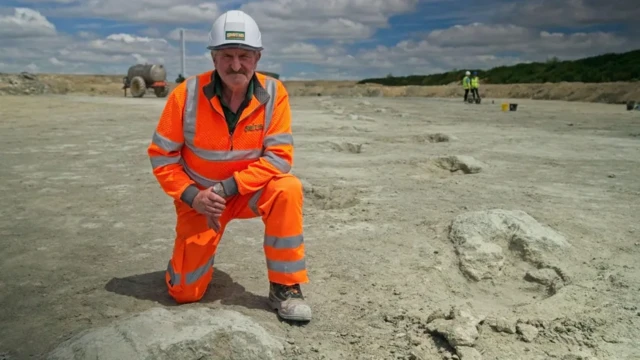
Na Gary Johnson wey be worker for di Dewars Farm Quarry be di first pesin wey spot di tracks as im dey drive digger.
E tok say, "I bin dey basically clear di clay wen I come hit hump, wey I bin tink say e no normal for di ground", e tok as e point to di high place wia mud come up as a result of dinosaur foot wey press di ground.
Dem find anoda trackway site close by for di 1990s so dat na wen e click for am say all dis bumps and dips fit be dinosaur footprints.
E tell BBC News say, "I bin reason say na me be di first pesin to see am. E bin no feel real - na moment wey make me feel somehow, true-true".
Wia dis foto come from, BBC/Kevin Church
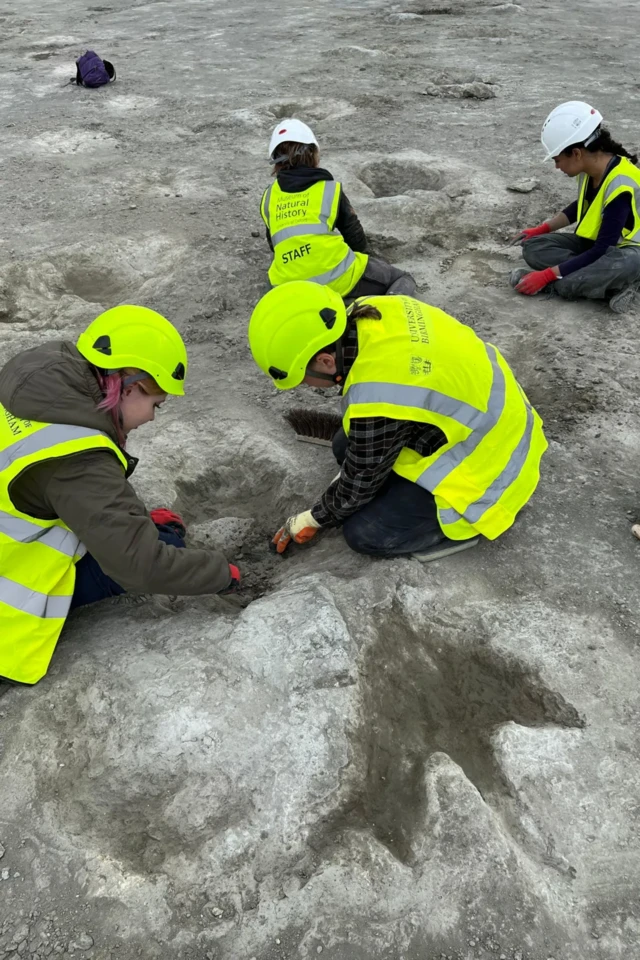
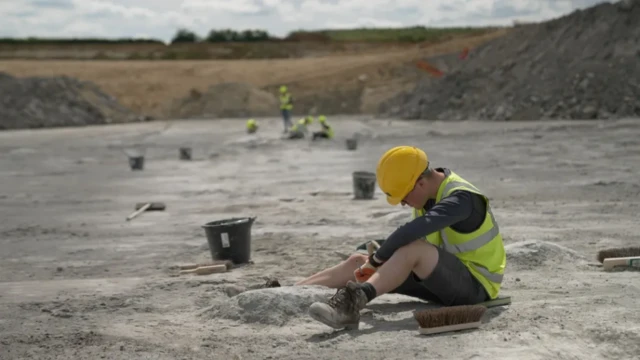
Dis summer, ova 100 scientists, students and volunteer join di excavation for di quarry wey dem show for di new series, Digging for Britain.
Di team don find five different trackways.
Four of dem, na sauropods wey be plant eating dinosaurs wey dey waka on four legs make dem. Dia footprints resemble elephant own, but e dey bigger. Dis animals reach up to 18m in length.
Sabi pipo reason say anoda track, na Megalosaurus make am.
Dr Emma Nicholls wey be vertebrate palaeontologist from di Oxford University Museum of Natural History explain say, "e almost resemble caricature of di dinosaur footprint".
"Na wetin we dey call a tridactyl print. E get three toes wey dey very clear for di print."
Di carnivorous creatures wey waka on two legs, be agile hunter, na wetin she tok.
"Di whole animal go be 6-9m for length. Dem be di largest predatory dinosaurs wey we sabi say bin dey di Jurassic period for Britain."
Wia dis foto come from, Mark Witton
Di place wey dem bin dey live im bin dey covered by warm, shallow lagoon and di dinosaurs bin leave dia prints as dem bin dey waka around for di mud.
Prof Richard Butler wey be palaeobiologist from di University of Birmingham say, "sometin must to don happun wey preserve dis for di fossil record."
"We no sabi exactly wetin e be but e fit be storm event wey happun and wey load sediments on top di footprints wey make dem stay instead of to just wash am away."
Di team study di trackways well-well during di dig. Dem make casts of di tracks and also take pass 20,000 pictures to create 3D models of di full site and di individual footprints.
Prof Butler explain say, "di lovely tin about dinosaur footprint especially if you find trackway na say e be picture into di life of di animal."
"You fit learn tins about how dat animal bin dey move. You fit learn how di area wey di animal bin dey live inside be like. So tracks go give us anoda set of information wey you no fit get from di bone fossil record".
Wia dis foto come from, BBC/Kevin Church
Wia dis foto come from, BBC/Kevin Church
Wia dis foto come from, BBC/Kevin Church
One area for di site even reveal wia di paths of a sauropod and megalosaurus bin once cross.
Di prints bin dey so well preserved sotay di team bin dey able to find out which animal first waka pass. Dem believe say na di sauropod bicos di front edge of im large round footprint bin dey slightly matched by di three toed megalosaurus wey waka on top of am.
Dr Duncan Murdock from Oxford University tok say, "to know say dis one individual dinosaur waka for dis surface and leave dis exact print dey so exciting."
"You fit kind of dey imagine am dey waka, imagine as e dey pull im legs comot from di mud as e dey waka dey go."
Dem neva find out wetin happun wit di trackways but scientists dey work wit Smiths Bletchington, wey dey operate di quarry and Natural England for options to fit preserve di site for di future.
Dem believe say more footprints fit dey.