Planet earth history: Missing continent wey take 375 years to find
Wia dis foto come from, Getty Images
E take scientists 375 years to discover di eight continent of di world, wey don dey hidden since.
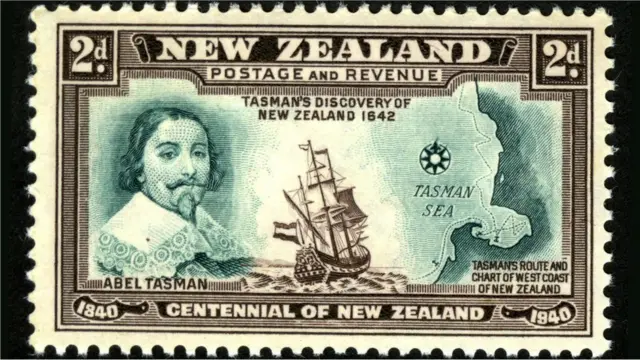
But wetin pipo no understand still remain. Abel Tasman bin dey on a mission for 1642.
Di experienced Dutch sailor, wey get moustache and bushy goatee bin dey confident say one continent dey for southern hemisphere.
And im dey determined to find am. European pipo no understand dis continent dat time.
But dem believe say e suppose get large land mass wey im name be Terra Australi - to balance out dia own continent for north.
Even dem don dey ontop dis planet mata since Ancient Roman times.
Na now dem won begin test am.
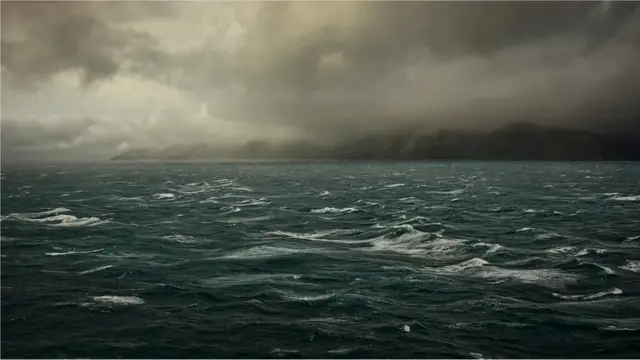
On August 14, Tasman waka from im company for Jakarta, Indonesia wit two small ships.




End of Di one wey oda users dey read well well
E waka west, den south, den east, and im eventually end up for di South Island of New Zealand.
Im first encounter wit di local Māori pipo (di pipo feel say dem don dey there several centuries ago) no go well.
On day two, several pipo use canoe to transport and dem hit one boat wey dey pass messages between di Dutch ships.
Four Europeans die. Later, di Europeans bin fire cannons at 11 more canons - nobody know wetin happun to dia targets.
Na di end of im mission be dat. Tasman name di location Moordenaers (Murderers) Bay and im go back home witout reaching di new land.
Im believe say im discover di great southern continent but di man no return.
(By dis time, pipo don know about Australia but di Europeans believe say no be di legendary continent wey dem dey look for.
Later dem name am after Terra Australis wen dem be change dia minds.
Tasman bin dey right all along. One missing continent dey exist.
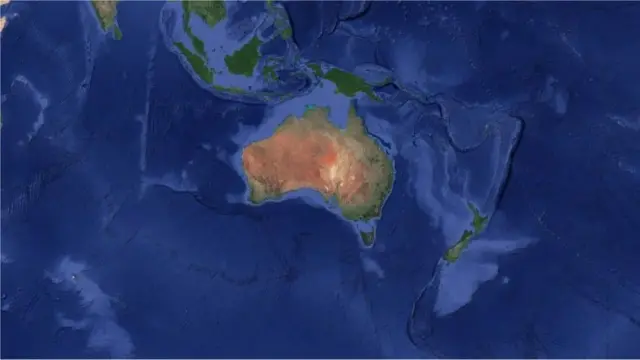
In 2017, a group of geologists announce dia discovery of Zealandia -Te Riu-a-Māui for Māori language.
A vast continent of 1.89 million sq miles (4.9 million sq km).
E dey around six times di size of Madagascar.
Though di world encyclopaedias, maps and search engines bin no won gree say continents pass seven.
Di team confidently tok say dis belief dey wrong. Na eight continents dey.
And di latest addition get record as di smallest, thinnest and youngest in di world.
Tori be say 94% of dis new continent na underwater, wit some handful islands, such as New Zealand.
E dey hidden for plain sight all along.
"Dis na example of how something very obvious fit take time to find," Andy Tulloch tok.
Tulloch na geologist for New Zealand Crown Research Institute GNS Science, wey dey part of di team wey discover Zealandia.
But this na just di beginning. Four years on and di continent still dey mysterious as ever.
Di secret dey beneath 6,560 ft (2km) of water. How e dey formed? Wetin dey live dia before?
And how long e don dey underwater?
You fit also read:
Discovery wey dey difficult
Wia dis foto come from, Alamy
In fact, Zealandia don always dey difficult to study.
More than a century after Tasman discover New Zealand in 1642, dem send British map-maker James Cook on scientific journey to di southern hemisphere.
Dem tell am make e observe di passing of Venus between di Earth and di Sun, so e go fit calculate how far di Sun be.
But e also carry one sealed envelop wey dem instruct am to open wen e don complete di first task. Top-secret mission to discover di southern continent also dey inside di envelop.
Cook sail over di southern continent before im reach New Zealand.
Scottish naturalist Sir James Hector na im gather di first real clues of Zealandia existence.
Na Hector attend journey to survey a series of island off di southern coast of New Zealand for 1895.
After im study dia geology, im conclude dat New Zealand na di "remaining part of mountain-chain wey form di crest of a great continental area wey reach di south and east, wey don dey submerged…".
Despite dis early breakthrough, di knowledge of Zealandia still never dey clear. and very little happun until di 1960s.
"Things dey happen slowly in dis field," Nick Mortimer tok. Mortimer na geologist for GNS Science who lead di 2017 study.
For 1960s, geologists bin agree on a definition of continent - dem say na geological area wit high elevation, wit different types of rocks and crust wey thick.
Dem say continent gass big."You no fit just be a tiny piece," Mortimer tok.
Dis definition bin give geologists something to work wit - if dem fit collect di evidence, dem fit prove say di eight continent dey real.
Still, di mission no move - to discover continent dey tricky and expensive, and Mortimer tok say e no dey urgent.
Then for 1995, di American geophysicist Bruce Luyendyk again describe di region as a continent and suggest say make dem call am Zealandia.
From there, Tulloch describes im discovery as an exponential curve.
Around di same time, di "United Nations Convention on the Law of the Sea" bin come into force and dem finally provide some serious motivation.
Dem tok say kontris fit extend their legal territories beyond their Exclusive Economic Zone, wey reach 200 nautical miles (370km) out from their coastlines, to claim dia "extended continental shelf" - with all di mineral riches and oil wey dey dia.
If New Zealand fit prove say dem dey part of a larger continent, dem fit increase dia territory by six times.
Suddenly abundance of funding begin show face for trips to survey di area, and evidence gradually build up. Every rock sample dem collect improve di case for Zealandia.
Di final improvement bin come from satellite data wey dem fit use track tiny variations for Earth's gravity across different parts of di crust to map di seafloor.
With this technology, Zealandia dey clearly visible as mass wey no get shape and almost dey large like Australia.
Wen dem finally unveil di continent to di world, e unlock one of di most sizeable maritime territories for di world.
"E dey cool," Mortimer tok, "If you think about am, every continent for di planet get different kontris inside, [but] na only three territories dey Zealandia."
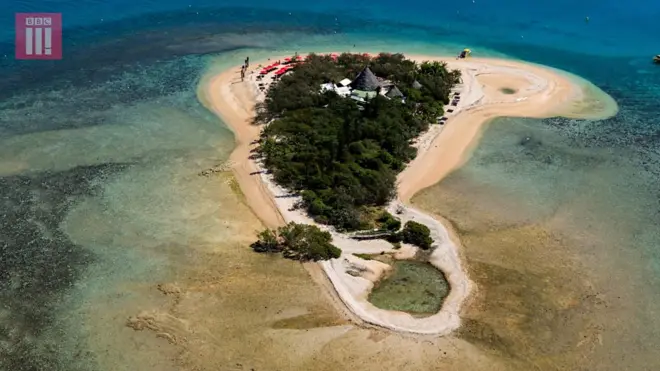
In addition to New Zealand, di continent surround di island of New Caledonia - a French colony wey dey famous for im lagoons - and di tiny Australian territories of Lord Howe Island and Ball's Pyramid.
One 18th-Century explorer say Ball's Pyramid "no dey larger dan a boat".
Stretching wey dey mysterious
Wia dis foto come from, Getty Images
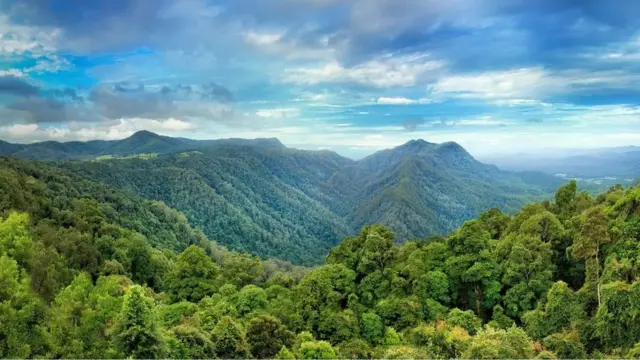
Zealandia bin dey originally part of the ancient supercontinent of Gondwana, wey dey formed 550 million years ago and combine all di land for di southern hemisphere.
E occupy one corner on di eastern side, where e dey beside several odas, including half of West Antarctica and all of eastern Australia.
Den around 105 million years ago, "sake of one process wey we no completely understand, Zealandia bin dey pulled away", Tulloch tok.
Continental crust dey be around 40km deep - e dey thicker dan oceanic crust, wey dey be around 10km.
As e dey strained, Zealandia end up to dey stretched so tey im crust now extend to 20km (12.4 miles) down.
Wia dis foto come from, GNS Science
Eventually, di continent bin sink - though no be to di level of normal oceanic crust - and disappear under di sea.
Despite say e dey thin and submerged, geologists know say Zealandia na continent sake of di kinds of rocks wey dem find dia.
Like granite, schist and limestone, continental crust dey made of of igneous, metamorphic and sedimentary rocks.
Ocean floor dey made of igneous ones such as basalt.
But many things still dey unknown. Di unusual origin of di eight continent make am interesting to geologists and e also dey impossible to understand.
For example, e no still dey clear how Zealandia manage to stay together and not separate into tiny micro-continents despite say e dey thin.
Anoda mystery na wen Zealandia end up underwater - and whether e don ever consist of dry land.
Di parts wey dey currently above sea level na ridges wey dey formed as di Pacific and Australian tectonics plates crumpled togeda.
Tulloch say opinion dey divided on weda Zealandia don always dey submerged apart from di few islands, or na dry land before.
Dis also make pipo ask say wetin dey live there before.
With im mild climate and 39 million-sq-mile (101 million-sq-km) range, Gondwana sef na home to many flora and fauna, including di first four-limbed land animals and later, an abundance of di largest wey ever live - di titanosaurs.
So, dem fit study di rocks of Zealandia wit dia preserved remains?
Debate about dinosaurs
Wia dis foto come from, Alamy
Fossilised land animals dey rare for di southern hemisphere, but dem find di remains of several for New Zealand for 1990s, including di rib bone of one giant.
Dem also find di remains of long-tailed, long-necked dinosaur (a sauropod), beaky herbivorous dinosaur (a hypsilophodont) and armoured dinosaur (an ankylosaur).
Den for 2006, di foot bone of a large carnivore, possibly a kind of allosaur, dey discovered for di Chatham Islands, about 500 miles (800km) east of di South Island.
Crucially, di fossils all date to after di continent of Zealandia split from Gondwana.
However, dis no mean say dinosaurs dey roam over di majority of Zealandia - dis islands fit get sanctuaries while di rest dey drowned, as e dey now.
"A long debate dey about dis, about weda e dey possible to have land animals witout continuous land - and weda witout am, dem fit don dey stuffed out," Rupert Sutherland tok.
Sutherland na professor of Geophysics and Tectonics at di Victoria University of Wellington.
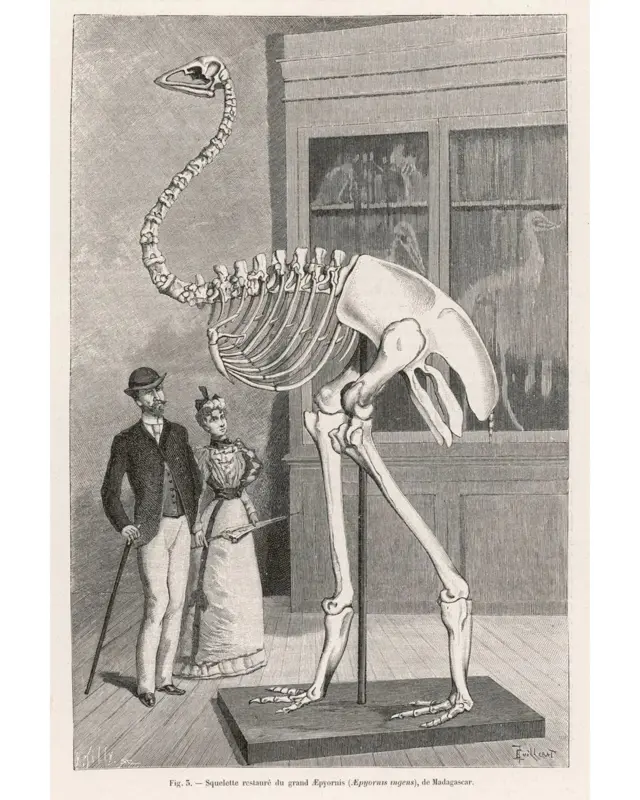
Di plot dey thick wit one of New Zealand weirdest and most beloved inhabitants, di kiwi - a dumpy, bird wey no fit fly and wey get feathers like hair.
Oddly, im closest relative no be Moa, wey dey part of di same group - di ratites - wey live on di same island until dem disappear 500 years ago, but di even-more giant elephant bird, wey bin stalk di forests of Madagascar until as recently as 800 years ago.
Di finding don lead scientists to believe say both birds evolve from a common ancestor wey live on Gondwana.
E take 130 million years to fully break up, but wen e happun, fragments dey left behind and e dey scattered across di globe, wey South America, Africa, Madagascar, Antarctica, Australia, the Arabian Peninsula, di Indian Subcontinent, and Zealandia.
Dis suggests say at least part of now-submerged Zealandia don remain above sea level di whole time. Except around 25 million years ago pipo believe say di entire continent - even di New Zealand - dey plunged underwater.
"Dem believe say all di plants and animals fit don dey colonised after," Sutherland tol. So wetin happun?
Wia dis foto come from, Alamy
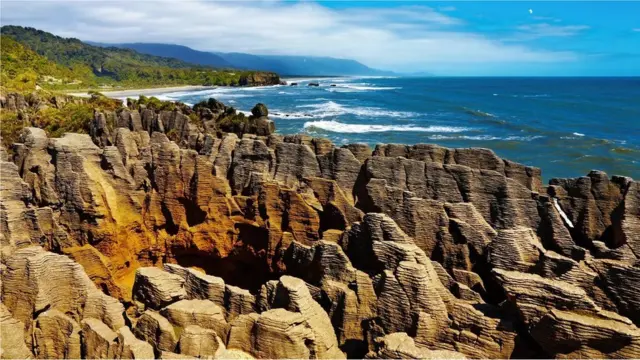
Though e no dey possible to collect fossils from di seafloor of Zealandia directly, scientists don dey plumb im depths by drilling.
"Actually di most helpful and distinctive fossils na di ones wey form for di shallow seas," Sutherland tok. "Because dem leave a record - zillions and zillions of tiny, tiny little fossils wey dey very distinctive dey dia."
In 2017, a team carry out di most extensive surveys for dat region so far, and dem drill more dan 4,101ft (1,250m) into the seabed for six different sites.
Di cores wey dem collect contain pollen from land plants and spores and shells of organisms wey live in warm, shallow seas.
"If you get water, wey dey only 10m (33ft) deep or something like dis, den good chance dey say land bin dey around as well," Sutherland tok.
Im explain say pollen and spores also hint at di possibility say Zealandia no dey as submerged as pipo think.
Wia dis foto come from, GNS Science
One (precise) twist
You fit find another mystery for Zealandia shape.
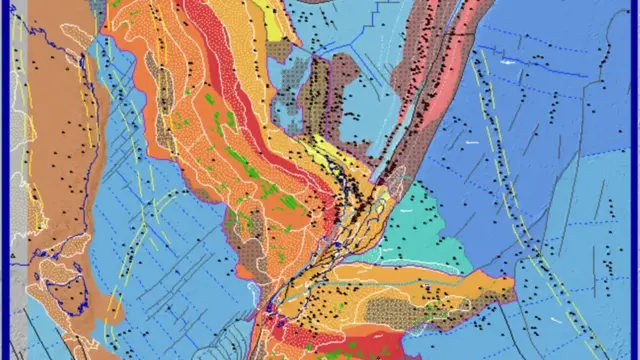
"If you look New Zealand geological map, two things dey wey really stand out," Sutherland tok. One of dis na Alpine Fault, a plate boundary wey run along di South Island and e dey so significant, you fit see am from space.
The second na di geology of New Zealand - and di one of di wider continent - dey oddly bent.
Both dey split in two by one horizontal line, and na where di Pacific and Australian tectonic plates meet.
For dis exact point, e be like someone don take di lower half and twist and am away, so dat di previously-continuous ribbons wey no longer line up go dey almost at right angles.
Easy explanation for dis na say di tectonic plates bin move and somehow deform dem out of shape. But how or wen dis ting happun never dey known.
"Various interpretations dey, but dis na quite a large unknown ting," Tulloch tok.
Sutherland tok say di continent dey unlikely to give up all im secrets anytime soon.
"E dey quite hard to make discoveries, wen everything na 2km (1.2 miles) underwater, and di layers wey you need to sample na 500m (1,640ft) beneath di seabed as well," he tok.
"E dey really challenging to go out and explore continent like dat. So, e just take a lot of time, money and effort to go out and use ships to survey regions."
If nothing else, di eighth continent for di world surely show say - nearly 400 years after Tasman search -plenty things still dey to discover.