Behind di glamour: Nigeria fashion industry dey face labour crisis
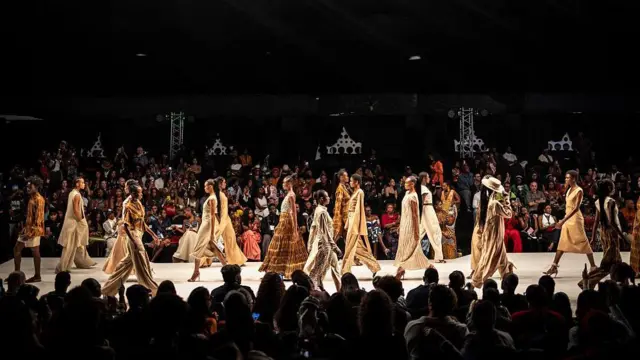
Wia dis foto come from, OLYMPIA DE MAISMONT/AFP via Getty Images
- Author, Todah Opeyemi
- Role, Journalist
- Reporting from, Lagos
- Read am in 7 mins
Models dey faint. Some dey climb fence to escape di confusion wey dey happun for casting.
One designer fit even comot from show afta dem catch am for wahala say models dey pay agency make dem showcase dem.
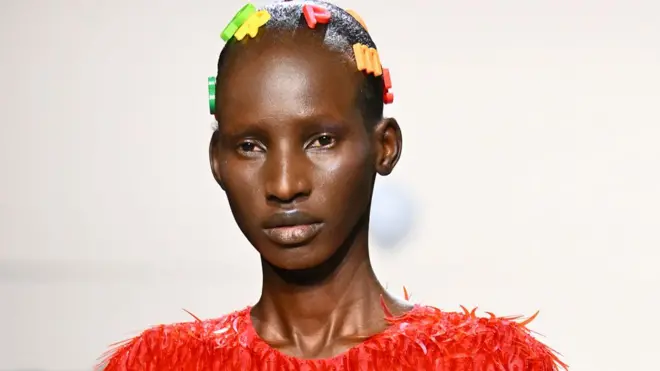
International celebrities dey show for fashion brand event, while national stars dey waka for main runway.
Lagos dey inside full season of art, design and fashion but behind all di fine fine tins of Lagos Fashion Week (LFW), Nigeria fashion industry dey face serious labour wahala.
Di Sub-Saharan fashion market dey estimated at $31 billion, and Nigeria carry about 15 percent around $4.7 billion according to Euromonitor report wey dem quote for industry documents.
Di modelling industry, wey na mostly women full am, dey attract plenty young pipo wey wan waka for LFW runway opportunity wey fit help dem build career and carry dem enta big fashion cities like Paris, London and New York.
Reports dey tok say pipo dey suffer exploitation, bad working condition, and money matter wey no clear.
All dis one don make many pipo dey question wetin really dey hold di industry ground.
Designer wahala
Samiat Salami move from United States go Nigeria for 2021 wit dream to create her own brand wey go celebrate century-old craftsmanship through hand-drawn batik prints.
"I move come Nigeria sake of say I wan start textile business," na wetin Salami, wey be founder of Oya Abeo tok. "Afta I don live away for many years, I really wan come back home. I see say sometin fine dey happun wey I no dey part of, and e pain me."
Now she tok say she dey inside industry wey to sabi di rules and politics important pass even talent, and most times she no dey sure how she go take waka inside am.
Afta she participate for Lagos Fashion Week Green Access program last year, Salami spend six months prepare for dis year show - 15-piece collection wey she say cost her between 3.5 million and 4 million naira ($3000).
But just few days bifor di event, dem remove her name from di lineup bicos of allegation say she gree make one agency pay her for models wey go waka her showcase.
Di agency tok say dia models miss LFW casting bicos dem travel go outside di kontri, but Salami tok say she bin tink say di money wey agency offer her na just "inconvenience fee."
"I feel scapegoated," Salami tell BBC. "E no even enta my head to confirm wit Lagos Fashion Week bicos I tink say na dem direct di agency come meet me."
"I no even take am serious for beginning," she tok, referring to di email tok wey she get wit di agency wey claim say LFW organizers direct dem to contact designers on dia own. When di wahala bust, she say e shock her.
"I just say, wetin be dis? Na joke be dis? I don realize say dem scam me. E even be like dem models sef don suffer. Dis one bad."
Agency wahala
Di whole controversy center around MHD Model Management and im founder, Enoch Raimi. Many models come out anonymously through Organisation for Models in Nigeria say dem dey ask make dem pay bifor dem go fit participate for Lagos Fashion Week.
Hannah Martin, wey work wit di agency for some months, also share her own tori of exploitation and threat.
She tok say afta dem pick her for one mandatory casting call, she decide to commot from di agency afta Enoch Raimi begin send her abusive messages.
Martin tok say Raimi don tell her bifor say she don get international placement — chance to model abroad — and even send her email to confirm am. But later dem remove her from di placement. "E say e go bring me down and make sure I no model again" she tell BBC.
"I dey cry… most times, you go see say dem no even ask model opinion bifor dem begin charge" she add.
When she later ask why payments delay and deductions plenty, Raimi vex and begin act hostile.
For phone interview wit BBC, Enoch Raimi defend imself but accept say e make mistakes.
For di designer payment matter, e tok say e just dey try secure spots for im models both off schedule and main LFW stage.
"Pipo don twist di issue like say I wan exploit public for Lagos Fashion Week. E no be so," e tok.
E deny say e neva ask models to pay and claim say e even dey pay for dia transport and training.
Raimi admit say e use wrong language sometimes "I no suppose mix emotion wit business. I still dey grow as agency. I make mistakes, but some no go ever repeat again."
Talking about Salami, Raimi tok say e sorry "I really sorry say all dis happun."
E tok say e mistakenly share screenshot of dia financial chats bicos e dey try defend imself from di pay-for-runway tok.
'Chaotic casting'
Dis year Lagos Fashion Week casting dey "chaotic," model and creative director Naomi Utere tok.
She attend but dem no pick her, later one designer directly recruit her.
"Di place wey dem use for casting too small," Utere tok.
"We all dey sweat. Eviribodi dey push. One girl climb fence escape bicos she no wan pass middle wia crowd full."
Anoda model, Amanda Basil, confirm di same tin "Models no dey comfortable; odas climb fence just to go house... pipo wey enter looking fine come out looking somehow."
Dem also complain say di all-black dress code plus cramped space make everytin worse. "We dey risk our life, time and energy to work we suppose dey get pay, no be exploitation" Basil add.
Industry wahala and crisis
Plenty models tell BBC say dem dey suffer poor pay, delay payment, and bad working condition.
Many dey work overnight wit injuries and no get health insurance.
Pay for Nigeria dey vary from small transport stipend to N300,000 ($168; £138) for big show.
LFW dey reportedly pay 100,000 to 50,000 naira ($56–$84; £46–£69) for whole week.
Meanwhile, for Paris or London, one single show fit give models thousands of dollars, while for oda African hubs like as South Africa and Kenya, high-profile bookings fit pass Nigerian model weekly income.
"Na di same show o, one person go collect just transport, anoda 100k, anoda 250k," Utere tok.
Basil add "Dis idea say models suppose collect small money need to stop. We be human beings wit bills to pay. Many pipo don quit sake of dis. If no be say I love am, I for don stop long time."
Even for young models wey dey live wit family or for university hostels, wey dem pay for accommodation yearly, week fashion pay no fit covers dia basic costs.
Dis gap show imbalance for Nigerian fashion industry, wia what many pipo dey consider international norms clash sharply wit local reality.
Labour law - part of a broader crisis
Bernice Asein, wey write "Fashion Law in Africa" and be founder of one fashion law institute, describe di situation as part of one bigger crisis.
"We get labour law crisis," Asein tok to BBC about Nigeria fashion industry, but she add say e reflect di wider labour situation and economic reality for di kontri. "Models dey react well well now bicos for years dem don dey overwork dem."
Asein dey support say industry make dem self-regulate through code of conduct, like the New York Fashion Workers Act under state labour law, wey, for example, require say payment must show within 46 days afta job complete and make higher rates dey for extra hours — tins wey plenty models for Nigeria dey tok say never solve bicos Nigerian Labour Law no address dem.
Di act still dey demand written contracts for all jobs, protection against unauthorised use of images, and safeguards to make sure fair treatment and pay transparency dey between models, agencies and brands.
Asein, wey be lawyer wey represent plenty models and dey help dem through bad contracts, tok say she dey always push for dem to speak up because na important tin for change. "I don see progress wey don happun internationally and we need to copy dat here to protect dem."
Fear and silence
Plenty models still dey fear to share dia experiences for public, dem dey fear say industry big pipo fit blacklist dem. Lagos Fashion Week na platform wey "plenty pipo dey desperate to waka for" sake say e add to dia portfolios.
"Pipo dey see am as prestige," one model tok, but ask make name no show. Di fear of losing opportunities make many keep quiet about exploitation.
Recent online activism don bring many issues come light, including critics say some designers dey ask for volunteer models and one documentary wey show discrimination and exploitation.
Moving forward
Even though dem drop her from Lagos Fashion Week, Salami still determined to show her collection alone, although she fear di extra cost as small brand.
"Too many pipo depend on me for dia income... since I show up here, my reality don bicom to provide income for pipo; dat one never disappear," she tok. "Dis collection come from deep place. E go pain me if nobodi see am."
Lagos Fashion Week organisers dem bin contact for comment but dem no reply BBC requests.