China security summit: Dis week na fresh start for anti-US alliance?
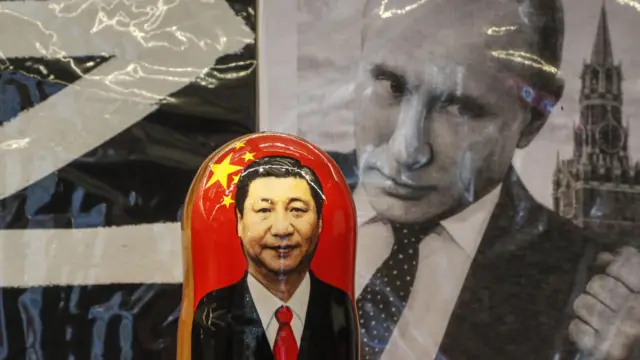
Wia dis foto come from, EPA/YURI KOCHETKOV
- Author, Alexey Kalmykov
- Role, BBC News Russian
- Published
- Read am in 8 mins
One month na veri long time for global politics.
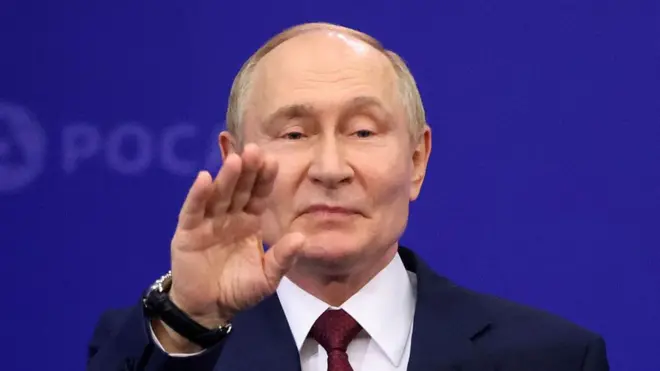
Vladimir Putin dey for China again, but difference dey now. For di first time since di invasion of Ukraine, di Russian president dey visit im main ally not as vassal of di Chinese President Xi Jinping, wey dey cornered by Western sanctions, but as world leader wey dey speak on equal terms wit di president of di United States - di world leading economic and military power and China main rival.
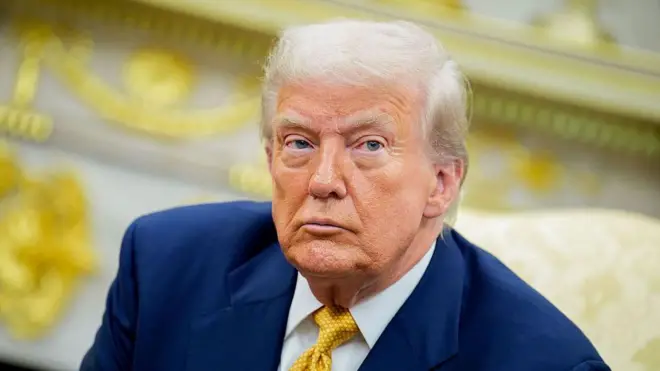
Dis visit to China go dey victorious for Putin afta im return from Alaska, wia Trump ceremoniously welcome di the Russian president on US soil and Putin bin persuade am to drop im demands not to bomb Ukraine and to abandon threats of new sanctions against Russia.
And for China, Putin welcoming party go happun - more dan dozen regional leaders go meet for di Chinese city of Tianjin for two-day summit of di Shanghai Cooperation Organisation (SCO).
Part of dis group go be di North Korean leader Kim Jong Un - no stranger to loud, anti-Western rhetoric - and di Indian Prime Minister Narendra Modi, relationship wit Beijing and Washington dey more complex.
But dat na just di beginning.
On Wednesday for Beijing, many of di leaders go attend di parade togeda to mark di 80th anniversary of di end of di Second World War and celebrate "di victory of di Chinese pipo for di War of Resistance against Japanese Aggression and di victory for di World Anti-Fascist War".
So di events for China dis week signal di strengthening of global anti-US alliance?
And na di Russia-India-China (RIC) bloc - one powerful group wey aim to counter-balance Western dominance for global affairs, but e don dey dormant for di past five years - re-awakening at di time wen trade war wit US President Donald Trump still dey hot?
Trump no fit make Putin and Xi quarrel
Putin unusually long visit to China dey intended to demonstrate to di West say di "boundless friendship" between Russia and China dey only grow stronger, and say US attempts to drive wedge between dem dey doomed to failure, some experts believe.
Even if Trump surrender Ukraine to Putin and lift sanction, Russia no go turn away from China, na so dem tok.
Analysts point to how den-US Secretary of State Henry Kissinger, under US President Richard Nixon, manage to pull China out from under Soviet influence for di 1970. But relationship between Beijing and Moscow don already tense. Tins don dey different now.
"By increasing trade pressure on China, di Trump administration go only strengthen di Russian-Chinese axis. Attempt to weaken ties between di two kontris and to carry out 'reverse Kissinger' neva produce tangible results," Pierre Andrieu, one expert on Chinese-Russian relations for di Asia Society Policy Institute and wey serve as French diplomat for Russia, Tajikistan and Moldova, tok.
"If di US strategy na to drive wedge between Moscow and Beijing by ending di war for Ukraine and lifting some sanctions on Russia, den Washington underestimate di depth and complexity of dis partnership," one Russian-Chinese relation write for one article for di Centre for European Policy Analysis.
Wia dis foto come from, Reuters
China don become di main buyer of Russian energy resources and di main supplier of cars and odas goods to Russia afta di departure of Western companies. But aggression against Ukraine don also strengthen di ideological bonds of Russian-Chinese friendship.
"Both kontris oppose Western liberalism and challenge American 'hegemony.' Both kontris get nuclear powers and permanent members of di United Nations Security Council. Dia strategic interest dey coincide," Andrieu tok.
"Economically, dem dey complement each oda. Russia na raw materials power, China na industrial and technological power," e write.
But e believe say di warm personal relations betwen dia leaders na key.
Putin and Xi get much in common. Dem be di same age (72), both grow up under Soviet-era communism, and edemdon dey for power for long time. Both of dem don build authoritarian verticals of power and dem no dey tolerate pipo wey no agree wit dem.
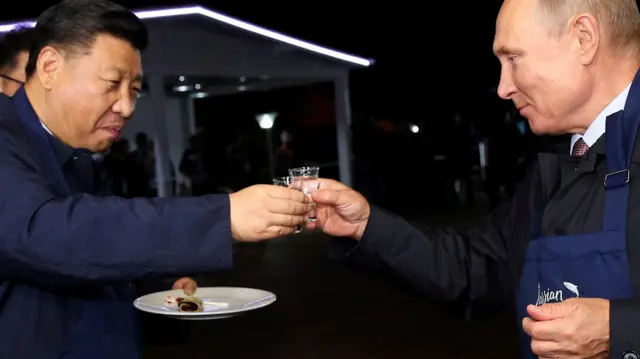
Just bifor di invasion of Ukraine for 2022, Putin sign one statement wit Xi on "friendship witout borders and cooperation witout no-go zones". Xi call Putin im "dear friend". E don meet am more dan any oda world leader, over 40 times.
But dis visit dey special.
China also dey benefit from keeping Putin on "short leash" and preventing am from turning to di West again, but China no want make Russia dey stronger, Patricia Kim, wey be expert on Chinese foreign policy and US-China relations for di Brookings Institution for Washington, tok.
"Di ideal outcome for Beijing na, Russia strong enough to stand up to di West, but weak enough to remain for China orbit," Kim tok.
"Russia na useful partner for China. E dey help Xi maintain stability both at home and for di entire Central Asian region," Andrieu tok. "E help Beijing mobilise support from di Global South and promote alternative to di Western model of world order."
Enter Modi
Wia dis foto come from, Pablo Porciuncula/AFP via Getty Images
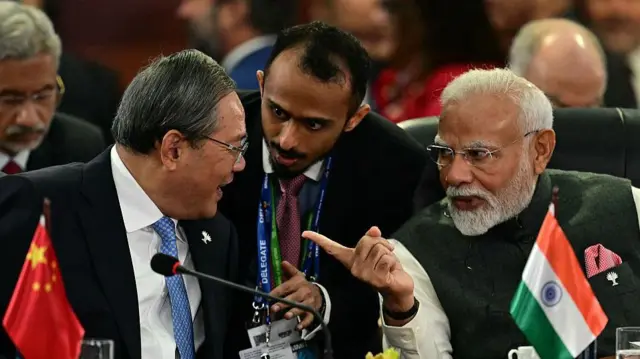
Di third member of di RIC triumvirate - India - get strong relationship wit both Beijing and Washington and e fit potentially end any hopes for revival of di bloc.
Dat Xi and Modi bin meet on di sidelines of di SCO for Tianjin - wey mark Modi first time for China in seven years - dey significantly big. Di two kontris don barely tok since 2020 border skirmishes between di two for di Galwan Valley.
But dark economic clouds on India horizon don change di realities on ground. Trump don impose tariffs on Indian goods as punishment for Delhi continued purchase of Russian oil, forcing former enemies closer togeda.
Xi tell Modi say make China and India be partners and not rival while Modi tok say dem "atmosphere of peace and stability" don dey between dem.
Both kontris no be only di most populous, dem also get di two of di biggest economies for di world.
Modi announce say di flights between India and China - wey dem suspend since di border fight over five years ago - go resume, witout providing timeline.
Xi tok say "both sides need to approach and handle our relationship from di strategic height and long-term perspective" and say "na di right choice for both sides to be friends".
Wetin e mean for di future of alliances?
Analysts tok say if di big RIC troika dey effectively revived - both Russia and China don tok say dem wan see wetin go happun - wit some of di world largest economies as dia members, e fit counter growing Washington influence, alongside oda alliances such as Brics group (wey dem create for 2006 between Brazil, Russia, India, China and South Africa).
However, India at least dey perform veri delicate balancing act, notwithstanding di economic realities of Trump tariffs. E go also need to come to in terms wit some profound trust issues wit China.
Sabi pipo tok say India dey keen to maintain independent foreign policy. Memories of di deadly border clash wit China still also dey fresh. And India dey worry about China close relationship wit dia old enemy Pakistan.
Wia dis foto come from, Reuters
Di optics of dis week though e dey hard to ignore.
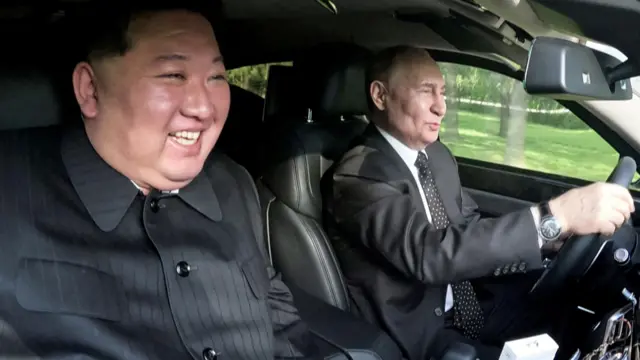
Putin and Kim dey among di 26 oda heads of state wey dem dey expect to attend di military parade for Beijing, along wit Iranian President Masoud Pezeshkian.
Di highly choreographed event go see tens of thousands of military personnel wey go march in formation through di historic Tiananmen Square, wit troops from 45 of di China military as well as war veterans.
"For di first time in history, di leaders of China, Russia, Iran and North Korea go gada for one place – at di military parade for Beijing on 3 September.
"Dis gathering go be di first summit of di 'axis of autocracies'?" Neil Thomas ask. Im be China expert for di Asia Society Policy Institute.
Dis union dey unlikely to last long, e tok, becos im participants get different goals and dem no trust each oda.
"But di presence of Putin, Pezeschkian and Kim underscore China role as di world leading authoritarian power," e tok.
So, maybe events dis week for China na powerful display, not necessarily of di role of alliances such as di SCO, di RIC and Brics to counter Washington - but rather di cementing of China position at di veri centre of any such alliances for di foreseeable future.
Additional reporting na from BBC Global Journalism and BBC News