US court say many of Trump global tariffs dey illegal
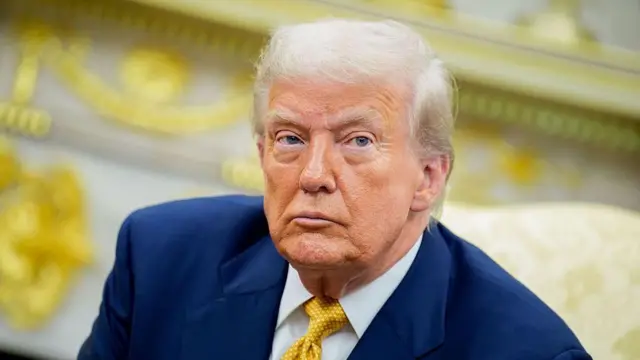
Wia dis foto come from, Getty Images
- Author, Max Matza & Anthony Zurcher
- Role, BBC News
- Published
- Read am in 4 mins
One US appeals court rule say most tariffs wey US President Donald Trump announce dey illegal, dis now don set up potential legal showdown wey fit overturn im foreign policy agenda.
Dis ruling go affect Trump "reciprocal" tariffs, wey im impose on most kontris around di world, as well as oda tariffs wey im give China, Mexico and Canada.
For decision wey end 7-4, di US Court of Appeals for di Federal Circuit reject Trump argument say di tariffs dey permitted under di emergency economic powers act, dem call dem "invalid as contrary to law".
Di ruling no go take effect until 14 October dis go give di administration time to ask Supreme Court to take up di case.
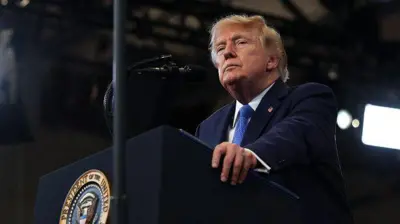
Trump criticise di appeal court and dia ruling for Truth Social, im say: "If di ruling dey allowed to stand, dis Decision go destroy di United States of America."
"Today a Highly Partisan Appeals Court incorrectly tell us to remove our Tariffs, but dem know say United States of America go win in di end," im write.
"If dem ever remove dis Tariffs, e go be total disaster for di kontri. E go make us financially weak, and we need to dey strong."
Trump bin use di International Emergency Economic Powers Act to justify di tariffs, di (IEEPA), give di president di power to act against "unusual and extraordinary" threats.
Trump bin declare national emergency on trade, im argue say di trade imbalance dey harmful to US national security. But di court rule say to impose tariffs no dey witin di president mandate, dem add say to set levies na "a core Congressional power".
For dia judgement, di US Court of Appeal for di Federal Circuit reject Trump argument say dem permit di tariffs under im emergency economic powers, dem call di levies "invalid as contrary to law".
Di 127-page ruling say di IEEPA "no mention tariffs (or any oda word wey get di same meaning wit tariff) e no even get tins wey show di process wey contain clear limits on di President power to impose tariffs".
So therefore, di power to impose taxes and tariffs go kotinu to belong to Congress, na wetin di court rule, and dem say di IEEPA no fit override dis.
Di court write say e dey unlikely say wen Congress bin pass di law for 1977, dem bin plan na to "depart from dia past practice and give di President unlimited authority to impose tariffs".
"Whenever Congress wan give di President di authority to impose tariffs, dem dey make am clear, dem go either use terms like tariff and duty, or through an overall structure we go make am clear say Congress dey refer to tariffs," na wetin di judges write.
Di ruling dey come in response to two lawsuits wey small businesses and coalition of US states file.
Dem file di lawsuits afta Trump executive orders for April, wen im bin impose baseline 10% tariff on almost every kontri for di world, as well as "reciprocal" tariffs on dozens of kontris. Trump bin declare di date as America "liberation day" from unfair trade policies.
For May, di New York-based Court of International Trade bin declare say di tariffs dey unlawful. Dat decision bin dey on hold during di appeal process.
In addition to those tariffs, Friday ruling also strike out tariffs on Canada, Mexico and China, wey Trump bin argue say dey necessary to stop di importation of drugs.
However, di decision no apply to oda tariffs, like those wey dem impose on steel and aluminium, wey come in under a different presidential authority.
Ahead of di ruling, lawyers for White House argue say cancelling di tariffs go lead to di 1929-style financial collapse, stock market crash wey bin lead to di Great Depression.
"To suddenly revoke di President tariff authority under IEEPA go be bad consequences for our national security, foreign policy, and economy," dem write for letter.
"Di President believe say our kontri no fit pay back di trillions of dollars wey oda kontris don already commit to pay, wey fit lead to financial wahala."
Di ruling also raise kwesions about deals wey some nations agree wit US for reduced tariffs rates.