CCEA GCSE Biology (Single Science) past papers and mark schemes
Here you can find CCEA past papers for GCSE Biology (Single Science). Use the links below to download question papers and mark schemes (which contain the answers).
If you’re unsure whether you need Foundation Tier or Higher Tier papers, consult your teacher.
CCEA past papers and mark schemes are the intellectual property of CCEA and are copyright © CCEA. All CCEA material is linked to with their permission.
Unit 1
Cells, Living Processes and Biodiversity
Foundation Tier
Summer 2025 - Past paper | Mark scheme
Summer 2024 - Past paper | Mark scheme
Summer 2023 - Past paper | Mark scheme
Higher Tier
Summer 2025 - Past paper | Mark scheme
Summer 2024 - Past paper | Mark scheme
Summer 2023 - Past paper | Mark scheme
Unit 2
Body Systems, Genetics, Microorganisms and Health
Foundation Tier
Summer 2025 - Past paper | Mark scheme
Summer 2024 - Past paper | Mark scheme
Summer 2023 - Past paper | Mark scheme
Higher Tier
Summer 2025 - Past paper | Mark scheme
Summer 2024 - Past paper | Mark scheme
Summer 2023 - Past paper | Mark scheme
Unit 3
Practical Skills (Booklet A)
Foundation Tier
Summer 2025 - Past paper | Mark scheme
Summer 2024 - Past paper | Mark scheme
Summer 2023 - Past paper | Mark scheme
Higher Tier
Summer 2025 - Past paper | Mark scheme
Summer 2024 - Past paper | Mark scheme
Summer 2023 - Past paper | Mark scheme
Unit 3
Practical Skills (Booklet B)
Foundation Tier
Summer 2025 - Past paper | Mark scheme
Summer 2024 - Past paper | Mark scheme
Summer 2023 - Past paper | Mark scheme
Higher Tier
Summer 2025 - Past paper | Mark scheme
Summer 2024 - Past paper | Mark scheme
Summer 2023 - Past paper | Mark scheme
More CCEA mark schemes
You can find more biology past papers and mark schemes on the CCEA website.
Papers going back as far as 2018 are available there, in both standard and modified versions.
Five top tips for your biology revision

1. Understand command words
Words like describe, explain, compare or evaluate each have a specific meaning in the mark scheme. Misunderstanding them is one of the top reasons students lose marks.
Quick Fix: Make a glossary of command words with clear definitions. Practise matching them to past paper questions to build confidence.
2. Know your practicals
Many students are unprepared for practical-based questions. You need to know apparatus, variables, method, expected results, and improvements for all prescribed practicals.
Quick Fix: Use revision videos, CCEA worksheets or BBC Bitesize revision materials to review every prescribed practical.
3. Practise past papers with the mark scheme
It’s not enough just to complete past papers; you must mark them against the official mark scheme to understand how marks are awarded.
Quick Fix: After each paper, check your answers with the CCEA mark scheme. Identify where marks were lost and why, so you can improve next time.
4. Label diagrams precisely
Whether it's a heart, leaf or microscope, diagrams must be labelled accurately to earn marks.
Quick Fix: Practise drawing and labelling diagrams from memory. Use specific terms (e.g., pulmonary artery instead of just artery).
5. Learn from your mistakes (and everyone else's)
Common errors like confusing photosynthesis with respiration or mitosis with meiosis show up in every exam series.
Quick Fix: Create a Mistake Tracker in your notes. After each paper, record and review your errors.
Five top tips for your biology exams

1. Answer what the question actually asks
Too many students ignore details in the question or write irrelevant facts.
Quick Fix: Read the whole question, including all background info, diagrams and tables, then underline key terms and instructions. Tailor your answer to exactly what’s asked.
2. Use scientific language to earn the QWC mark
To get the Quality of Written Communication (QWC) six marks in longer questions, you must use accurate terminology in well structured sentences.
Quick Fix: Aim for at least three clear, punctuated, and grammatically correct sentences using accurate biology terms. Avoid bullet points.
3. Show all working in calculations
Even if your final answer is wrong, you can earn marks for correct working out.
Quick Fix: Always write the formula, substitute values, include units, and give a final answer to the correct number of decimal places or significant figures.
4. Describe trends clearly and comparatively
When interpreting graphs or data, be specific - vague phrases like "it goes up" won't earn marks.
Quick Fix: Mention both variables. For example: "As temperature increases, enzyme activity increases up to 40°C, then decreases". Use comparative words and phrases like more than, faster, or less efficient.
5. Manage your time like a pro
Students can run out of time, leaving questions completely unanswered. For six-mark questions in particular, that can be a huge loss.
Quick Fix: Do timed past papers under exam conditions and focus on completing every question.
Revise specific biology topics

If practising with past papers has highlighted a particular area you need to improve, then further help is at hand.
You can go straight to the most relevant Bitesize study guide for CCEA GCSE Biology (Single Science) and refresh your knowledge.
All topics are covered: cells, living processes, biodiversity, body systems, genetics and health, diseases and micro-organisms. There is also help and advice around the practical skills required for investigations and experiments.
Follow the links to the topic of your choice, where you'll find easy-to-understand revision materials, including videos, diagrams and quick quizzes.
Cells
Microscopy, size and magnification | Cells and specialisation | Difussion
Living Processes
Photosynthesis and plants | Nutrition and food tests | Enzymes and digestion | The respiratory system, breathing and respiration | The nervous system | Hormones
Biodiversity
Fieldwork and competition | Ecological relationships and energy flow | The carbon cycle and decomposition | Global warming, human activity and biodiversity | The nitrogen cycle, minerals and eutrophication
Body Systems
Osmosis and plant transport | The circulatory system | Reproduction, fertility and contraception
Genetics
Chromosomes, genes and DNA | Cell division | Genetic diagrams and terminology | X and Y chromosomes and genetic screening | Genetic engineering | Variation and natural selection
Health, Diseases and Microorganisms
Communicable diseases | Aseptic techniques | Defence mechanisms | Non-communicable diseases
Practical Skills
Planning an investigation | Carrying out an experiment | Analysing experimental data | Drawing conclusions from an experiment
More GCSE Biology questions

There are plenty more biology questions to tackle with our Bitesize quizzes.
You can have a go at our quick-fire ten question GCSE Biology quiz or practise with 50 exam-style GCSE Biology questions.
You can also select which topic you want to focus on in this quiz based on GCSE Biology past papers - choose from questions on cell biology, organisation, infection and response, photosynthesis and respiration, homeostasis and response, inheritance, variation and evolution, and ecology.
Where can I get more help with my biology revision?
Explore more biology resources with the full range of help from Bitesize.
Biology - CCEA
Pinpoint areas to revise from the full list of CCEA GCSE Biology topics.
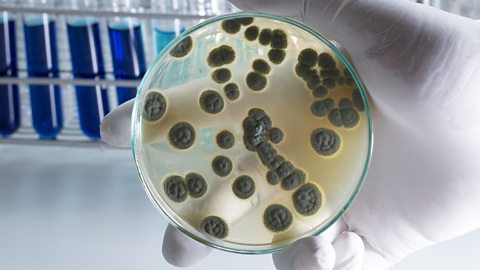
Biology revision resources
Get ready for your exams with quizzes, flashcards, podcasts and more.
Support - exams and revision
Handy tips and advice for keeping on top of your studies and revision.

More on Exam practice
Find out more by working through a topic
- count2 of 4
- count3 of 4

- count4 of 4