What can conclusions tell us about an investigation?
A conclusion identifies what has been learned from the investigation and may agree or disagree with the hypothesis made during planning.
Reliability

For data to be considered reliable, repeats must be carried out.
Repeating a scientific investigation makes it more reliable.
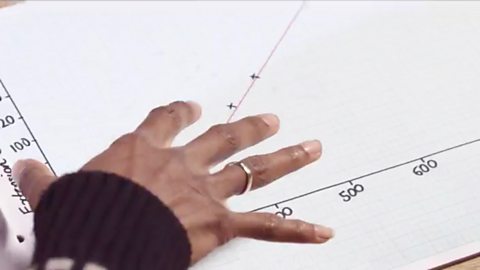
When analysing a set of results or graph, an anomalous result can be identified as one that does not follow the trend or lie on the line of best fit.
Once identified, When something is unexpected, or deviates from what is considered normal under those circumstances. can be removed and repeated.
Anomalous results can occur due to:
- human error
- an inadequately controlled variable
- the use of inappropriate measuring equipment
It is important to address anomalous results as they can make a conclusion unreliable.
Develop arguments and explanations
Scientific arguments are based on evidence gathered during an investigation.
Evidence can be used to produce an explanation.
Data often allows more than one possible explanation. Different scientists can have different explanations about the same evidence collected.
Quiz time!
Watch: Practical skills - evaluating
More on Practical skills
Find out more by working through a topic
- count1 of 4

- count2 of 4

- count3 of 4