What are cells?
All living things are made up of tiny, microscopic units which we call cells.
What are animal cells made up of?
Animal cells are made up of many different elements:
| Structure | Function |
|---|---|
| Nucleus | Control centre of the cell. It contains the cell’s genetic information arranged in chromosomes. |
| Chromosomes | Threadlike structure found in the nucleus. Made of DNA which contains the genetic information of the cell. |
| Cytoplasm | Chemical reactions take place here. |
| Mitochondria | Site of cell respiration. Very abundant in cells that need a lot of energy (eg muscle cells). |
| Cell membrane | A selectively permeable boundary surrounding the cell which allows some substances to enter and leave the cell while preventing others. |
| Nuclear membrane | Surrounds nucleus. |
Plant cells
Plant cells contain all of the elements which make up animal cells, but they also include:
| Structure | Function |
|---|---|
| Cellulose cell wall | A rigid structure outside the cell membrane that provides support. |
| Large permanent vacuole | Contains cell sap and when full pushes the cell membrane against the cell wall, providing support. |
| Chloroplasts | Contain chlorophyll, a green pigment that traps light for photosynthesis. |
Stem cells
Stem cells are simple, unspecialised cells found in animals and plants that have the ability to divide to form cells of the same type. They can also differentiate into a variety of specialised cells.
Narrator: We're all very complex organisms, made up of lots of different types of cells carrying out different jobs in our bodies; such as nerve cells, blood cells, fat cells and muscle cells.
So, where do they all come from? Each one of us starts off as a single cell when an egg and a sperm join together. This then divides by mitosis to form two identical cells, and they just keep on dividing to form a hollow ball of 200–300 tiny cells.
Now – the clever bit. The cells on the inside layer of this very early embryo can make all of the cell types needed in your body. They're called stem cells.
The stem cells continue to divide by mitosis, and so the embryo grows. They also start to differentiate,to become specialised for different purposes. For example, red blood cells look very different from nerve cells, but they both start out as embryonic stem cells.
Adults don't have any embryonic stem cells, but they do still have stem cells – they're essential for replacing or repairing normal cells which become damaged, or worn out. But the adult stem cells are more limited in the types of cell they can make. For example, bone marrow stem cells only form different types of blood cells.
Plants have stem cells too. They're found at the meristems, the growing tips of the roots and the shoots. The big difference is that the stem cells in adult plants can still make every type of plant cell. Each one has the potential to form a whole new plant!
Unsurprisingly, people want to make use of these amazing cells. Plant stem cells can be used to make clones, identical copies of the parent plant. That's massively useful for lots of things, like producing orchids and other house plants quickly and cheaply, conserving endangered species, or making clones of plants that have been genetically modified to deal with environmental stresses.
Using plant stem cells is one thing. Using human stem cells in medicine is quite another. Scientists have found ways to grow embryonic stem cells in the lab, and are trying to use them to cure conditions such as diabetes (by replacing the insulin-producing cells in the pancreas), or enable people paralysed by spinal injuries to walk again by regrowing spinal nerves.
The clinical challenge is to encourage the embryonic stem cells to develop into the type of cells we need, without them growing into what we don't want.
It's ethically tricky too, because the stem cells come from human embryos.
Adult stem cells offer another possible route. Scientists have been using them for years in bone marrow transplants. And they are now investigating different types of adult stem cells, and how they might control the way they develop.
After years of research, scientists seem to be on the brink of success with a number of stem cell treatments which could change medicine forever.
Watch this space!
Stem cells can be harvested from embryonic umbilical cord or adult bone marrow.
Embryonic stem cells can form a full range of cell types but at an early stage most adult stem cells will have changed permanently into specialised cells, meaning they can’t specialise into anything else.
It is possible to collect stem cells from bone marrow, however these stem cells only form a limited range of cell types (blood cells).
In plants, stem cells can be found in the The tip or apex of a shoot or root, ie, the very top part of a plant structure where active cell division occurs. growing points, or A plant tissue made of undifferentiated cells that can divide and differentiate into specialised plant tissues and organs. Meristems are important for plant repair and growth., at the end of shoots and roots.
The cells produced here are able to divide until they are in their final position in the root, stem or leaf.
Even then, their specialisation can be reversed under certain conditions.
This unique property means scientists are able to produce large numbers of genetically identical plants in a very short period of time by cloning.
Bacterial cells
Bacteria are single-celled organisms.
Key points to note when comparing and contrasting the structure of bacterial cells with animal and plant cells are that they:
Do not contain a nucleus
DNA is a circular chromosome that floats in the cytoplasm
Have a cell membrane
Have cytoplasm
Have a non-cellulose cell wall
Have plasmids - rings of DNA floating in the cytoplasm
What is specialisation?
Organisms can be:
Single-celled - where all life processes are carried out by one cell.
Multi-celled - where cells differentiate and become specialised to carry out a particular function (eg red blood cells carry oxygen).
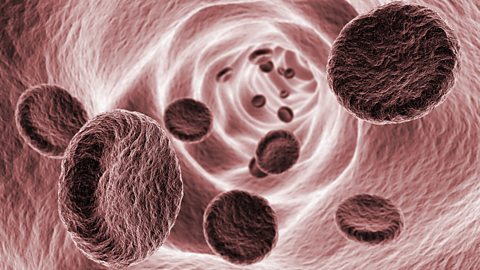
Specialised cells are organised. There are different levels of organisation:
Cells with the same structure and function are known as tissue (eg muscle tissue).
Several types of tissue that carry out a particular function is an organ (eg the heart organ contains muscle and nerve tissue).
Organs that work together to carry out a particular function are known as an organ system (eg the circulatory system).
Test your knowledge
Magnification of cells activity
Play this game to see what different cells look like through different microscopes.
Game - onion cells
Play an Atomic Labs activity to look at onion cells under a microscope.
You can also play the full game
More on Cells
Find out more by working through a topic
- count3 of 3

- count1 of 3