Is Covid-19 airborne? Air conditioning and coronavirus plus wetin WHO tok and why e dey important

Wia dis foto come from, Getty Images
Until recently, di World Health Organization (WHO) don consider say contact wit surfaces wey dey infected wit coronavirus na di only way to catch di disease, since na wetin dia research show be dis.
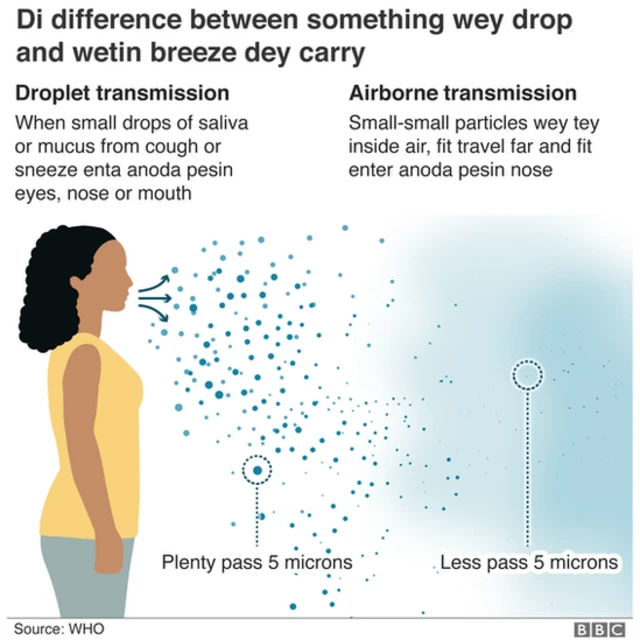
Dis na when Covid-19 follow small-small drops wey comot from pesin mouth when dem cough or sneeze.
Dis na di reason why WHO officials torchlight handwashing as di main way to prevent Covid-19.
But now, dem say dem realise say 'airborne transmission' na something wey fit happun.
Dis one mean say coronavirus fit spread through small particles wey dey comot from pesin mouth.
If dem confam di evidence, dis go affect how pipo package demsef to avoid infection inside place like house, building etc.
Wetin be airborne transmission?
Airborne transmission dey happen wen pesin draw air wey get particles of virus or bacteria carried inside nose or mouth.
Dis particles go don hang for air tey and because dem small well-well, e fit spread.



End of Di one wey oda users dey read well well
Example of airborne diseases na tuberculosis, flu and pneumonia.
How long e fit stay for air?
Studies don show say coronavirus wey dem spray for air fit dey alive for at least three hours.
But scientists say dis experiment na for inside laboratory, and e dey different from real life.
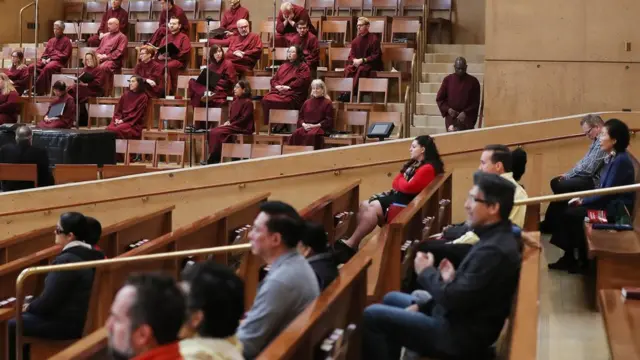
In di US city of Mount Vernon for Washington, dem suspect say just one infect at least 45 others, from just singing wey dem do todega as choir members.
Some of those wey catch bin no break any social distancing rules.
Wia dis foto come from, Getty Images
Wetin make pesin do now?
Di way disease dey spread na im dey determine di method to take stop am.
Currently, WHO advice for Covid-19 na to wash hands with warm water and soap for 20 seconds, and do social distancing.
But some scientists now dey even though dis method dey good, e no go reach to stop airborne transmission.
So far di WHO never tok anything join dia current advice but dem dey torchlight di evidence.
If dem confam am, official advice fit change to ask compulsory face mask, especially for bars, restaurants and public transport.
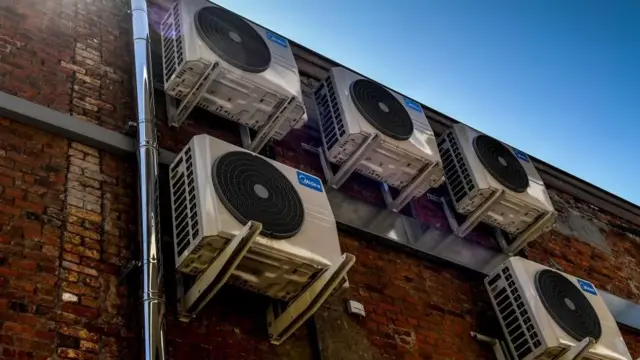
Even places wey dey get air conditioner fit follow.
Wia dis foto come from, Getty Images
Wetin make WHO reconsider im guidelines?
Recently 239 scientists from 32 kontris publish open letter to WHO so as for dem to torchlight airborne transmission wey dem say dey possible.
"Dis no be attack on WHO. Nascientific debate, but we feel say we need to go public because dem no gree hear di evidence afta plenty tok wit dem," tok Jose Jimenez, sabi pesin for University of Colorado wey follow sign di paper.
WHO adviser, Dr. David Heymann, react say dem dey expect solid results from more research before dem torchlight new strategy to counter di virus.