Ukraine war: World dey face 'dark hour', Biden tells Quad Summit
Wia dis foto come from, Getty Images
- Author, Zubaidah Abdul Jalil & Tessa Wong
- Role, BBC News
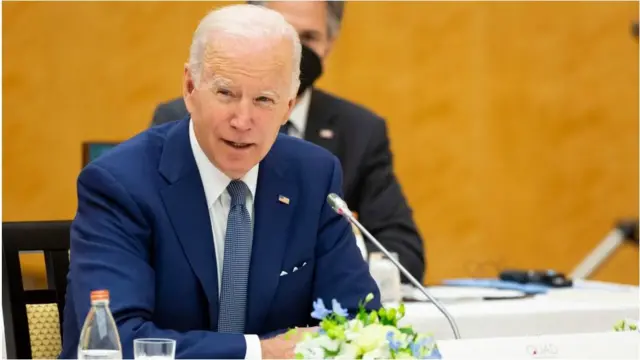
Di world dey "navigate a dark hour in di history wey we share togeda" sake of Russia invasion of Ukraine, US President Joe Biden tell key Asian allies.
Di war don become a "global issue" showing di importance of defending international order, im tok.
Japanese PM Fumio Kishida also tok say make similar invasion no happun for Asia.
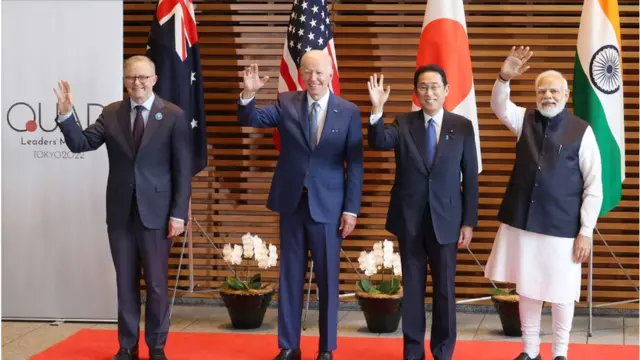
Mr Biden dey meet wit leaders of Japan, Australia and India for Tokyo for im first visit to Asia as president.
Di four kontris dey known collectively as di Quad dey discuss security and economic concerns including China's growing influence for di region - and difference sake of Russia invasion.
Mr Biden comments dey come a day afta im warn China say dem dey "flirt wit danger" sake of Taiwan, and vow to protect Taiwan with military if China attack - and dis one go contradict US policy on di issue.
Later, di day bin dey interrupted by reports say Russian and Chinese warplanes don approach Japanese airspace as part of a military patrol, wey prompt Tokyo to announce say dem don scramble jets in response.
Mr Kishida tell a news conference say planning di incident on di day of di summit dey "provocative".
Russian official tok say di flight ova di Sea of Japan and East China Sea dey part of an annual military exercise.
For im opening remarks for Tuesday summit, Mr Biden tok say dia meeting na about "democracies versus autocracies, and we gass make sure say we deliver".
Im tok say di Ukraine war "go affect all parts of di world" as Russia blocking Ukraine grain exports don cause global food crisis.
Mr Biden promise say US go work wit allies to lead di global response, and im reiterate dia commitment to defend international order and sovereignty "no mata where dem violate am in di world" and remain a "strong enduring partner" in di Indo-Pacific region.
Afta di meeting, Mr Kishida tell reporters say all di four kontris "including India" agree on di importance of of di rule of law, sovereignty and territorial integrity; and tok say "unilateral attempts to change di status quo by force no go dey tolerated".
India na di only Quad member so far wey don refuse to criticise Russia directly for dia invasion of Ukraine.
Di Quad nations announce a new maritime monitoring initiative wey dey expected to step up surveillance of Chinese activity for di region, along wit a plan to spend at least $50bn (£40bn) on infrastructure projects and investment over di next five years.
Wetin be Quad - and why be say China na concern?
Na Quadrilateral Security Dialogue e be before. Di Quad start as a loose grouping of countries wey come togeda to provide humanitarian and disaster assistance afta di 2004 Indian Ocean tsunami. Di group bin no dey active again before dem bring am alive again in 2017.
Wia dis foto come from, Getty Images
However, since den, di top leaders don gada for di fourth time - dem don already meet once for Washington last September and two times online - in less dan two years.
Analysts tok say di steady decline in di bilateral ties di Quad nations get wit China in di past few years don give di group more inspiration.
Mounting discomfort don dey sake of wetin China dey do for di region. Dem get maritime dispute with several kontris and a land boundary conflict wit India.
Beijing's heavy investment dey strengthen dia navy, and dia recent security pact wit di Solomon Islands don cause fears for Australia, while Japan don become dey dey careful of wetin dem call routine "incursions" from di Chinese navy inside dia water.
On Monday, Mr Biden unveil di Indo-Pacific Economic Framework for Prosperity (IPEF), a US-led trade pact wey aim to promote regional growth wey include 13 kontris, mostly for Asia.
US Commerce Secretary Gina Raimondo tok say dem go provid kontris "an alternative to China's approach". Official tok say dem go set standards in di areas of trade, supply chains, clean energy and infrastructure, and tax and anti-corruption.
Di IPEF don dey widely seen as a way for di US to re-engage wit di Indo-Pacific afta former US President Donald Trump suddenly withdraw from di Trans Pacific Partnership - a regional trade pact - in 2017.

Di Quad: Di basics
- Who dey inside di Quad? Di Quadrilateral Security Dialogue bring US, Japan, Australia and India togeda. E start as a loose grouping to provide aid afta 2004 Indian Ocean tsunami and dem relaunch am in 2017.
- Wetin be dia aims? Wit dia focus on di Indo-Pacific, di Quad say dem back di free and open, rules-based order - dia unstated goal na to contain China for dia backyard. Member nations' ties wit China don go down in recent years.
- Wetin dey at stake? Di US gass persuade dia allies say dem dey committed to a region seen as key to global security and prosperity. Di group dey united in dia concern sake of China's rise but dem no gree on oda issues. China tok say di region gass beware of what dem calls di "Asian Nato".