Mangoes dey good for diabetes? Study challenge common beliefs wey no be true
Wia dis foto come from, Mansi Thapliyal
As di summer season dey descend on India, one of di most common questions one prominent Mumbai-based diabetologist dey hear from im patients na, "I fit eat mangoes?"
“Mangoes, wit dia rich sweetness and diverse varieties, na staple fruit of Indian summers, and e dey understandable say many pipo go wan indulge,” na so Rahul Baxi tok.
However, dis simple question, e say get many beliefs wey no be true – ranging from di belief say mangoes suppose dey strictly avoided, to di opposite extreme wia some believe say eating mangoes in excess fit “reverse diabetes”.
Di reality dey somwia in between, but di confusion no stop wit mango season. "In fact, many patients dey return for follow-up appointments afta mango season, often wit increased blood sugar, and sometimes wetin cause am fit simply be eating many of dis beloved fruit," Dr. Baxi tok.
Two new Indian clinical trials dey try to overturn conventional wisdom about diet, suggesting say controlled consumption of mango instead of carbohydrates (in di form of bread) fit actually improve blood sugar and metabolic health in pipo wit type 2 diabetes.

Wia dis foto come from, HINDUSTAN TIMES VIA GETTY IMAGES
Type 1 diabetes occur wen di pancreas dey produce little or no insulin, while in type 2 diabetes di body dey become resistant to di effects of insulin.
Type 2 diabetes account for more dan 90% of cases worldwide, according to di International Diabetes Federation (IDF). Na di eighth leading cause of morbidity worldwide and e dey expected to rank second by 2050. Although e dey poorly understood, e dey strongly linked to obesity, age, ethnicity, and family history.
For India, estimated 77 million adults get type 2 diabetes, while nearly 25 million dey prediabetic and at high risk of developing di disease, according to di World Health Organization.



End of Di one wey oda users dey read well well
Yet despite all dis challenges, new discoveries dey offer surprising glimmer of hope, especially for mango lovers.
One pilot study, wey dey come for di European Journal of Clinical Nutrition and wey involve 95 participants, find out say three popular Indian mango varieties—Safeda, Dasheri, and Langra— produce similar or lower blood sugar responses dan white bread afta a two-hour blood sugar test. (Glycemic response refer to how quickly and how much food dey increase blood sugar afta ingestion.)
A three-day continuous blood glucose monitoring study of pipo wit and witout type 2 diabetes show say, in diabetic participants, post-meal blood glucose fluctuations bin dey significantly lower afta dem eat mango. Dis low blood glucose fluctuation fit dey beneficial to di body in di long term, di researchers tok.
"Mangoes na one much-loved fruit wey don dey criticized for di possible effects on glucose and weight gain,"na so Dr. Sugandha Kehar, lead author of both studies tok.
"Dis studies show say as part of prescribed diets, mango consumption no dey harmful to blood sugar levels and fit even dey beneficial."
A second eight-week randomised trial wey dem publish for di Journal of Diabetes & Metabolic Disorders—wey dem conduct for Fortis C-DOC for Delhi wit funding from di Indian Council of Medical Research—reinforce dis findings.
Thirty-five adults wit type 2 diabetes wey replace dia breakfast bread wit 250g of mango see improvements in dia fasting blood sugar, hemoglobin A1C (HbA1c) levels, wey dey measure average blood sugar levels, insulin resistance, weight, waist circumference, and HDL cholesterol levels. Dis markers na key indicators of diabetes control and overall metabolic health.
"We don demonstrate for di first time di benefits of small doses of mangoes instead of carbohydrates (bread) at breakfast in two detailed studies, putting to rest all speculation regarding di adverse metabolic effects of di consumption," na so Professor Anoop Misra, lead author and leader of di study explain.
“But di key na moderation and clinical supervision – dis no be license for unlimited mango feasts.”
Wia dis foto come from, Bloomberg via Getty Images
I ask Professor Misra wetin e mean to eat mangoes in moderation.
"If your daily limit na 1,600 calories, all calories from mango suppose dey included in dat total, not in addition. A 250g mango—about one small fruit—contains about 180 calories. As in di study, you go need to replace di same amount of carbohydrates wit mango to get di same results," e explain.
Dr. Baxi say e tell im patients somtin similar.
"If glucose levels dey under control, I go allow and even encourage my patients to enjoy mangoes in limited amounts—about half a serving wey go provide 15g of carbohydrates—once or twice a day."
Dr. Baxi advise im patients to control dia portions: dem suppose eat mangoes between meals, not as dessert. Pair dem wit protein or fibre, and avoid to combine dem wit oda carbohydrates or sugars, such as juices and milkshakes.
Beyond di metabolic impact, mango occupy a much larger place for Indian life – fruit wey dey open doors both literally and figuratively, as e carry cultural, social and even diplomatic significance.
"Mango diplomacy" na familiar phrase across di subcontinent, wia carefully chosen crates of fruit fit facilitate political agreements, strengthen alliances or ease tense negotiations.

Wia dis foto come from, AFP via Getty Images Image
Mango festivals dey spring up for Indian cities, to celebrate di fruit cultural and economic importance.
Dis fruit na both a beloved treat and a quietly powerful social currency. “Most Indians get favourite mango, and regional loyalties for long don fuel heated debates over di ranking,” na so Pushpesh Pant, one Delhi-based historian and food expert, tok.
“Good mangoes no be just for eating; dem be ornaments, like jewellery. Di rules of di mango dey push di best produce to dose wey dey willing to pay di premium price,” na so Sopan Joshi write for Mangifera indica: A Biography of the Mango, a masterful account of di fruit and im admirers.
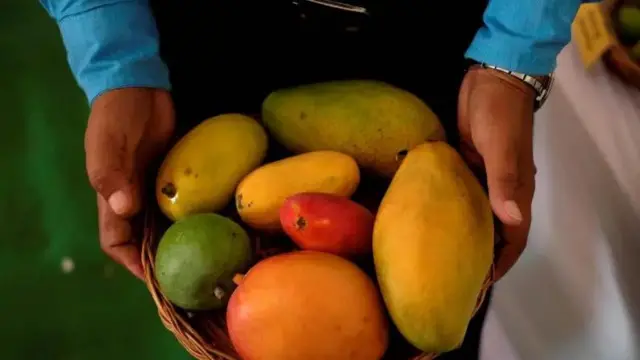
E get more dan 1000 varieties of mangoes wey dey grown in India.
Joshi write say Indian mangoes dey vary by region: northern and eastern varieties, such as Langra, Dasheri, Chausa, and Himsagar, dey intensely sweet, while southern ones offer a subtle sweet and sour flavour.
Alphonso mango from western India owe im characteristic taste to a unique balance of sugar and acidity.
Di poet Ghalib call mango "a sealed glass of honey," and hundreds of books dey written to celebrate di appeal.
Both a delicacy and icon, mango continue to delight and inspire, now wit a surprising nod from science.