Israeli-Palestinian conflict: Wetin be di two-state solution and why dem neva implement am?

Wia dis foto come from, Getty Images / BBC
- Author, BBC News Arabic & Global Journalism
- Published
- Read am in 10 mins
Saudi Arabia and France don collabo as dem chair one high-level conference for di United Nations wey dey aim to revive di two-state solution for di Arab-Israeli conflict wey don last for decades.
Di meeting dey hope to lay di groundwork for Palestinian state.
Since di deadly 7 October 2022 attacks wey Hamas launch against Israel and di war wey follow wit Israel for Gaza, di two-state solution dey look like say e far well-well.
But both Arab and European states dey recently push to bring back di idea, sake of di catastrophic conditions for Gaza wey dey increase.
Afta France and di UK, Canada na di latest Western kontri wey dey plan to recognise Palestinian state.
Wia dis foto come from, Sarah Yenesel / EPA / Shutterstock
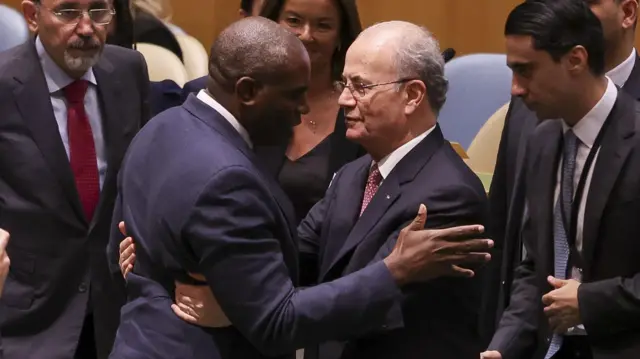
Both Israel and di closest global ally, di United States, boycot di two-day conference, as Washington describe am say e dey "counterproductive" to dia efforts to end di war.
UN Secretary-General Antonio Guterres say di meeting "gatz serve as a decisive turning point - one wey go start irreversible progress towards ending di occupation and to realise our shared aspiration for beta two-state solution".
Wetin be dis two-state solution?
Di two-state solution dey based on di establishment of Palestinian state wit secure and recognised borders wey go live alongside di Israeli state.
Di Palestinians dey ask for state wey include di West Bank, East Jerusalem and di Gaza Strip, wey Israel capture and occupy for di 1967 war.
But di current Israeli goment no wan agree to di Palestinian statehood and sovereignty.
Wia dis foto come from, Reuters
Israeli stance
Israel Prime Minister, Benjamin Netanyahu, dey march leg for ground against Palestinian independence, and e no support di two-state solution throughout im political life.
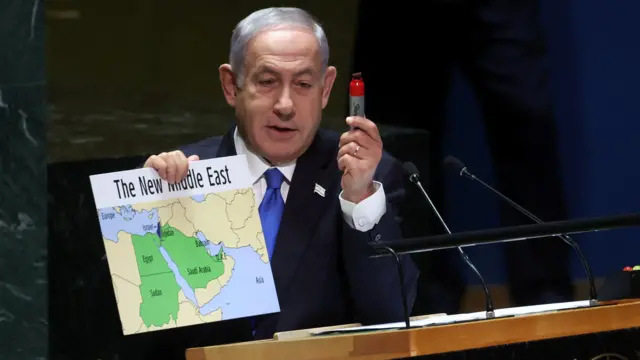
Two weeks bifor di 7 October attacks, Netanyahu appear for di UN General Assembly wey announce "di dawn of a new age of peace" between Israel and dia Arab neighbours.
Mr Netanyahu say a quarter of a century wey "di so-called experts" bin hold "dia approach" - wey dem bin dey negotiate a two-state solution wit Israel and future Palestine wey go share land between di River Jordan and di Mediterranean - neva even bring "a single peace treaty":
"For 2020, under di approach I bin advocate… e no tey, we achieve amazing breakthrough. Four peace treaties in four months, wit four Arab kontris."
Dis na di so-called Abraham Accords, wey di US bin broker during di first Trump administration.
Wia dis foto come from, Reuters
Di momentum of di Accords go persuade di Palestinians to drop dia "fantasy of destroying Israel and finally embrace di path of genuine peace", Netanyahu tok.
E kon hold up map of di "New Middle East", wey imply an end to di two-state solution.
But how dis two-state solution emerge as option for peace, and how di attitudes towards am don develop ova di years?
How di peace hopes fail
Di idea of a two-state solution date back to di UN Partition Plan for 1947.
Di plan bin propose say dem go split di British mandate territory of Palestine into two separate states.
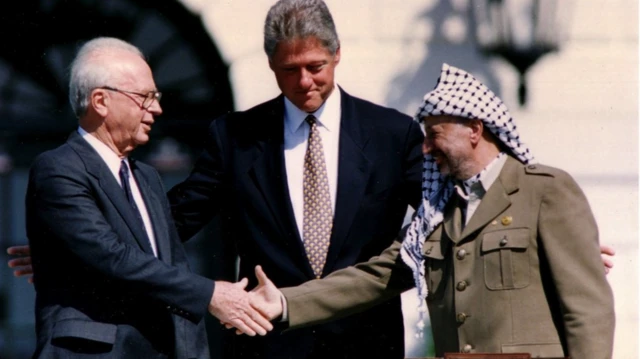
For 1993, di outline of two-state deal bin dey established, afta Israel and di Palestine Liberation Organization (PLO), wey Yasser Arafat Fatah faction bin lead, embrace mutual recognition afta Norwegian-brokered back-channel negotiations.
However, di so-called Oslo process neva reach di logical endpoint and e bin leave more problems wey dey hard-to-resolve.
Land-for-peace deals bin establish self-rule for di Palestinian Authority (PA) on territory wey Israel bin don capture and occupy for di 1967 war.
But military occupation and Jewish settlement activity bin continue, wit so-called "permanent status issues" wey dem later set aside for negotiations.
Dis include di status of Palestinian refugees from wetin becom Israel for di first Arab-Israeli war of 1948, and afta di UN bin vote for partition for 1947.
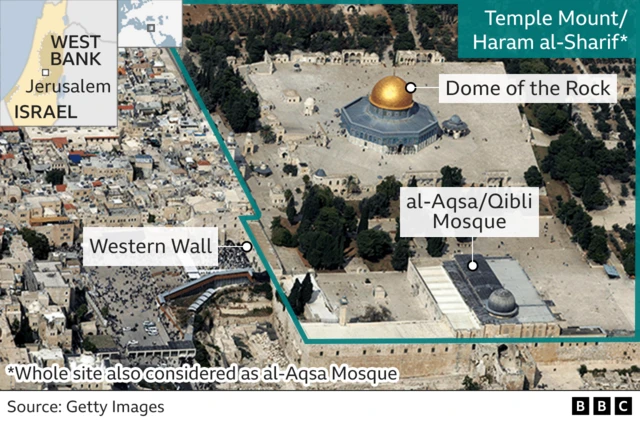
Israel bin annex East Jerusalem for 1967 and dis na anoda problem, as di two side dey see di holy sites as wetin dey too important to let go.
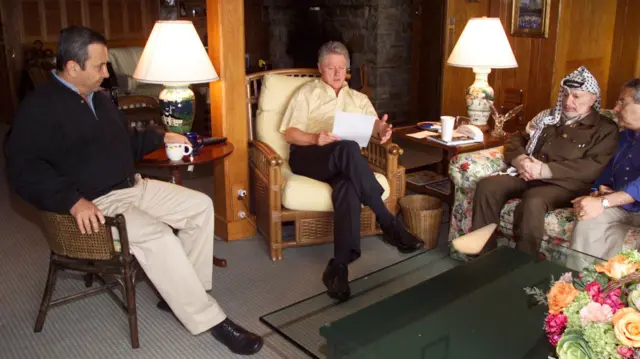
Afta years of diplomatic tok-tok wey no go anywia, na during one closed-door summit for Camp David for 2000 wey di US President dat time, Bill Clinton, host, finally tackle all dis issues but Israeli PM Ehud Barak and PA President Arafat bin no fit bridge di gap.
Evribodi lay di blame of failure for anoda pesin door. Israeli and US officials say Arafat turn down di most generous deal e go eva get.
Palestinians say na sham, wey fall short of dia requirements, just like di capital for East Jerusalem.
Di Islamic Resistance Movement, Hamas, founded in Gaza for 1987, bin disagree wit dia Fatah rivals concessions for peace and find beta opportunity to delay tok-tok on suicide bombings from 1994 onwards.
Religious settlers also take advantage of Israeli leeway to extend and reinforce di Jewish presence for di land wey dem see as wetin God bin promise dem..
Wia dis foto come from, Reuters
Wetin happen afta Oslo?
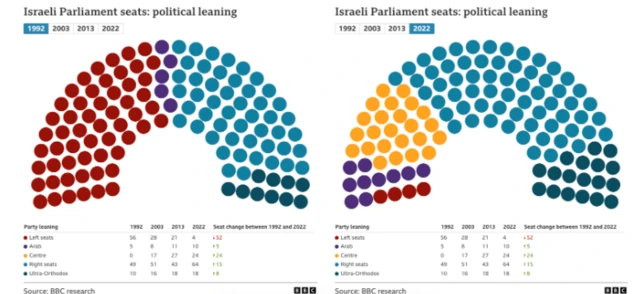
For 2000, wen di Palestinian uprising wey dem sabi as di Second Intifada bin happun, di centre of Israeli political gravity move significantly to di right.
Israel Labor Party, di driving force behind Oslo, reduce to irrelevance, while different factions of di pro-settlement right bin dey predominate.
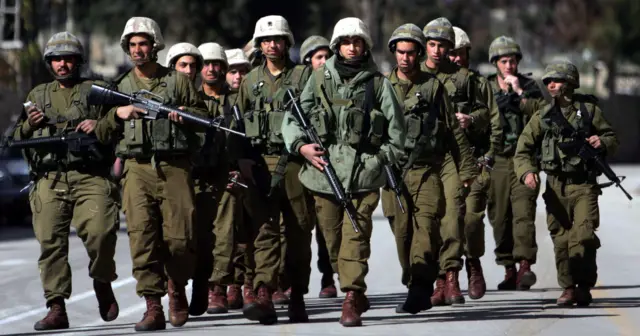
Rebellious Palestinian populations face Israel military might, while Sharon cabinet bin implement barrier wey separate Palestinians from Israel and from some settlements inside di West Bank. Arafat bin dey pinned down for Ramallah until small time bifor im death for 2004.
Mr Sharon remove thousands of settlers wey dey live among 1.5 million Palestinian inhabitants of Gaza and relocate troops to di perimeter. Four isolated West Bank settlements bin also dey evacuated.
Wia dis foto come from, Uriel Sinai / Getty Images
Di "disengagement" plan all round bin dey big, di intention na to safeguard di Jewish majority for Israeli territory by separating di heavily-populated Palestinian area.
Sharon top adviser tell one journalist say dem provide di "amount of formaldehyde necessary" to end political negotiations.
Nevertheless, di move divide Likud and alienate settlement advocates. Still, Sharon kon form new party to fight di 2006 election.
One brain haemorrhage weeks bifor polls mean say we no learn weda e get similar plan for di West Bank.
Arafat successor, bin dey hala say Mahmoud Abbas, na betrayal of Oslo principles, di disengagement bin dey celebrated by Hamas figures for Gaza as victory for resistance.
But wit di co-operation of Egypt, Israel tighten di blockade of Gaza, and e result to regular escalations of violence, wit militant raids and rocket crews wey dey fire Israel, while dem bin dey use Israeli bombardment and incursion to keep resistance in check.
Meanwhile, for di West Bank Hamas dey evolve.
Wia dis foto come from, Jaafar Ashtiyeh / AFP via Getty Image
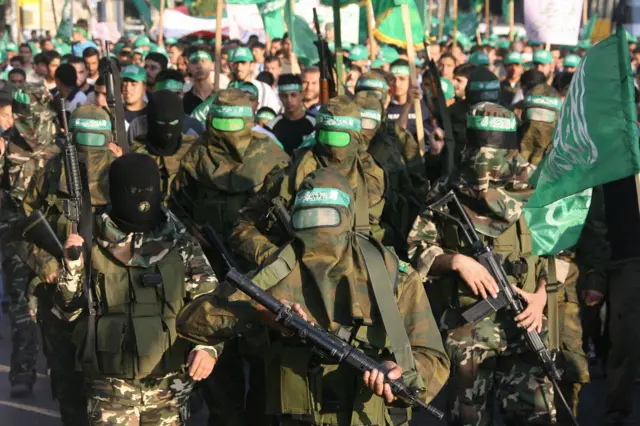
Participation for di 2006 PA legislative elections result bring Hamas to majority from voters wey bin don tire sake of di failure of Fatah to deliver Palestinian independence or govern transparently witout corruption.
Hamas expel di PA from Gaza by force, wey lead to di separation of Gaza as centre of armed resistance from di Fatah-ruled West Bank wey dey committed to di peace accords.
But different type of signs bin dey for Hamas attitude wey bin give pipo hint of di possibility of future political engagement - dem bin give dem offer say dem go stop di long-term violence and dem also suggest say a state fit dey established for di territory Israel occupy for1967.
But Hamas no change dia charter wey call for di nullification of Israel.
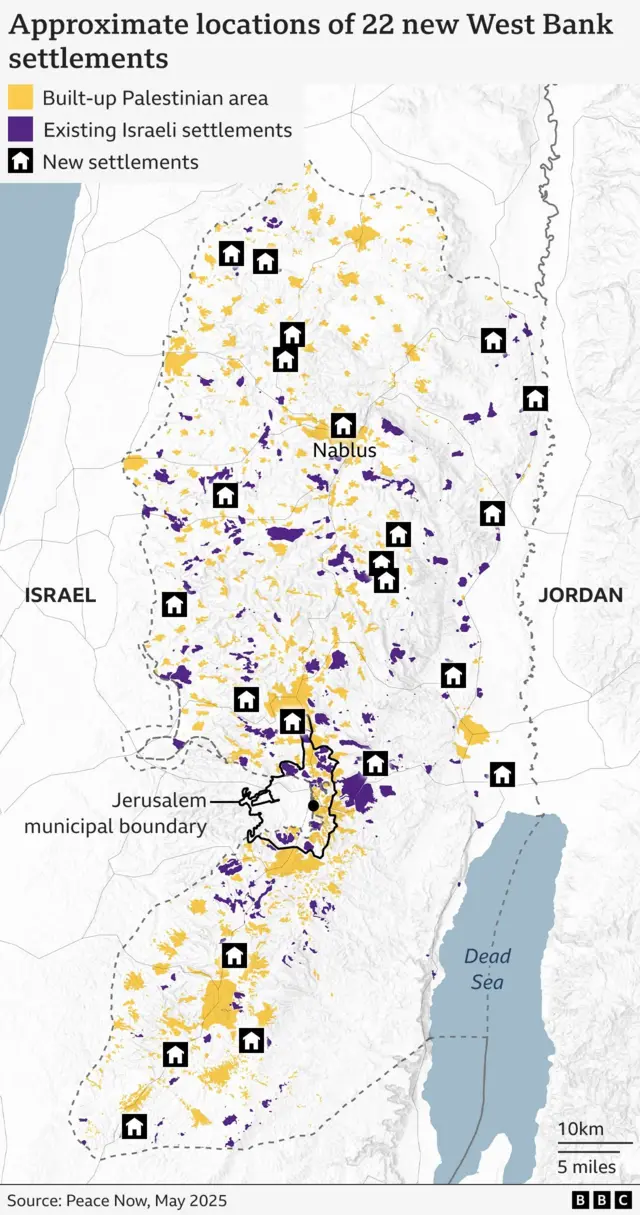
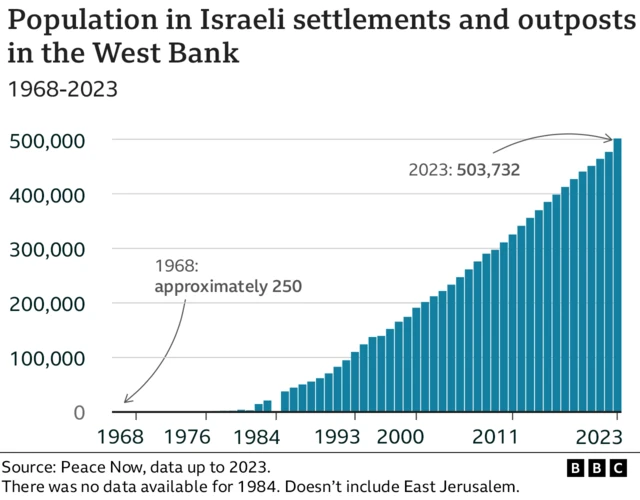
Israel, for dia part, still continue to expand settlements for West Bank in size and population - a trend wey don continue up to 2025.
Ova time, Hamas also exploit di lack of scrutiny for Gaza to build military capability, wit support of allies like Hezbollah for Lebanon, for wetin don dey known as di Axis of Resistance.
New factors
Many new factors don come into play afta di 7 October attacks and Gaza war.
Netanyahu say dem don increase am since 7 October, say dat kain prospect go "endanger [Israel] existence".
E don vow to "maintain full security ova all territory west of di Jordan River", including di Gaza Strip and di West Bank.
Israel parliament pass resolution for July 2024 to reject di establishment of Palestinian state.
Right-wing Netanyahu supporters don call for land wey Palestinians want for dia state to dey annexed as Israeli. Dis include parts of Gaza.
Some supporters also say dem want di permanent removal of di Gazan population.
E also get one big agreement for Israel wey say dem gatz destroy Hamas. However, many attempts to achieve dis plan don get serious impact on civilians for Gaza.
But international pressure don increase on Israel to move towards peace since di killing of senior Hamas military leaders as well as di weakening of di Hezbollah militant group and Iran.
Di joint Arab-European-sponsored UN conference and recent announcements by kontris such as France and di UK say dem aim to recognise Palestinian state signify a shift in position by applying pressure on Israel to move towards a two-state solution.
However, di US, wey historically na one of di main sponsors of di two-state solution, seem to dey move away from am.
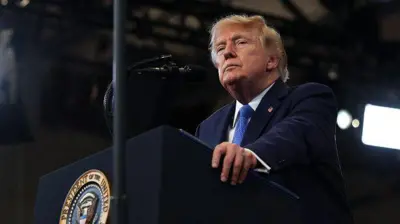
Although US President Donald Trump neva make im stance on di mata clear, im administration dey oppose di UN conference
One US cable wey Reuters see say: "Di United States dey oppose any steps wey go unilaterally recognise a conjectural Palestinian state, wey kon add significant legal and political obstacles to di eventual resolution of di conflict and fit force Israel during a war, thereby supporting dia enemies."
Wen asked on 29 July if pressure go dey on Israel to reach long-term solution, Trump say e go dey like say dem dey reward Hamas.
And witout US support for efforts to revive di two-state solution, prospects of achieving progress towards am remain uncertain.
Reporting by BBC Arabic's Lina Shaikhouni, Martin Asser, Lamees Altalebi and Paul Cusiac