Gaza hunger palava: Wetin starvation dey do to di body
Wia dis foto come from, Anadolu/Getty Images
- Author, Rebecca Thorn and Angela Henshall
- Role, BBC WS Health
- Read am in 6 mins
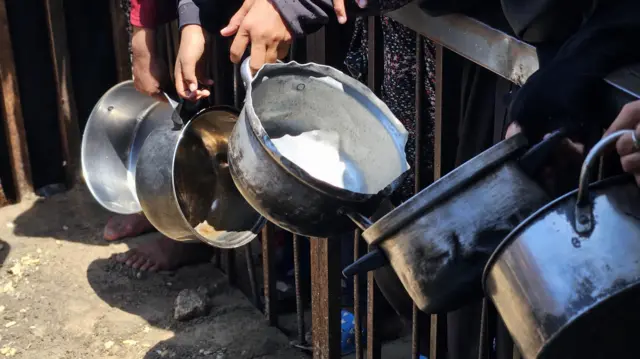
Di United Nations food aid programme don warn say almost one out of evri three pipo for di Gaza Strip dey go for days witout anytin to chop.
US President Donald Trump don tok say "real starvation" dey for Gaza, afta Israeli Prime Minister Benjamin Netanyahu insist say notin like dat dey.
Over di last couple of days, Israel wey dey deny say starvation dey for Gaza, don announce "local tactical pause" to allow aid into di region.
But di UN humanitarian chief, Tom Fletcher, say plenty amount of food dey needed to avoid starvation.
One out of five children for Gaza City dey malnourished and cases dey increase evri day, according to di UN Palestinian refugee agency (Unrwa).
Di UN don report say hospitals don admit pipo wey get severe exhaustion sake of lack of food, and say odas dey collapse for street.
Even though di UN neva declare famine for di territory yet, di IPC warn say risk of famine dey veri high.
Wetin be famine and wen dem fit declare am?
Di Integrated Food Security Phase Classification (IPC) na di global standard to describe how difficult e dey for a population to access enough affordable, nutritious food.
Di highest phase - Phase 5 Famine - refer to situation wey meet di following criteria:
- 20% of households dey face extreme lack of food
- At least 30% of children dey suffer from acute malnutrition
- At least two adults or four children per 10,000 pipo die each day due to direct starvation or di interaction of malnutrition and disease
Di IPC report for Gaza wey dem bin publish on 12 May show say di entire population dey live for Crisis (Phase 3) and above.
According to di report, nearly 469,500 pipo go likely experience catastrophic food insecurity (IPC Phase 5) between May and September 2025.
If dis circumstances occur, di UN fit join bodi wit di goment of di kontri or wit oda international aid and humanitarian organisations to declare famine.
Wia dis foto come from, Majdi Fathi/NurPhoto/Getty Images
Wetin dey happen to pesin body during starvation?
Wetin dey cause starvation na wen pesin don stay long witout food and e mean say di body no dey receive enof calories to take carry out basic functions.
Usually, di body dey breaks food down into glucose. But wen food no dey, di body go start to break down glycogen for di liver and muscles to release glucose into di bloodstream.
Wen dose resources don finish, di body go turn to fat wey e bin don store, and eventually muscle mass, to produce enof energy.
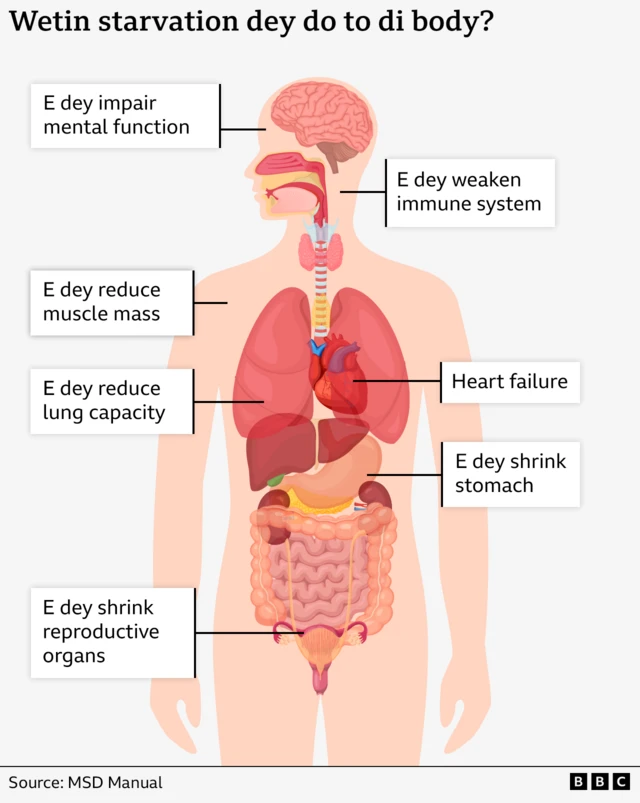
Starvation fit cause di lungs, stomach and reproductive organs to shrink and e fit affect di brain, leading to hallucinations, depression, and anxiety.
Pipo fit die sake of starvation, but pipo wey get acute malnourishment dey often kpai sake of complications like infections for di respiratory or digestive systems, becos of di damage for dia immune system.
Starvation dey also affect pipo differently.
"You no go just suddenly dey severely malnourished, dis children fit don get measles, pneumonia, diarrhoea or similar previously," according to Professor Charlotte Wright, senior research fellow (honorary), human nutrition for di University of Glasgow for di United Kingdom.
"Children wey bin previously dey healthy but now don dey starve, go still get di energy to eat and digest food if e dey available. Odas go just dey waste away."
How malnutrition dey affect babies and children?
Lack of food during childhood fit get lifelong impacts, including impaired cognitive development and stunting.
Di WHO define stunting as di impaired growth and development wey children dey experience from poor nutrition, repeated infection, and inadequate psychosocial stimulation. Often, dis children dey shorter for dia age dan expected.
Pipo wey get malnutrition dey more likely to give birth to malnourished children, according to di United Nations Foundation.
Unicef say poor diet during pregnancy fit cause anaemia, pre-eclampsia, haemorrhage and death for mothers, as well as stillbirth, low birthweight, wasting and developmental delays for children.
Malnourished mothers fit also struggle to produce enough nutritious milk to feed dia babies.
Dr Nuradeen Alibaba from Médecins Sans Frontières, wey specialise in treating children wit malnutrition, say di impact fit dey life-long.
"Stunted growth no dey reversible, meaning say dem go get short stature even afta dat period of being malnourished, and dis go put dem for big disadvantage. Dem dey often get permanent learning disability also wey fit no dey obvious until dem start school.
"[Malnutrition] dey also suppress di immune system wey go leave dem veri prone to infections.
"One important tin wey pipo no fully understand be say for girls, e get level of malnutrition wey fit cause infertility. And if dem even get belle, dis women dey much more likely to born babies wit low-birth-weight."
Osteoporosis fit be anoda complication.
"Brittle bones for later life fit make dem more fragile so dem no go fit carry dia bodi weight well - so even a small tin fit lead to a break or fracture," Dr Alibaba tok.
Wia dis foto come from, Getty Images
How dem dey treat malnutrition?
"To respond to dis crisis, you basically need two approaches - both more food going into Gaza and for di more expensive therapeutic foods to dey supplied too," Professor Wright tok.
"E dey urgent for di food to dey re-directed towards di children and dia mothers."
"Breastfeeding na di safest and most hygienic option for infants, but you gatz feed di mother so she go fit feed di baby. And dat na di real challenge - to make sure say di food go actually reach dem rather dan di men.
"Di key message be say di children and di mothers gatz be di priority, and dem no need much."
BBC Arabic health reporter Smitha Mundasad, wey also be trained doctor, explain say malnutrition fit get devastating effects particularly for children - and treatment no always dey straightforward.
For severe cases, wia pesin no fit swallow again, dem go need specially formulated nutrition for hospital or clinic "and oda treatment for infections or oda potential complications," she tok.
"For some cases, feeding someone too quickly or wit di wrong food fit dey dangerous.
"Di answer den, no be just getting food – na to get di right food - and to get a functioning healthcare system wey go support dis."