Who be di winners and losers for US-EU trade deal?
Wia dis foto come from, Getty Images
- Author, James FitzGerald and Tom Geoghegan
- Role, BBC News
- Read am in 5 mins
Di US and EU don strike wetin pipo reason as di largest trade deal in history, afta tok-tok for Scotland.
E look like di framework for agreement rather dan a full trade deal, and di details still neva dey clear.
But di headline figures wey President Donald Trump and EU chief Ursula von der Leyen announce offer clues about which sectors and groups fit be dey hit hardest or get di most to gain.
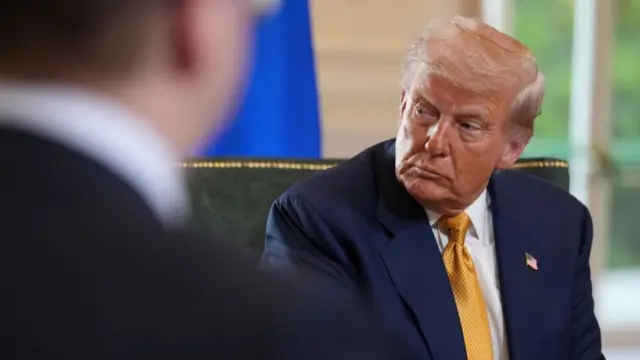
Trump - winner
Afta promising new trade deals wit some countries, Trump don land di biggest of dem all.
Many commentators dey see am like say EU don give up more, as instant analysis by Capital Economics suggest 0.5% knock to GDP.
Plenty billions of dollars go also pour into US coffers in import taxes.
Figures on inflation, jobs, growth and consumer confidence go give clearer picture on weda Trump tariffs dey deliver pain or gain.
US consumers - loser
Ordinary Americans already dey para for di increased cost of living and dis deal fit add to di burden by increasing prices on EU goods.
Tariffs na taxes dem dey charge on goods bought from oda kontris. Typically, dem be di percentage of a productalue. So, a 15% tariff go mean say $100 product wey dem import to di US from the EU go get $15 dollar tax added on top - wey go take di total cost of di imported product go $115.
Companies wey dey bring foreign goods enta US gatz pay di tax give di govment, and most time dem dey pass some or all of di extra cost on to customers.
Markets - winner
Stock markets for Asia and Europe rise on Monday afta tori of di deal framework break.
Under di framework, US go put 15% tariff on goods dem import from di EU. While dis rate dey significant, e dey less dan wetin e for be and e offer certainty for investors.
Di agreement "clearly dey market-friendly, and suppose put further upside potential into di euro", Chris Weston one Australian broker, tell AFP.
European solidarity - loser
27 members of di EU go need to sign di deal, each of dem get different interests and levels of reliance on export of goods to US.
While some members dey careful of di agreement, odas don criticize am – wey suggest divisions within di bloc.
French Prime Minister Francois Bayrou say: "Na dark day wen alliance of free pipo, wey come togeda for dia common values and to defend dia common interests, resign diasef to submission."
At least two oda French govment ministers and Viktor Orban, di Hungarian leader, wey tok say Trump "eat von der Leyen for breakfast" join am.
Carmakers in Germany - loser
Di deal don cut into nearly half di tariff wey pipo wey dey import cars from di EU to America dey face. From di rate of 27.5% wey Oga Trump bin impose for April to a new rate of 15%.
Cars na one of EU top exports to di US. And as di largest manufacturer of cars for di EU - thanks to VW, Mercedes and BMW, Germany for just dey watch closely.
Dia leader, Friedrich Merz, don welcome di new deal, as e admit say im for welcome a "further easing of transatlantic trade".
German car making trade body, di VDA echo wetin Oga Merz tok, wey mean say even di rate of 15% go "cost di German automotive industry billions annually".
Carmakers for US - winner
Trump dey try to boost US vehicle production. American carmakers bin happy wen dem hear say EU dey drop dia own tariff on US-made cars from 10% to 2.5%. Theoretically, e mean say pipo for Europe go dey buy more of American cars.
E go dey good for US sales overseas, but di deal no be all good news wen e come to domestic sales. Dat na sake of di complex way wey America dey take put dia cars togeda.
Dem dey assemble most of America cars for abroad - for Canada and Mexico - and Trump don sama tariff of 25% on dem wen dem bring dem into di US.
Dat compare wit a lower tariff rate of 15% on EU vehicles. So US car makers now fit dey fear make European manufacturers no cut dem off.
EU pharmaceuticals - loser
Confusion also dey around di tariff rate wey go dey levied on European-made drugs wey US dey import.
EU want make drug receive di lowest rate possible, to benefit sales.
Trump say di deal wey dem announce on Sunday no cover pharmaceuticals. For di deal, dem bin reduce di tariff rate on some products to 15%. But von der Leyen say pharmaceuticals dey included, and one White House source confam di same to BBC.
Either scenario go represent disappointment for European pharma, wey bin initially hope for a total tariff exemption.
Di industry currently dey enjoy high exposure to di US marketplace thanks to products like Ozempic, one star type-2 diabetes drug dem dey manufacture for Denmark.
Dem don highlight dis point for Ireland, wia opposition parties don point out di importance of di industry and criticise di damaging effect of uncertainty.
US energy - winner
Trump tok say di EU go buy $750bn (£558bn, €638bn) in US energy, dem go also increase overall investment for US by $600bn.
"We go replace Russian gas and oil wit significant purchases of US LNG [liquified natural gas], oil and nuclear fuels," Von der Leyen tok.
Dis go deepen links between European energy security and US at a time wen dem dey try to stop importing Russian gas since dia full-scale invasion of Ukraine.
Aviation industry in EU and US - winner
Von der Leyen tok say some "strategic products" no go attract any tariffs, including aircraft and plane parts, some kain chemicals and some agricultural products.
Dis one mean say companies wey dey produce components for aeroplanes go get friction-free trade between di big trading blocs.
She add say di EU still dey hope to get more "zero-for-zero" agreements, notably for wines and spirits, in di coming days.