Three reasons why former pope Benedict XVI burial na one of a kind for Catholic history
Wia dis foto come from, Getty Images
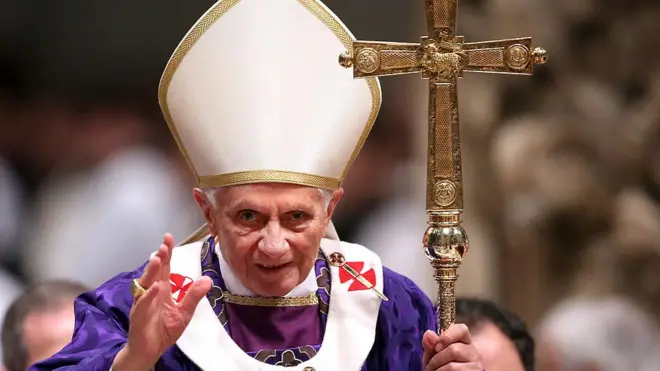
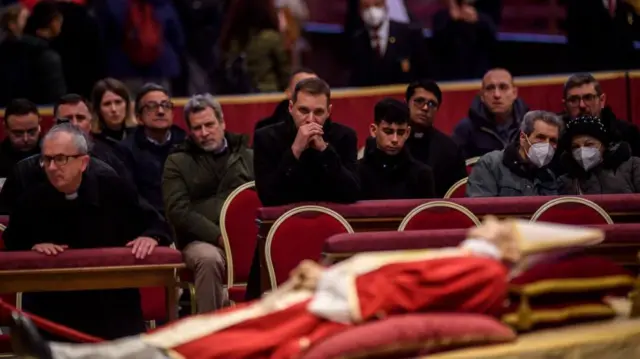
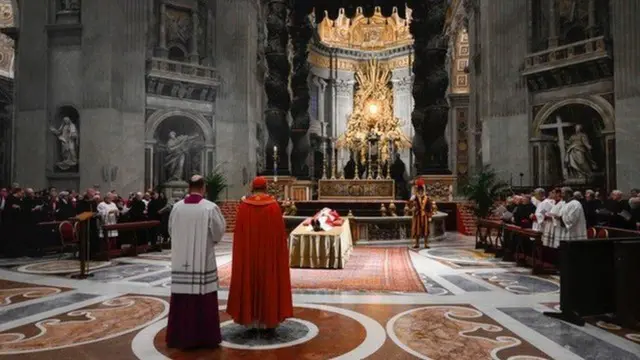
E go be ceremony like no oda for di long history of di Catholic Church: for di first time, one pope go lead di funeral of anoda pope.
E go take place dis Thursday for Saint Peter Basilica for Rome, wey be one of di Catholic Church holiest temples and be important pilgrimage site.
Pope Francis, di current head of di Church, go preside ova di funeral rites for Pope Emeritus Benedict XVI, wey die on New Year Eve at di age of 95.
Dem born am for Germany as Joseph Ratzinger, and dem elect am as pope for May 2005 afta di death of John Paul II. However, for February 2013 Benedict XVI resign from di Vatican top job - na unusual move wey di Church neva see since di 15th Century.
No oda pope don step down since Gregory XII for 1415, and Benedict na di first to do so voluntarily since Celestine V resignation for 1294.
And Ratzinger decision - on account of ill-health wey di burden of papal office also increase – dat na why im wake and burial dey uncommon.
"E go be solemn but sober funeral, as Benedict XVI request for im will," Vatican spokesman Matteo Bruni tok.
Dis na three reasons why di funeral of di Pope Emeritus dey unique.
End of Di one wey oda users dey read well well
Wia dis foto come from, Getty Images
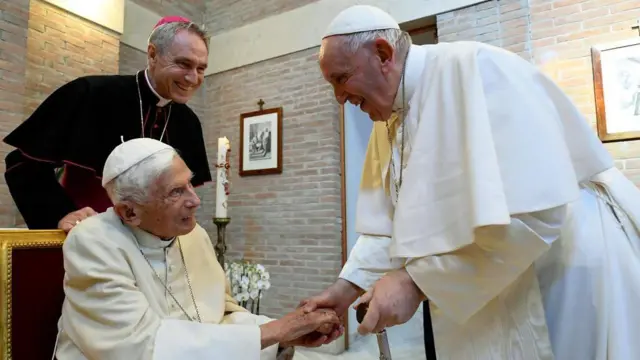
Na pope go officiate am
Na one pesin wey dem dey call Camerlengo (Italian for "chamberlain"), for one office of di papal household. dey always preside ontop di funeral of any recently deceased pope
Di Camerlengo dey in charge of leading di Catholic Church for times wen acting pope no dey.
But dis time, as Benedict XVI resign almost ten years before im passing, pesin dey for im role: his successor, Francis I.
And na Francis wey, for di first time in history, will as Pope officiate di funeral of anoda pope.
Wia dis foto come from, Vatican press office
For Vatican history, just one oda pope don voluntarily renounce di throne of Saint Peter for di same way as Benedict XVI.
E happun for di 13th Century, wen dem unexpectedly elected pope Pietro Angeleri di Murrone, one priest wey live as a hermit,- since im no be cardinal.
Thus im become Celestine V. However, im soon realise say di job dey too big for am and, afta just six months, im decide to resign and return to im life in seclusion.
However, im death happun for very different circumstances wey different from dat of Benedict XVI: im successor, Boniface VIII, wey dey worry say dem dey see Celestine as a saint and threatened by a potential schism within di Church, make dem arrest am.
Celestine V die for one tower wia dem lock am afta ten months of confinement and dem no organise any official funeral for am.
Oda resignations of popes wey dey recorded in history no dey voluntary, or e happun as a result of infighting.
In fact, di last formal resignation dates from 1415, wen Gregory XII, for di midst of di so-called Western schism, resign under political pressure - and im successor no dey not elected until afta im death, two years later.
No election go follow
One of di main events afta di death of a pope na di appointment of a successor, wey must happun as soon as possible.
For di early years of Christianity, dem dey chose leaders from among di Apostles themselves, and then among di founders of di different regional churches as di Church dey expand and Christianization dey progress.
But then di process wey dem sabi as conclave (from di Latin cum clavis, "wit a key") begin to prevail, one assembly of cardinals wey "lock themselves" inside one room to appoint a new leader.
Dis practice dey change through di centuries (some conclaves last for years), but di standard protocol na say cardinals meet for di famous Sistine Chapel for di Vatican and - behind closed doors and through several voting sessions – dem go come up wit di name of di man wey go be di next head of di Catholic Church.
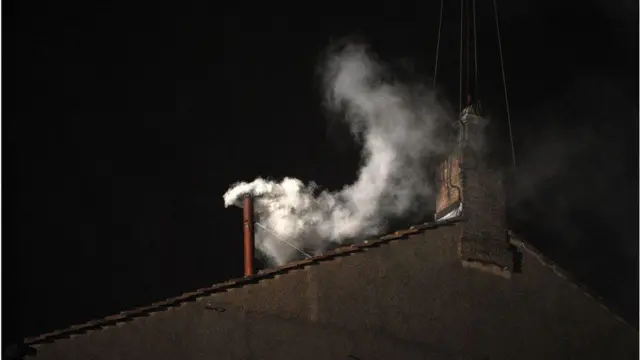
Wen dem reach majority, dem go burn one substance to generate a white smoke - a sign to di world say dem don get new pontiff.
Wia dis foto come from, Getty Images
Di time no conclave or white smoke go dey, as dem don already complete di election process afta di resignation of Benedict XVI for 2013, wey lead to di appointment of Jorge Bergoglio, wey take di name Francis I.
Experts don point am out say di way di late Pope Emeritus step down don set a precedent for oda papal resignations for di future.
Francis imself admit say im don sign one resignation letter, wey dem go carry out if im health worsens to di point of not allow am to fulfil im duties.
Di destroyed Ring of di Fisherman
Afta dem appoint am, every pope receive di Papal regalia and insignia, di items of attire wey present am as di visible head of di Catholic Church and sovereign of di Vatican City State.
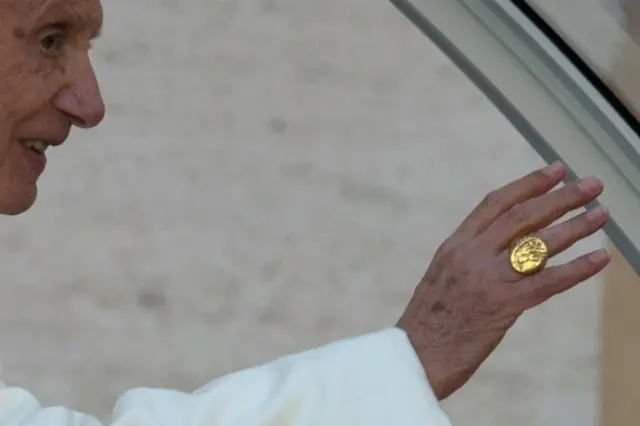
Among dem, one white cassock wit attached pellegrina or short cape, di papal ferula (a staff topped by a crucifix), and di so-called Ring of tdi Fisherman, one gold ring wit a depiction of St Peter for one boat dey cast im net.
Wia dis foto come from, Getty Images
Na all di recent pope don wear di cassock, while di ferula no dey exclusive to one pontiff - for example, Francis sometimes carry di same one wey Paul VI and John Paul II used.
But di Ring of di Fisherman dey purposely designed for each new pope.
And afta im death, among di many rituals wey dem dey perform, dem destroy di personalised ring wit one hammer.
Dis time, e no go happun afta di death of Benedict XVI, as im Fisherman ring dem make for 2005 don dey "annulled" afta im resignation for 2013.
But dis time dem no destroy am, as per tradition, but mark am wit one cross, according to then Vatican spokesperson Federico Lombardi.
Dem also allow Benedict XVI to keep wearing one plain white cassock - although e different from di the one wey Francis use - to mark im status as a former pope, wey dem see am dey wear until im death.