Role of the slave trade in British industry
The slave trade stimulated British manufacturing and industry through the demand for goods such as plantation utensils and clothing needed for enslaved people and estates.
The Nigerian historian Joseph Inikori suggested that it was the slave trade which allowed the The process that transformed manufacturing from handmade to machine-made, mass-produced goods using water, steam and coal power transported by canal, rail and steamship. Britain was the first country to have an Industrial Revolution. to happen.
British industry benefited by supplying factory-made goods in exchange for enslaved people. Profits made in the slave trade provided money for investment in British industry.
Banks and insurance companies which offered services to slave merchants expanded and made cities such as London very wealthy.
However, although the slave trade had an important role in Britain's industrial development, changes in agriculture and advances in technology also contributed to Britain's wealth.
Wealth of ports and merchants
The involvement of British ports
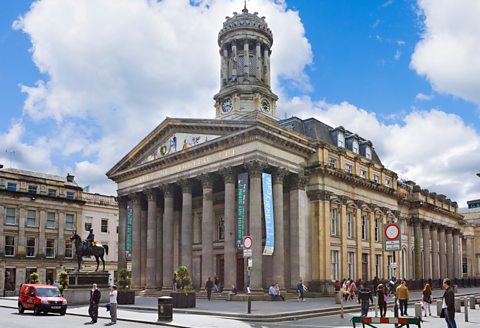
The work of enslaved people on the plantations generated huge profits and wealth for the merchants and ports involved, in both Britain and the Caribbean.
The main British ports involved in the slave trade all experienced periods of rapid growth and increasing wealth during the 18th century.
From 1761 to 1807, traders based in British ports transported 1,428,000 captive African people across the Atlantic and making around £60 million – perhaps £8 billion in today's money – from the sale of enslaved people.
The Royal Africa Company
In 1672 the Royal Africa Company was formed by Charles II and London merchants to provide enslaved African people for the West Indies.
The company transported around 100,000 African people into slavery in the Caribbean between 1672 and 1689. The gold it supplied to the A British government agency that produces coins for the United Kingdom. was named the guinea, after the West African country from which the gold was taken.
In 1689 the Royal Africa Company (based in London) lost its monopoly on the slave trade. Bristol and Liverpool merchants began to get more involved in the trade. By 1760, Glasgow had overtaken London as the main importer of tobacco.
West-Indian plantation owners
For much of the 18th century, the British colony of Barbados was the richest of all the European colonies in the Caribbean region because of the profits from its sugar plantations.
The West India Interest was formed in the 1740s when British merchants joined with West Indian sugar planters. This was the first sugar trading organisation to have a significant voice in Parliament. For example, in 1789 an assembly of planters from Jamaica visited Parliament to lobby MPs in support of the slave trade.
More guides on this topic
- Overview of the triangular trade
- What was the triangular trade?
- What did the triangular trade do for British ports?
- How did the trade in enslaved people affect African societies?
- What were West African slave fortresses?
- What was the Middle Passage?
- Overview of Britain and the Caribbean
- Why did sugar plantations develop in the Caribbean?
- What was Britain's influence on the Caribbean?
- How did the trade in enslaved Africans affect the British economy?
- What impact did the trade in enslaved people have on the Caribbean?
- Overview of the captives’ experience and attempts to gain freedom
- What work did enslaved people do on a Caribbean plantation?
- How were enslaved Africans treated in the Caribbean?
- How did enslaved people resist or rebel against enslavement?
- The captives' experience and resistance to enslavement
- Overview of the abolitionist campaigns
- How did the abolitionist movement begin?
- What methods did abolitions use to end the trade in enslaved people?
- What were the arguments against abolition?
- Why was the abolitionist campaign successful in 1807?
- The abolitionist campaigns
- Video playlist
