Overview of the triangular trade
The Triangular Trade is the first section of The Trade in Enslaved African People (1770-1807) topic of National 5 History.
It covers the following content:
- the organisation and nature of the trade in enslaved Africans
- its effects on British ports
- its effects on African societies, for example Ashanti, and plantations in the Caribbean
- slave ‘factories’ on the African coast
- the economics and conditions of the ‘Middle Passage’
Look through this overview article for a quick guide to these areas, or to revise what you have already learned.
Click on the links to get more detailed information on each area.
Video: The Triangular Trade
The transatlantic trade in enslaved Africans made many European traders extremely wealthy. Find out more about the trade routes in this short film.
“One day, when all our people were gone out to their works as usual and only I and my dear sister were left to mind the house, two men and a woman got over our walls, and in a moment seized us both, and without giving us time to cry out or make resistance they stopped our mouths and ran off with us into the nearest wood.”
Between the years 1640 and 1807, British traders transported an estimated 3.1 million Africans across the Atlantic, to be forced into slavery.
For all those who were ripped away from their lives and families, it was a terrifying experience.
But for the merchant companies who ran the ships, they were just a commodity of what was to become the richest trading network the world had ever known - the ‘Triangular Trade’.
There were three stages to the Atlantic trade route… and merchants could profit from each one.
For the Outward Passage, ships were loaded with goods such as guns, gunpowder, alcohol and clothing.
These were being manufactured in the rapidly growing British cities – such as London, Bristol, and central Scotland.
These goods weren’t usually sold for money. They were traded directly with African merchants and kingdoms – in exchange for captured people
The price for a human life was low – in the early 1700s, one enslaved African could be bought for just 2 muskets, or a bundle of clothing
But once shipped to the Caribbean, these people could be sold at a much higher price.
The Middle Passage crossing could last over 38 days, during which men, women and children faced disease, starvation and abuse on the overcrowded ships.
Organisation and nature of the trade in enslaved Africans
British traders became formally involved in the trade in enslaved Africans due to the Assiento – the right to sell 144,000 Africans into slavery every year in Spanish-controlled territories in South America.
British traders employed a three-stage transatlantic journey that became known as the Triangular Trade.
- Stage One: The Manufactured Run. Trading British-made goods such as wool and guns in Africa. Traders bought enslaved Africans with the proceeds of the sales.
- Stage Two: The Middle Passage. Enslaved Africans would be transported across the Atlantic to the Americas. They would be sold at great profit to work on plantations.
- Stage Three: The Home Run. The traders bought goods produced by slave labour such as sugar, rum, cotton, and tobacco. These were sold in Europe and generated vast wealth.
Find out more detail about the importance of plantation crops, especially sugar
Effects of the trade in enslaved African people on British ports
British ports were very important in the development of the trade in enslaved Africans.
- London's ports handled sugar imports from Caribbean plantations.
- London financial institutions and banks made money from funding and insuring the trade in enslaved people.
- Glasgow controlled 50% of the European tobacco trade.
- Bristol's industries provided goods to trade for enslaved Africans. It was also a major sugar port.
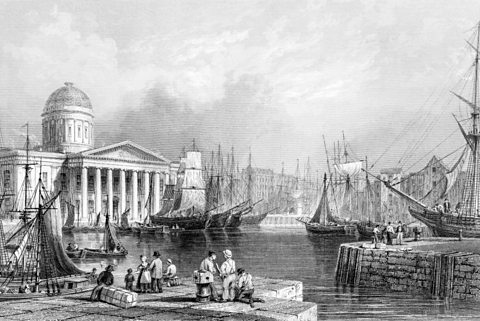
- Liverpool merchants carried more enslaved Africans than any other British port – around 60% of the trade.
As well as carrying enslaved Africans, British ports benefitted from the trade in other ways. Many ports carried and traded good created by enslaved workers.
Find out more detail about the effects of the trade in enslaved African people on British ports
Effects on African societies and plantations in the Caribbean
- trade in enslaved Africans existed in Africa on a smaller scale before the arrival of Europeans
- European demand for slave labour turned the trade into a huge industry
- trade in enslaved people was profitable for Europeans and some African rulers and merchants
There was a huge human cost of the trade in enslaved African people:
- 12 million Africans transported into slavery in the New World
- 6 million Africans died in captivity and on board slave ships
There were wider social and cultural effects on Africa:
- loss of knowledge and history that was passed from person to person
- loss of farmers, poorer harvests and a lack of development in agriculture
- dismissive and racist European views of Africa and Africans developed
Find out more detail about the effects of the trade in enslaved people on African societies and plantations in the Caribbean
Slave ‘factories’ on the African coast
- Slavery existed in African societies prior to European traders.
- The transatlantic trade in enslaved people increased African slavery.
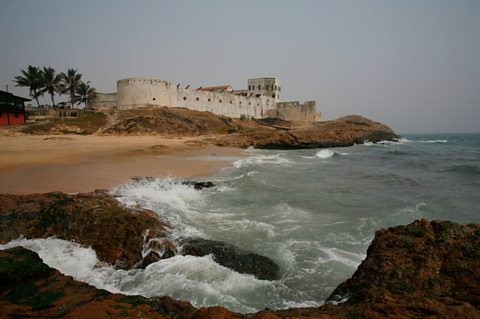
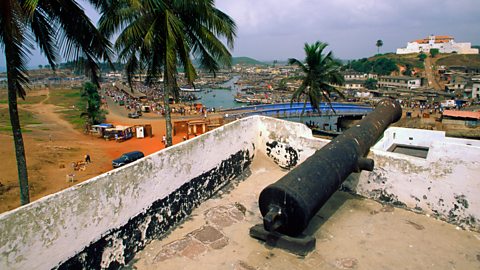
Due to the huge demand for an enslaved labour force to work on Caribbean and American plantations, European traders set up permanent bases in West Africa. These became known as slave fortresses.
- Millions of Africans were captured and sold through these European slave fortresses.
- Millions of enslaved Africans died in captivity or on board European slave ships en route to the New World.
West African societies change due to the trade in enslaved people. The wealth to be made from trading with the Europeans made slavery a major industry for some West African regions.
Warfare was common between African regions and prisoners of war were sold to the European traders.
Find out more detail about slave ‘factories’ on the African coast
Economics and conditions of the ‘Middle Passage’
The Middle Passage was the leg of the Triangular Trade that transported captive African people from the West Coast of Africa to the Caribbean and Americas.
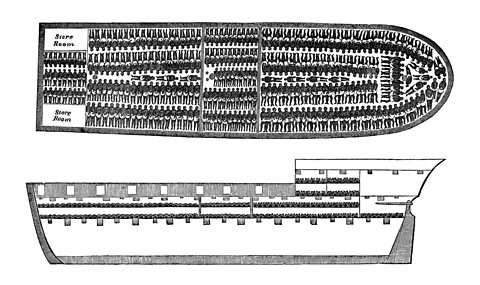
There were two methods of transporting captives. Both aimed to maximise profit
| method | description | outcome |
|---|---|---|
| tight pack | as many captives as possible squeezed on board | many would die but traders hoped enough would survive to make a large profit |
| loose pack | fewer captives loaded with more space | a larger proportion would survive, so profits would be kept high |
Conditions on board
- Men were kept chained in the dark, cramped cargo hold
- Women and children were kept separate - sometimes on deck with little shelter
- Food was limited and lacked nutrition - captives became weak or ill
- Food and water became contaminated from human waste
- Lack of hygiene, cramped conditions and poor ventilation led to disease and illness
- Captives were subject to violence, torture and sexual exploitation
Resistance
Captives sometimes refused food, refused to exercise, jumped overboard, or planned to attack, overpower or kill the crew.
Those who attempted resistance were punished by whipping or other torture or killed.
It is estimated that 15 % of captive African people died during the Middle Passage.
In 1781, the crew of the slave ship Zong threw 132 captive Africans overboard to save drinking water and prevent rebellion. The ship's owners attempted to claim compensation for lost cargo. The case inspired abolitionists into action.
Changes to conditions
The 1788 Slave Trade Act (known as Dolben's Act) was passed to improve conditions onboard slave ships:
-limits on the number of captives* to be carried were imposed
- a surgeon/doctor was required for each ship
- surgeon's pay was linked to survival rates of captives
Find out more detail about the economics and conditions of the ‘Middle Passage’
More on Trade in enslaved African people
Find out more by working through a topic
- count2 of 21
- count5 of 21