How did the abolitionist movement campaign against slavery?
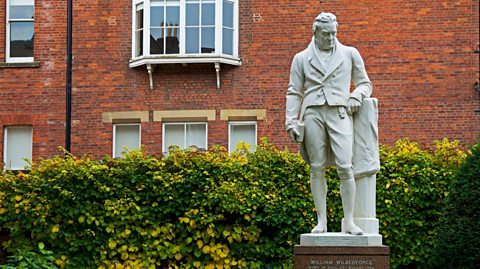 Image source, ALAMY
Quick version
There were several important aspects to the success of the abolitionist movement:
Legal action questioned the legality of slavery under British law:
- the Somerset Ruling, 1772. This court decision defended an enslaved African's rights to not be shipped to a plantation against his will
- Knight vs Wedderburn, 1774. This case stated that slavery was incompatible with Scottish law
Abolitionists such as Thomas Clarksoncollected evidence of the cruelty of the trade in enslaved people.
Testimonies and accounts were
- John Newton published his account of being a slave ship captain, 1787
- Olaudah Equiano published his account of being enslaved, 1789
Public campaigns were organised to promote abolitionism:
- a sugar boycott of sugar produced by enslaved labour, 1791
- a nationwide petition-writing campaign to put pressure on parliament and MPs, 1780s-1790s
Learn in more depth
Legal challenges to slavery
One method of the abolitionist movement was to challenge the legality of the trade in enslaved Africans.
Granville Sharp was an early abolitionist involved in several cases against the legality of slavery.
There were two notable law cases that successfully championed the rights of formerly-enslaved Africans living in Britain.
- the Somerset Ruling, 1772
- Knight vs Wedderburn, 1774
Granville Sharp (1735 - 1813)
Granville Sharp was a civil servant who became interested in campaigning against slavery in 1765.
He had befriended Jonathan Strong, an enslaved African who had been badly beaten by his master.
When Strong's former owner attempted to sell him back into slavery in the Caribbean, Sharp took a successful case to the Lord Mayor of London and Strong was freed.
Sharp then devoted his time to forcing a definitive legal ruling on the question of whether a slave could be compelled to leave Britain.
In 1772, he was involved in another landmark case involving an enslaved African in Britain.
What was the Somerset Ruling, 1772?
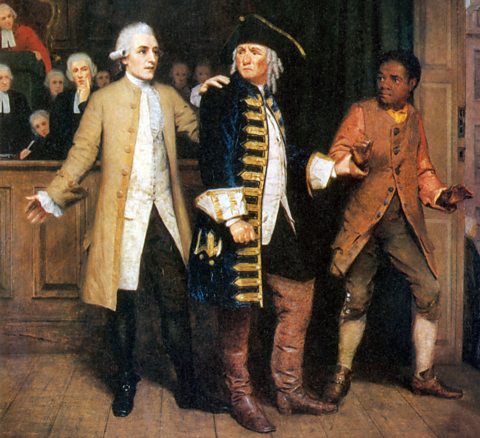 Image source, ALAMY
James Somerset was an enslaved African bought in America and brought to Britain by Charles Stewart. Somerset escaped after Stewart tried to sell him to a Jamaican plantation.
In a court case the followed, the judge stated that owners of enslaved people could not legally force enslaved people to return to the colonies once they were in Britain.
This became known as the Somerset Ruling. It was regarded by many as effectively abolishing slavery within Britain.
Image source, ALAMYWhat was the Knight vs Wedderburn case of 1774?
In 1774, a dispute between an enslaved African known as Joseph Knight, and the Scottish man who had purchased him, John Wedderburn, was taken to court. Knight had left Wedderburn's service, and Wedderburn tried to use the law to force his return.
In a landmark ruling, Edinburgh's highest court – the Court of Session – declared that slavery was incompatible with Scottish law. Knight, as far as Scotland was concerned, was a free man.
Gathering evidence of slavery's cruelty
A crucial part of the abolition campaign was the gathering of evidence to support abolitionist claims about the cruelty and inhumanity of the trade in enslaved Africans.
- physical evidence - such as the manacles that bound enslaved Africans, and the devices used to torture and punish
- testimony evidence - accounts and statements of former enslaved Africans and also people who had been involved in the slave trade
Thomas Clarkson (1760 - 1846)
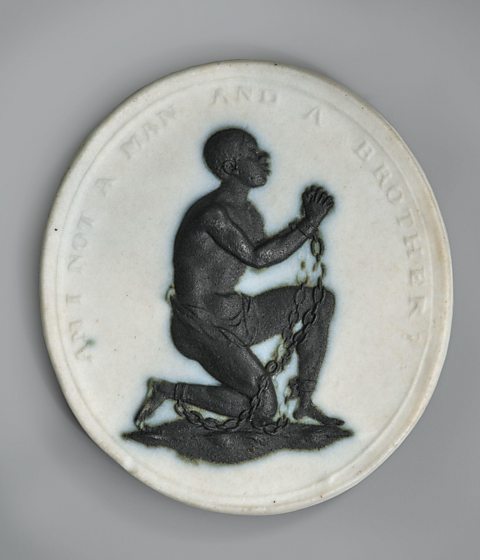 Image source, ALAMY
At Cambridge University in 1779, Thomas Clarkson won an essay competition, writing on the subject of whether it was lawful to enslave other people against their will. He published his essay in 1786, bringing attention to the issue of slavery.
In 1787, Thomas Clarkson, Granville Sharp and ten others formed the Society for the Abolition of the Slave Trade. The society helped to persuade the MP William Wilberforce to take up the abolitionist cause.
Clarkson's task was to collect information and evidence for the committee to present to parliament and the public.
He devoted his time and energy to travelling around Britain, particularly to the ports of Liverpool and Bristol, gathering eyewitness accounts from sailors about the horrors of the trade in enslaved people.
He also collected physical evidence from the trade in enslaved people:
- handcuffs
- whips
- branding irons
- thumbscrews
Image source, ALAMYPublishing testimonies of enslaved Africans
Some of the most powerful and effective aspects of the abolitionist movement were the testimonies of people with direct experience of the horrors of the trade in enslaved people.
Once published, their accounts helped educate the broader populace and to turn public opinion against the trade.
Olaudah Equiano (1745 - 1797)
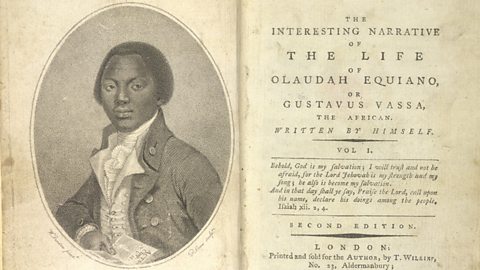 Image source, ALAMY
Former enslaved Africans, such as Olaudah Equiano also fought for an end to slavery.
Equiano was a prominent member of the 'Sons of Africa', a group of 12 black men who campaigned for abolition.
In 1789 he published his autobiography, The Interesting Narrative of the Life of Olaudah Equiano.
It became immensely popular, helping the abolitionist cause, and made Equiano a wealthy man. It is one of the earliest books published by a black African writer.
The success of the book encouraged other former enslaved Africans to publish and share their stories.
Image source, ALAMYJohn Newton (1725 - 1807)
John Newton was an Anglican clergyman and former slave ship captain. He wrote the hymn Amazing Grace, first published in 1779.
It took him a long time to speak out against the trade in enslaved people but when he did he had an influence on many young evangelical Christians.
Newton began to deeply regret his involvement in the slave trade and in 1787, he wrote an article called Thoughts upon the African Slave Trade that supported the abolition campaign.
The paper graphically described the horrors of the slave trade and his role in it, and was hugely influential. A copy of the pamphlet was sent to every MP.
Public abolitionist campaigns
Public campaigns and protests were very important in gaining public support for efforts to end the trade in enslaved Africans.
Sugar boycotts, 1791 - 1792
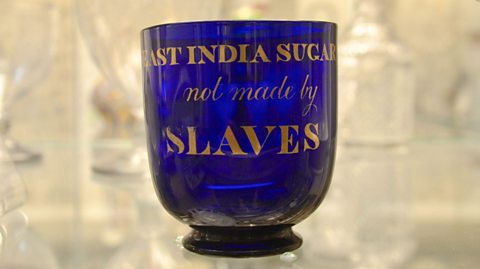 Image source, Simon Leigh/ALAMY
It was not just men who were the leading figures in abolition at this time: women played a prominent role.
During that late 1700s, a sugar boycott began in Britain as a protest against the trade in enslaved people. The protest was largely organised and implemented by women and aimed to damage profits made by sugar plantations that used enslaved labour.
It was estimated that over 300,000 people participated in the sugar protests. This damaged the profits of the plantations, but also made sugar produced by enslaved labour undesirable to the wealthy middle-classes who were more likely to buy sugar.
Rival sugar companies that did not sell sugar made by enslaved workers enjoyed great success. The East India Company sourced sugar from India and proudly advertised that this did not come from enslaved labour.
Image source, Simon Leigh/ALAMYAnti-slavery petitions
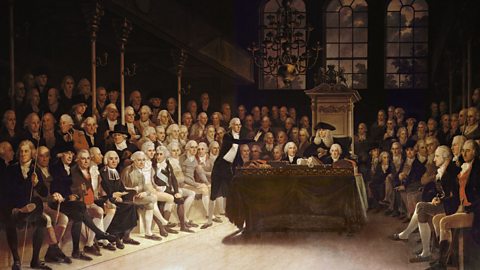
In 1788, the Society for Effecting the Abolition of the Slave Trade organised a nationwide campaign to raise awareness of the evils of the trade in enslaved people. They urged people sympathetic to the cause to write to their MPs and to petition the government to end the trade.
Following the campaign, over 100 petitions were presented to parliament within three months.
In 1792, over 500 petitions with thousands of signatures were handed to parliament calling for abolition.
Important milestones to abolition
The Zong Case, 1781
The Zong was an overcrowded ship that carried enslaved Africans to the Americas in 1781.
Due to a navigational error, the ship had to spend an additional three weeks at sea.
With supplies and water running out, the crew murdered 132 enslaved people by throwing them overboard.
The case was used by abolitionists such as Thomas Clarkson in order to highlight the extreme brutality of the traders in enslaved people.
Efforts to persuade parliament to end slavery
In 1789, the Society for the Abolition of the Slave Trade persuaded the MP William Wilberforce to represent them in Parliament.
Thomas Clarkson collected information for the committee to present to Parliament and the public.
He travelled around Britain, making visits to the ports of Liverpool and Bristol, gathering evidence about the slave trade from eyewitnesses, including from sailors who had worked on slave trading ships.
The Abolition of the Slave Trade Act, 1807
After over twenty years of campaigning, the Abolition of the Slave Trade Act was passed by the British Parliament in 1807. The Act made it illegal to buy and sell enslaved people throughout the British colonies.
However, while the act abolished the trade in enslaved people, it did not end the use of enslaved labour across the British Empire. Plantation owners were still able to use their existing enslaved labour force.
This meant that some people in the Caribbean, and elsewhere in the British Empire, remained enslaved.
Test what you have learned
Quiz
Recap what you have learned
The abolitionist movement employed different strategies in their fight to end slavery:
Legal action:
- the Somerset Ruling, 1772. This court decision defended an enslaved African's rights to not be shipped to a plantation against his will
- Knight vs Wedderburn, 1774. This case stated that slavery was incompatible with Scottish law
Evidence collection:
- Thomas Clarkson collected evidence of the cruelty of the trade in enslaved people.
Publishing evidence:
- John Newton published his account of being a slave ship captain, 1787
- Olaudah Equiano published his account of being enslaved, 1789
Public campaigns:
- a sugar boycott of sugar produced by enslaved labour, 1791
- nationwide petition-writing campaigns to put pressure on parliament and MPs, 1780s-1790s
More on Trade in enslaved African people
Find out more by working through a topic
- count19 of 21
- count21 of 21
- count1 of 21