Overview of the abolitionist campaign
The abolitionist campaigns is the fourth section of The Trade in Enslaved African People (1770-1807) topic of National 5 History.
It covers the following content:
- origins of the abolitionist movement
- arguments of the abolitionists
- methods of the abolitionists
- arguments for the trade in enslaved Africans
- debate over reasons for the eventual success of the abolition campaign
Look through this overview article for a quick guide to these areas, or to revise what you have already learned.
Click on the links to get more detailed information on each area.
Video - Abolitionist campaigns
The campaign to abolish the trade in enslaved Africans took years and the dedicated work of many people. Find out more in a short video.
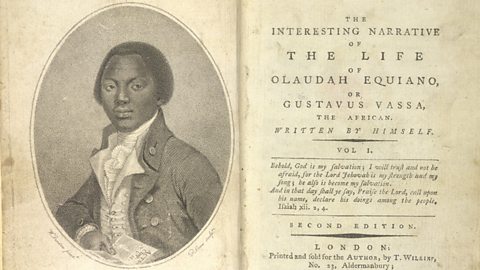
Olaudah Equiano was a writer in 18th Century London.
“… the air soon became unfit for respiration… and brought on a sickness among the slaves, of which many died… The shrieks of the women, and the groans of the dying, rendered the whole a scene of horror almost inconceivable.”
When he wrote those words about the ordeal of captured Africans being transported across the Atlantic he didn’t need to use his imagination. He was writing from experience.
He had been captured at the age of 11, in West Africa, and sold into slavery in the Caribbean.
Later in his life, he bought his freedom, and when he published his autobiography in 1789, it was a great success – helping to raise public awareness of the terrible reality of the slave trade.
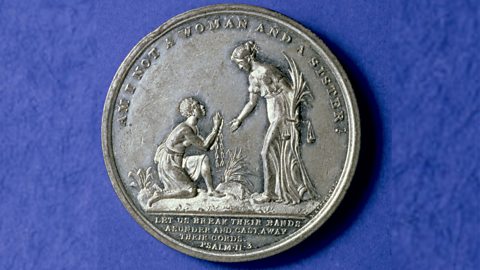
Some British religious groups were opposed to slavery. They believed that God had created all men as equals.
The Quakers became active campaigners.
The Society For Effecting The Abolition Of The Slave Trade was formed in 1787, and most of its founders were Quakers.
They held public meetings, published pamphlets, and petitioned Parliament.
One of its members, Thomas Clarkson, began to collect detailed evidence on the way the trade was run – the conditions on the ships, how many men women and children died during the crossings, and the cruel methods used to subdue people.
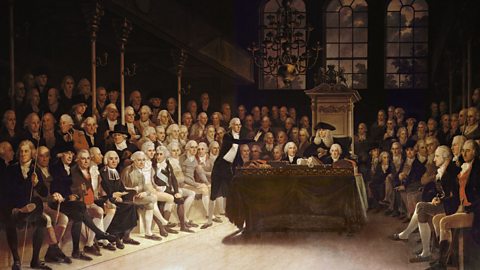
His evidence was used by Member of Parliament William Wilberforce.
Starting in 1789, Wilberforce regularly introduced bills in Parliament proposing the banning of the slave trade. His bills were voted down; many MPs themselves had investments in the Caribbean.
While many workers feared abolition would impact their own jobs and industries, as the campaign continued, public opinion began to shift.
More and more people began to see slavery as morally wrong – and many boycotted buying sugar.
In 1807, Wilberforce presented his sixteenth Abolition Bill. It passed.
It didn’t make slavery illegal, but it ordered all slave ships to be destroyed, and banned the buying and selling of slaves anywhere in the British Empire.
However, slavery didn’t end immediately, continuing in British owned plantations until it was finally prohibited in 1838.
Origins and arguments of the abolitionist campaigns
Many of the campaigners against the transatlantic trade in enslaved people belonged to the Quaker faith. Their religion led them to oppose the trade on moral and ethical grounds.
- The Committee for the Abolition of the Slave Trade was established in 1787.
- The Kingston upon Hull MP, William Wilberforce, represented them in the Houses of Parliament.
Over several years, Wilberforce introduced bills to parliament to try and end the trade in enslaved people. The bills were unsuccessful.
Opposition to slavery took different forms:
- religious. Quakers and Methodists believed that slavery was incompatible with Christianity
- humanitarian. Many people sympathised with enslaved Africans and wanted them to have their freedom.
- economic. Some, like the economist Adam Smith, thought that slavery was inefficient.
There were also campaigns, boycotts, and protests by abolitionist campaigners outside of parliament.
Find out more detail about the origins and arguments of the abolitionist campaigns
Methods used by the abolitionists
The abolitionist movement employed different strategies in their fight to end slavery:
Legal action:
- the Somerset Ruling, 1772. This court decision defended an enslaved African's rights to not be shipped to a plantation against his will
- Knight vs Wedderburn, 1774. This case stated that slavery was incompatible with Scottish law
Evidence collection:
- Thomas Clarkson collected evidence of the cruelty of the trade in enslaved people.
Publishing evidence:
- John Newton published his account of being a slave ship captain, 1787
- Olaudah Equiano published his account of being enslaved, 1789
Public campaigns:
- a sugar boycott of sugar produced by enslaved labour, 1791
- nationwide petition-writing campaigns to put pressure on parliament and MPs, 1780s-1790s
Find out more detail about methods used in the abolitionist campaigns
Arguments against abolition
Many groups opposed abolition:
Financial interests
- plantation owners relied on enslaved labour
- investors in the trade
- business owners who profited from goods and services related to the trade
- textile workers relied on cotton grown by enslaved workers on plantations
Cities
- Some cities grew wealthy as a result of the trade
- London - financial institutions provided insurance and loans to shipping companies
- Bristol - imported sugar Caribbean plantations
- Liverpool - traded in enslaved Africans and imported cotton h
- Glasgow - grew wealthy from the tobacco trade
Workers
- shipyard workers built and refitted slaver ships
- dockers and warehouse workers unloaded goods from the plantations
- thousands of sailors were employed in the triangular trade
Politicians
- some MPs and members of the House of Lords were plantation owners
- some politicians were paid by lobby groups who opposed abolition
There was also political opposition to abolition:
- abolitionists were seen as radicals with dangerous views
- the French Revolution led to fears of instability in Britain
- French colonies freed enslaved Africans and saw rebellions. British politicians feared similar unrest
- the British economy depended on money associated with the trade in enslaved people, especially at a time of war with France
Find out more detail about arguments used against the abolitionist campaigns
Why was the abolitionist campaign successful in 1807?
- public opinion turned against enslavement
- this was reflected in the large numbers of people signing petitions and boycotting sugar
- economic conditions made the trade less profitable
- enslavers had tighter margins of profit
- growing sugar became more expensive and faced more competition
- industrial revolution and agricultural change made the trade less important to the British economy
- parliamentary debate gained support for abolition
- William Wilberforce presented a bill for the abolition of the slave trade in Parliament every year from 1789 - 1806
- abolition became a subject for discussion and debate
- Parliament was presented with evidence of the trade
- the success of the 1806 bill ending trade of enslaved people with French colonies brought an end to two thirds of the trade
Find out more detail about reasons why the abolitionist campaign succeeded
More on Trade in enslaved African people
Find out more by working through a topic
- count17 of 21
- count19 of 21