Overview of Britain and the Caribbean
Britain and the Caribbean is the second section of The Trade in Enslaved African People (1770-1807) topic of National 5 History.
It covers the following content:
- the importance of plantation crops, especially sugar
- the influence of the British in the Caribbean
- the impact of the Caribbean trade on the British economy
- the negative impact of the trade in enslaved Africans on the development of the Caribbean islands
Look through this overview article for a quick guide to these areas, or to revise what you have already learned.
Click on the links to get more detailed information on each area.
Video - Britain and the Caribbean
British ports and cities were directly involved in the trade in enslaved Africans in the Caribbean. Find out how the trade affected both Britain and the Caribbean.
When European powers first reached the Caribbean islands, they quickly realised they had discovered an asset that could be exploited.
The Caribbean climate was perfect for growing the luxury goods of the time – coffee, tobacco, cotton and sugar.
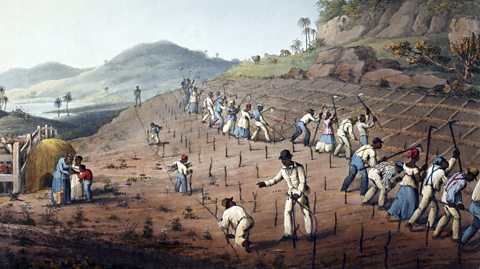
On the islands that the British had captured such as Trinidad and Tobago, the Bahamas, Barbados and Jamaica, settlers quickly cleared land to create plantations.
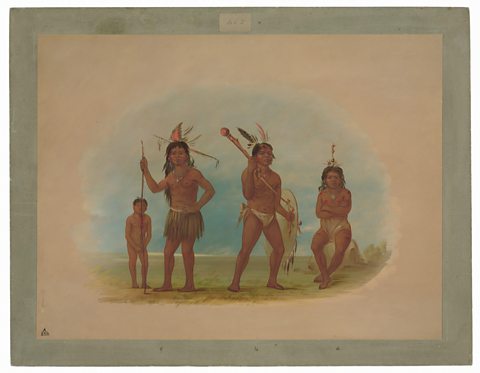
The indigenous peoples of the islands – the Arawak and the Taino – were forced to become unpaid labourers, producing goods which, when shipped to European markets, made the plantation owners massive profits
They were treated with extreme violence by their invaders – and had no resistance to European diseases like smallpox and flu.
As their numbers declined, the plantation owners needed a new source of labour.
The solution they found was to ship captured West Africans to the islands, creating a new workforce of enslaved people.
The cost to the enslaved African workforce was immeasurable.
The people transported to the Caribbean in chains were subject to brutal violence.
Working conditions were so hard that the plantations became mass graveyards for hundreds of thousands of African men, women and children.
As the plantations expanded to occupy all fertile land, the island’s natural ecosystems were destroyed.
But Britain reaped huge benefits…
It wasn’t just the plantation owners who became wealthy.
Cities such as Liverpool and Bristol experienced an economic boom from their part in the slave trade.
Dundee’s linen industry reaped huge profits from exporting garments to clothe enslaved workers and Glasgow was a hub for the European tobacco trade.
75% of sugar production went through London, before being sent on to global markets, making merchants rich.
The British government took its share of the profits in custom duties.
This income fundamentally changed the nation’s finances, and allowed the Treasury to spend vast sums enlarging the Royal Navy – securing Britain’s place as a dominant colonial power all over the world.
Britain’s banks became the richest in the world, with Lloyds of London profiting from insuring the ships that serviced the slave trade routes. Many of those profits were reinvested into new industries – laying the foundations for the Industrial Revolution.
Slavery and sugar changed the world. The trade had a devastating impact on parts of Africa while giving Britain a strong economic future. And it left the Caribbean islands stuck with unstable economies - dependent on the global market price of sugar.
The importance of plantation crops, especially sugar
- the Caribbean provided the majority of Europe's sugar.
- high demand for sugar meant large profits
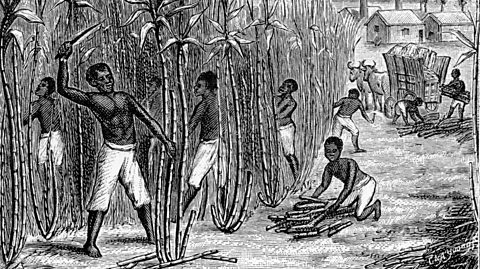
- producing sugar was labour-intensive
- enslaved Africans provided a cheap labour force for plantations
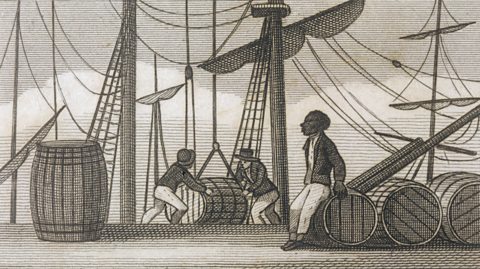
Raw sugar liquid was processed in mills to produce high value goods such as refined sugar and rum. These goods were shipped back to Europe to be sold.
British ports heavily involved in the sugar trade included:
- London
- Bristol
- Liverpool
Find out more detail about the importance of plantation crops, especially sugar
The influence of the British in the Caribbean
Britain formed colonies in North America and the Caribbean in the first half of the 1600s.
- These territories were planted with valuable crops such as cotton, tobacco, and coffee.
- Enslaved African labour was used to harvest the crops.
By the 1700s, sugar was the main crop planted in the Caribbean. Enslaved Africans worked the sugar plantations.
- 12 million enslaved Africans were transported to the New World.
- 3 million enslaved Africans were carried on British slave ships.
The trade in enslaved Africans became crucial to the British economy.
- By 1800, 60 per cent of British trade went to Africa and the Americas.
The trade in enslaved Africans led to the growth of the Royal Navy and Britain's civilian merchant navy.
Find out more detail about the influence of the British in the Caribbean
Impact of the Caribbean trade on the British economy
The British economy benefited from Caribbean colonies and involvement in the trade in enslaved Africans:
- Enslaved labour produced raw materials that allowed British factories to grow.
- British factory goods had large overseas markets.
- Trade in enslaved Africans made merchants rich.
- British banks provided loans and insurance to merchants involved in the trade in enslaved people.
- Trade in products made by enslaved Africans generated wealth for British ports and cities.
- Ports such as Glasgow, Liverpool and Bristol grew from small port towns to large cities due to involvement in trade in enslaved people.
- Industries such as shipbuilding grew due to the demand for ships to trade in goods related to the trade in enslaved people.
British merchants and Caribbean plantation owners joined forces and formed lobby groups to petition the UK Parliament to protect their business interests and defend the trade in enslaved Africans.
Find out more detail about the impact of the Caribbean trade on the British economy
Negative impact on the development of the Caribbean islands
The trade in enslaved Africans did lasting damage to the Caribbean islands:
Change to the people of the Caribbean:
- Arawak and Taino native Americans and their culture were virtually wiped out.
- Europeans colonised the Caribbean and imposed their culture on the islands.
- Large enforced migration of enslaved Africans further changed the culture of the Caribbean.
Environmental damage:
- Single crop plantations destroyed Caribbean habitats and environment.
Economic damage:
- Dominance of single crops led to economic disaster if the price or demand for the crop fell.
- Black populations were kepyt working low-skilled, low paid farm jobs even after the end of the trade in enslaved people.
Political damage:
- Slave Codes designed to subdue larger enslaved African populations persisted after the end of slavery.
- Many Caribbean islands remained under European control after the end of the trade in enslaved people.
Find out more detail about the negative impact of the trade in enslaved Africans on the development of the Caribbean islands
More on Trade in enslaved African people
Find out more by working through a topic
- count9 of 21