


The tale of a city
Once upon a time, a very unlucky Chinese emperor who had ruled the country for too long finally bored his people (especially the rebellious and ill-treated farmers who then turned their ploughs to weapons) and was driven away. Then, as usual, a new dynasty began.
The head of the rebels declared himself as the new emperor, created a name for the new dynasty, and gained new wealth and men (and women)… When everything else was ready, he suddenly halted at one fatal issue: where should the new capital be?
So, here comes the tale of a city— Nanjing.
It turned out that the new emperor was unlucky too. Shortly after he and his new court had applauded for the smart idea of Nanjing as the new capital, his new dynasty fell apart. Some hundreds of years later, the same story happened again. Another unlucky emperor, nearly defeated by the rebels, decided to move the capital to the southeast—again, to Nanjing. Only a few months later, he was killed with his dying dynasty even before the poor fellow could ever sleep one happy night and breathed any peaceful air.
Perhaps Chinese history is too long and those unwise choices were easily forgotten, another seven emperors (and the first president in the modern time, too) either made Nanjing their capital, or moved the old capital to this city. Unfortunately, Nanjing all failed them.
The only reason why a girl refuses so many suitors again and again must be that she is way too wise and too beautiful. She is too good to be a housewife.
And that’s my prejudiced conclusion of the tale of my dear hometown.
An ancient poet would easily fall in love with (or in) Nanjing.
If he lived in the east of the city, he would walk in the Purple Mountain, treading on the fallen sycamore leaves and meditating for a few lines. 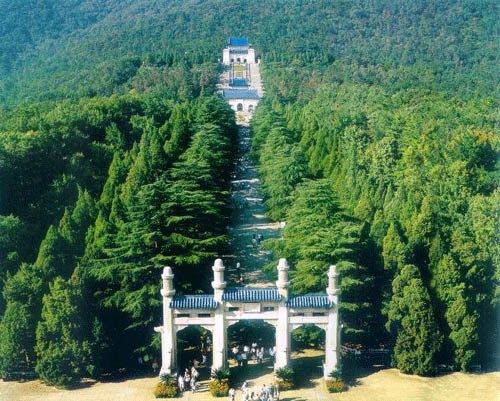
If he lived a bit more west, he would walk on the old walls around the Xuanwu Lake, touching the coarse bricks inscribed with names centuries old and meditating for a few lines. 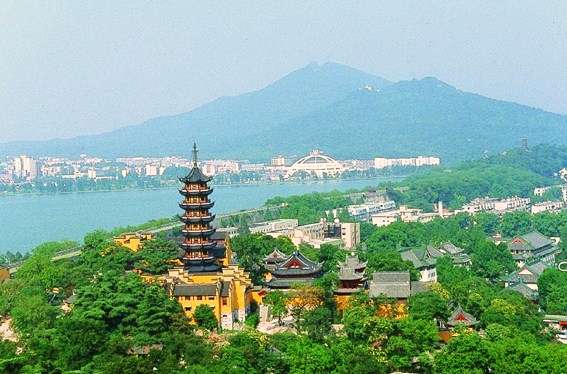
If he then walked to the south, he would meet a singing girl with her parasol on a stone bridge above the rippling Qinhuai River, and the white water birds flying around made him meditate for some more lines. 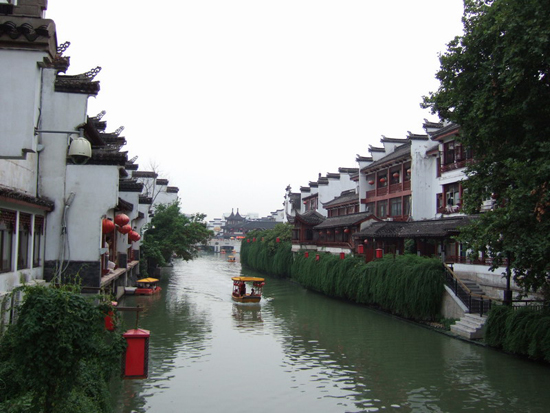
He would just walk and walk and write poems after poems. One day he would walk to the very northern corner, and write more poems for what he saw: the roaring Yangtze River, which ran all the way from the Tibetan mountains to the fertile plains of East China, galloping with her eternal vitality into the sea.
He would then go there and write poems there in every season. 
Springs in Nanjing made him full of good dreams, the long willow leaves stroking the pond, the peach blossoms wildly clustering in his garden. 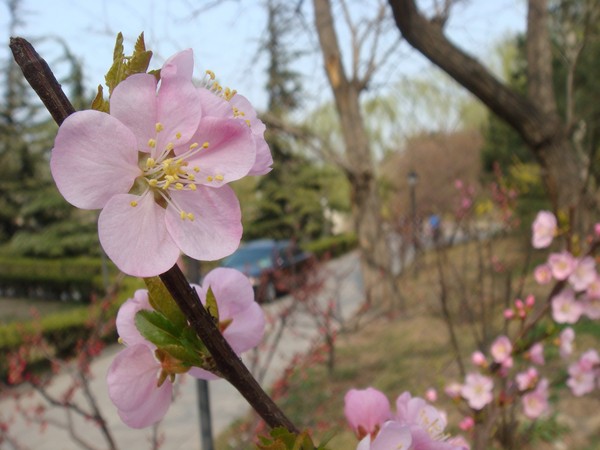
Summers’ heat made him sleepy, yet pleasant with beautiful vegetables and fruits served to his table.
Autumns he liked the best, to the Qixia Mountain to pick some maple leaves, and with them he could decorate his bamboo fans in his pavilion. 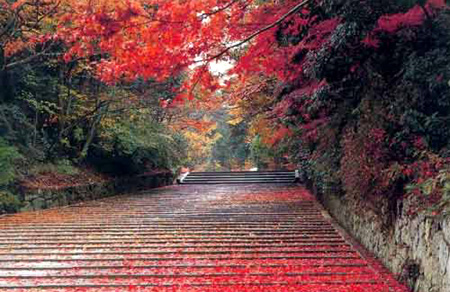
When winter came and rivers froze, he painted, with his finest ink and brushes, the plum blossoms budding in the snow, and anonymously sent it to the singing girl. 
There, in Nanjing, an ancient romantic poet would find everything he dreamed of as an ideal world: wealth of nature and culture, affluence of rains and grains, richness of beauty and romance.
Those unlucky emperors loved Nanjing for the same reasons, so did their subjects and soldiers. But they all forgot that a capital city in a great land as China meant much more—political struggle, military discipline and historical gravity, which Nanjing could never bear on her beautiful and delicate shoulders.
When their court soon became greedy for food and women, and soldiers all turned romantic, you know, it’s time for a new dynasty.
Comments
Wow! Jin Lu, your post are so great! It's a pleasure for me to read them. I want to thank you for this lovely month of your blogging. And your native city looks very beautiful. Especially I was amazed by the photo with Qinhuai River and houses that are so close to it. And the last photo reminded me that our winter would come soon and we'd have the same soft and shining snow and I just can't wait :)
Hi, Jin Lu. I am totally into your subtle words with rich meanings and breathtaking pictures. I bet one day you will become one famous poet, as I can tell you from your excellent entries that you have a good head for writing. Your snaps are evocative of my college lives, which made me have a flashback of the day my flatmates and I went out sightseeing. Time passed by so quickly. Ten years later, when I see these pictures, I realize that I remain nostalgic about the good old days. Thank you! Jin Lu, for bringing back those good memories for me!
Beautiful description!
.....hello, Jin lu ! Really you've posted a bunch of lovely pictures. It's apparent that you've got a charming MY TOWN. I love to visit Nanjing.....
Absolutely breathtaking scenes and I am drowning in the story too. The emperor legend might be true and it is a recurrent story in every century, somehow it also happen in other part of the globe. Thank you Jin Lu!.
Hi Jin Lu, What a fabulous entry you wrote. The entry is so poetic and enchanting, and I am enraptured by it. Thank you for sharing the tale and pics with us. Have a great day!
Hello Jin Lu, and many thanks for another post that really make me feel like living in an orient tale.Don't stop write because you are doing just great!! I'd like to visit places like the one you are showing us in your pictures some day.They are so differents to my born place. By the way,yes,my name is a man's name and that's what I am.I don't know why, but I'd never thought that someone could think another thing.It's funny isn't it? Congratulations for your beautiful post again and happy All Hallows Eve. Bye.
Hi, everyone I met this blog when I was trying one place where I can read and know some cultere around the world. I this this site is so great!
Thanks for all your contributions. This blog has now closed and can no longer accept new comments.


