


Our traditions
Those who are busy can avoid reading the italicized section.Others go on..
Till this day I was really busy and I told you about internet cafe issue.Money was not the matter but I didn't get time to think and write a post from the cafe.Whenever I go there, there will be a big queue because that is the only cafe nearby our place.If I get a system also, I will use it for a few minutes because others will be waiting out.In the evening our classes will be over by 7 PM.After that girls don't used to go out.So I was really in a pathetic situation.Now the situation has changed.Even though there is no net connection I have a laptop with me.So I can write posts from hostel and can publish it from cafe. :)
You won't believe what I did yesterday.Yesterday for the first time I read my teacher's blog from the cafe.As I was really impressed by his post, I didn't want to miss any part of it.So I copied all his posts and comments to my USB and in the night itself I read it completely.I enjoyed reading it so much that I completed reading it in a stretch.Good jokes and good teaching style.I am very lucky to have a teacher like him.One day I too want to be like him or like some readers who have a good command over English.Going through the comments, I felt sad at times when I realized that you are all are angry with me for being irregular.I hope now you can understand me.Even I was missing my teacher and all my readers.
Hoi hoi..So now everyone give me pardon and give me a sweet smile :)
Now here is a post for you.In this post I will write some traditions* in our place(South India or Kerala) which you won't see in other sites.
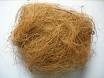
1.In our place we used to take bath regularly.Don't laugh.Let me complete :).Bathing is not so easy.We have to apply oil in our hair.We used to rub our skin using scrubber which is a natural thing we get from coconut tree.Let us call it coconut fibre(chakiri in my language malayalam) for I don't know its exact English word.Now for those who don't know what a coconut is, imagine a small ball covered with brown color fibrous husk.There are 3 parts. 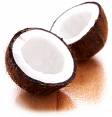
The outer fibrous portion is used as scrubber and it has various other uses also.It is used as fuel for natural stoves(We burn it like we burn wood).Second part, that is the covering of the ball is a hard shell.Inner part of the covering is a white colored meat which we use to cook cake and curries.Third is the inner vacuum portion.It is filled with it's juice which we drink.These scrubbers are replaced by plastic scrubbers now.But in rural places this is used even now.My state Kerala got it's name from these coconut trees.It is called kera in malayalam.Land of kera - Kerala.Now you can imagine the significance of coconut in our life.And about bathing, I think we give lot of importance in keeping our body clean.After excreting we are satisfied only if we wash our hands and anus using water.Tissue paper is being used now a days in big companies here.But we are not fully satisfied with it.
2.We used to offer coconut and flowers to God.Just go to some temple in your place and tell me whether there also flowers are given to God.Coconuts are given as a bribe to God to fulfill our prayers :).We have to break the coconut by striking it in a specially designed stone in front of the temple. 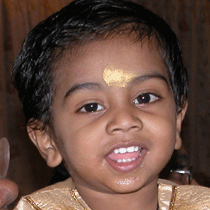 If it is broke properly, our wish will be done and if not, the heart of the person will also broke with the coconut because we believe that it is a bad sign.We will get a few flowers and sandal(a type of tree) paste from the temple in a small piece of plantain leaf.We will apply sandal in our fore head.Scientifically it is told that applying sandal paste on our fore head is good for nerves.It has good cooling effect.But we are supposed to apply it only after bathing.Also, we are not allowed to enter the temple or even it's premises without bathing or during mensuration.
3.Here, married women apply kumkum, a red coloured powder on their forehead.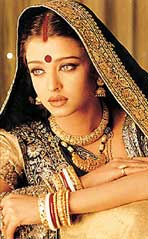 A small line is drawn with this powder half on the hair and the other half on the forehead.They also wear a 'thali' (a small pendant).This tali is given to her by her partner.This is similar to the wedding ring which you all know.We are supposed to wear it till our death or our partner's death.Tali gives s special feeling for a woman that they do not keep it carelessly over somewhere.This kumkum and tali is to identify a married woman and men are not supposed to look them in a wrong way.
4.We used to wash dishes using ash or tamarind.Now it is replaced by dish wash bar.Now guess what is used as scrubber?Yes, our coconut fibre. :)
5.Here, women neither drink nor smoke.We can't even imagine such a thing.But now, due to the influence of western culture working girls have started going to pub and it is a big issue now.You know what, this year some people protested celebrating valentine's day as it doesn't suit our culture.They told that if they see a girl and a boy together on a valentines day they will make them marry.But modern girls stood against this and they sent pink underwear to the protesters to show their protest.
6.In the evening, we lit lamp and pray in front of pictures of millions of Hindu Gods.
7.When we set out for some thing important in our life, we touch feet of our elders(parents/teachers etc) for their blessings.
8.On occasions like Birthdays and celebrations like Onam,Vishu etc., we don't eat non vegetarian food.
9.Killing of cows is illegal as it is considered as God's animal.Earlier, in our place, non vegetarians used to eat only chicken, lamb and egg.Now, beef and pork are also in the list.These are the common meat types available here.Before killing animals we used to say a small prayer.
I wanted to write 10 points.But I am getting sleepy now and dead tired.Ha!It is 1.30 AM.Let me go and sleep now or I will not be able to listen in my class tomorrow..Good night and sweet dreams :)
*All the above said points are not applicable to all people in my place.It depends on place, religion etc.
If you have any doubts on this ask me.I don't know whether I have succeeded in explaining coconut and all.Anyway I am here and so clarifications can be done. :)
Photos Courtesy : Google
Signing off,
Asha
Comments
Hi Asha, I've just printed you post and going to read it at home. I'm at work now, so I don't have enough time to read now. BUT I see, that is interesting !! ok, I forgive you that you haven't been here for so long, sweet smile to you :) :)
Very interenting culture! I think is better that Indians don't lose their traditions.
Hi, Asha! Thanks for replying. You were very attentive giving individual answers. That was a nice description of your place's traditions. It's very interesting the importance of the coconut in your region. Coconut is really enjoyed here in Brazil for its water and meat. I believe the English word for what you called "coconut fibre" is "coir". Now I have a question about your language. Besides Malayalam, do you use another language in your daily life? Regards.
After long dreming she woke up and write some points.Magnificent points, specially using of Coconut in daily life.Thankyou Asha.
Hello, Asha! I was in India three years ago, but I did not visit Kerala. I will never forget friendly Indian people.Your blog is very interesting.Best wishes!
Hello, Asha! Thank you very much for such an interesting post. Henrique asked you about another languages in India and I have a language question too. Do you have one language or dialect in India that would be understandable in every part of your country? And some girlish question :) Do Indian women use something special for their hair look so shiny? If it's not a state secret, will you be so kind to share it with is?:)
Hi Asha, It has been a while since I have read the blog but I guess, I haven't missed much. It is interesting to learn more about Indian culture even though I have seen some of the traditions in Indian movies but your message made some of the issues more clear to me. I love fresh coconut but it is not freely available in my home country Pakistan (in my area) and we mostly use dry coconut there. Luckily, in the UK you can easily get fresh coconut in super market so I buy it only for eating it raw. I have never used it in cooking but I am going to try it some times in the future to see how it tastes like when cooked. Your traditions about married women and offering coconut and flowers to your God are also fascinating. I think it will be a little scary when you are braking your coconut in front of the temple and it does not break. How often do you have to go to the Temple? Also who provides sanda paste in the temple? I believe that in most countries’ traditions are changing rapidly which in my opinion is because of the media and cheap travelling available these days. It is becoming difficult to keep your own traditions these days. Traditions are kind of mixing and people seem to like a bit of all cultures. I also think that at some point people are going to realise that it is not the right thing but it might be too late then. Anyway the time will tell what happens. That is it for today and will hopefully talk to you soon. You are doing a great job, keep up the hard work.
Hello Asaha, It was really good to read about your traditions and infact no one should ever lay his/her tradiotons aside as they are our identity. Speaking of coconut, it's easily available in Karachi and we relish its taste with great pleasure. When I had visited India back in 1989 I had enjoyed coconut water frequently and it was fantastic sipping coconut water through a straw and in the end eating thin creamy flesh yummmy! Over here one of the uses of coconut hair is that it's used in hair oil. Good luck, Naheed
Hi, Asha! That was absolutely fabulous to read your post. I've been to India lots of times (Northern states only though) and I'm fond of Indian culture, traditions and music!!! I even own a tabla and taanpura! My question is about those red dots on Indian women's forheads. I was told by an Indian family that they are called bhindy (not sure about spelling) and are for style only and not to distinguish between married and unmarried women. Could you comment on that, please.
It was really nice article. Can you explain me about "vishu"?
Thanks for all your contributions. This blog has now closed and can no longer accept new comments.


