


Karaoke & KTV & Nakasi
Hello there, and hi teacher Alex,
Nowadays, in Taiwan, Karaoke or KTV is a very popular recreation, and Nakasi is an old-fashion entertainment. I always thought they are an oriental stuff that would not pop up in the western world. I guess I am slightly wrong.
Karaoke and KTV and Nakasi are all from Japan, Nakasi is an old-fashion, Karaoke & KTV are a fashion, and they are a form of recreation that people (customers) can sing their favorite songs and enjoy their performance by themselves with the audience.
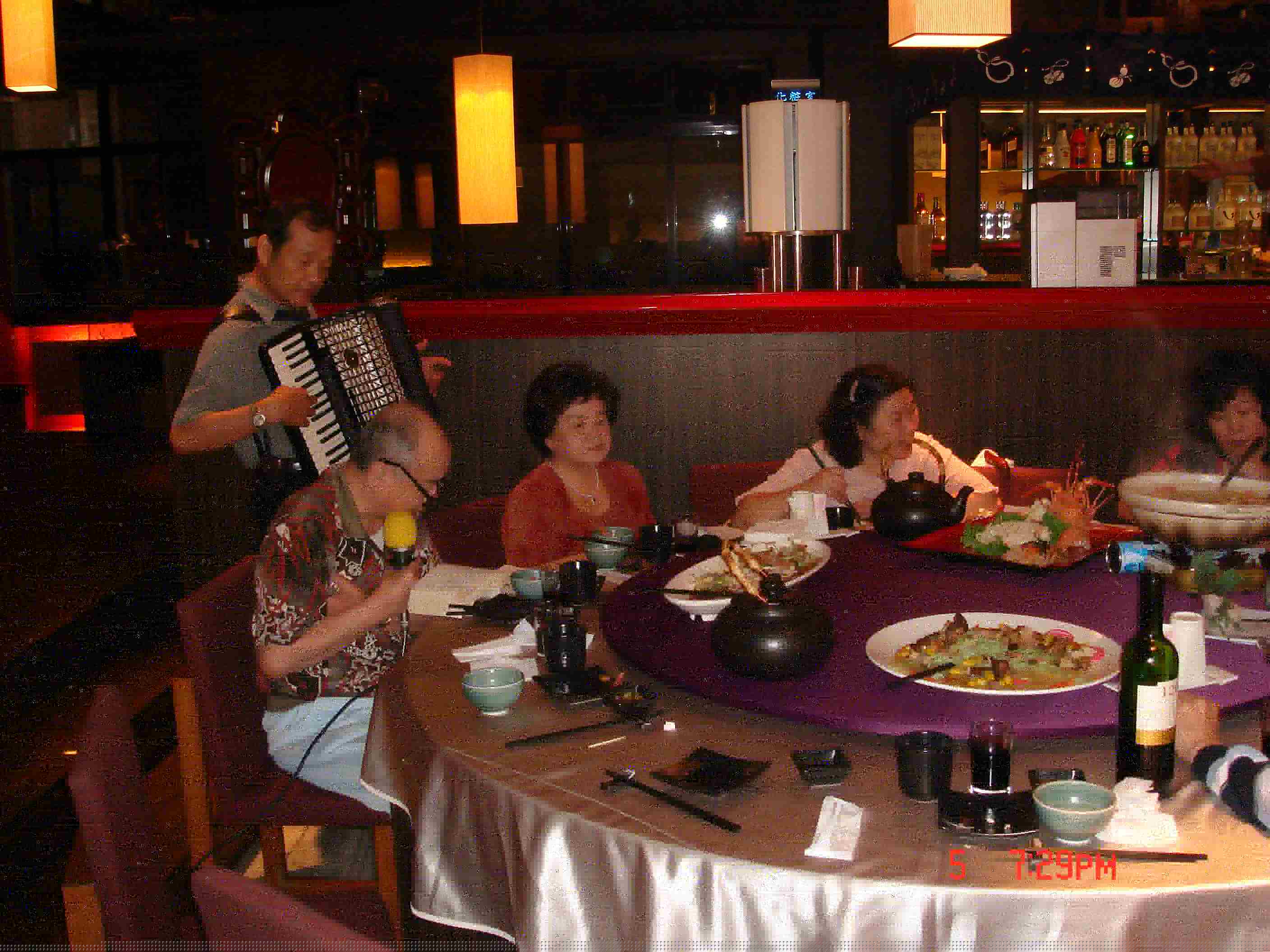
【Nakasi】: People sing a song to the accompaniment of a live band.
The term derives from the Japanese word ‘NAGASHI’ which means the accompaniment to a song or tune. There are one to three players who play musical instruments which usually are electric piano, guitar. Customer can sing their favorite songs by a live band. So, Nakasi is style of a live band accompaniment, and customers sing a song to a live electric piano accompaniment. It’s just like that teacher Alex is going to.
‘Ace of Spades’ is the heavy metal band Motorhead’s most famous song; I have not listened to it. The blog can have pictures, audio, video and text. Perhaps teacher Alex could sing the song and record it and publish on teacher blog, thanks you.
After Japanese invented Karaoke, Nakasi became out of fashion.
【Karaoke】: People sing a song to the accompaniment of Karaoke machine without live player.
Karaoke derives from Japanese word ‘Kara’ and ‘okesutora’. The word ‘kara’ means empty, and ‘okesutora’ means ‘orchestra’. In other words, Karaoke means that the orchestra which plays music in the empty box of speaker. Japanese invented a machine called Karaoke which records accompaniment music only; people sing their favorite song to the accompaniment of Karaoke machine. There are many Karaoke shops in Taiwan, people sing in a public place of shop, not in the chamber of shop, and customers order a song by turns to sing. First come, first serve. Singer used a songbook to guide them. No matter your singing is good or bad, there are followed by a burst of applause of all people in the shop after you sing a song. Singer will feel good.
Many people like privacy, they don’t like to sing a song in the public like Karaoke shop, therefore, KTV salons popped up right away.
【KTV】: People sing a song to the accompaniment of Karaoke machine, and with TV.
KTV means Karaoke with TV, lyrics are displayed and synchronized on music video on the monitor to guide the singer to sing. The KTV salon provides many little rooms like chamber, the customer can enjoy their singing with a few friends in a private place of chamber. At the present time, in order to catch up KTV salons, Karaoke shops also use the music video and TV to display the lyrics instead of using the songbook.
Teacher Alex talked about the locker, there are something different from Taiwan and western world:
Junior high and high school in Taiwan, the student don’t have regular locker. That’s because, every student has a regular classroom and a regular desk with a draw, they stay at the same classroom and wait for different teachers come to the classroom to teach them the different subject, which means that all teachers have to go to different classrooms to teach their subject, the teacher doesn’t have a regular classroom. The social place of students in school is the classroom instead of the place of lockers or hallway. It’s quite different from the western world.
Hi Alex, it confused me of your sentence which is below:
'the first thing we had to do was take all our valuables out of our pockets and put them into lockers'
My question is, why can the two verbs, ‘WAS’ and ‘TAKE’, be so close like in the neighborhood?
Love always,
Sing a song, happy a day.
James Zhih-Cheng Wu
Photo: My father sang to a Nakasi accompaniment.
Comments
Hi James, in the end of your blog, you asked the question that i also want to know. thanks! Your essay is excellent! it contains so much interesting information. Did they cost you a long time to collect and edit them?
God sake! Here in Taiwan KTV is fashion, indeed! When you go to Taipei, Ximeng Ding, like, in every corner there is one!! Along with KTV, there is MTV. You go to a place, it looks like a video renthal shop, you chose your movies, than you rent a room, and you can take as much people as you want. That's nice. Just think about ti.. I would like to add a coment on James note about socialization! Back home the students just have one classroom, but it isn’t because of it that we don’t socialize with people from other classes. There, as well as in here, we have breaks, a time that people are suposed to leave their classrooms and socialize. Just a few people stay inside the class. When the bell rings we leave our classes, and while waiting for our parents or walking home we meet other people, talk, socialize. Here it seems to be diferent, all things are done whithin the class people. Taking the train after class, activities. Back home we incentivate students to not stay just within their own classes!!!! It’s a different culture. How I wish i had clarity of ideas to write a whole month in this blog!
Hi,James.You know about Karaoke very well! Karaoke was invented by Daisuke Inoue.But he didn't apply for a patent for the Karaoke machine.I don't know why he didn't.If he had applied for it,he would be a multimillionaire! We have a lot of KTV in Japan but we don't say KTV.We say in Japanese "Karaoke box" which we can enjoy singing privately in a room. And you know,we can enjoy Karaoke at home with a microphone which has many songs data in it. We just connect it to TV.It is really fun and convenient. I'd like to add that your view of Nagashi.Nagashi is a singer who usually sings to his/her own guitar accompaniment in front of customers at bar.Customers request Nagashi to sing a song of their favorite popular songs and pay a small amount of money.But I don't know how many Nagashi exist these days. With best regards.
hello friend Thank you for good article, I will go on talking about your interesting topic.
Hi James, Your blog is utterly amusing and interesting and whatever... Every thing has its own charm: the little sentences you use to post at the end of your posts, the imagination stories and the true stories you write about, the words you choose to talk about them. I would ask you to talk about something, but I'm not sure this topics could be interesting for anyone. By the way, just if you fill like doing it, could you publish something about the religion in Taiwan? Or thinking about something different: I would be interested in knowing your point of view about feelings, no matter witch kind of feelings. Imagination/true discussion are equally welcome. Thank you. Regards, Lana
James, thank you for your story. I've never heard of "Nakasi", but we in Russia also had such a tradition - to sing alltogether to the accompaniment (usually at home with friends). KTV (we call it just karaoke) is very popular here too. Especially in summer one can hear it everywhere. And we like very much when karaoke machine estimates our singing. It seems to me that one should sing louder to get high score. What do you think?
Hi. I prefer singing a song in Karaoke room ,a variety of songs , economical,and convenient. It is very hilarious and such a relaxing time in there with friends. Thanks..
hello James congratulatinos for you singing in public. That's something I'll never be courageous enough. And about lockers, we in Argentina do the same way you in Taiwan do, I mean, one classroom and teachers coming, and between subjects we go to backyard for social activities, for 5 or 10 minutes each break. I enjoy your blog, nice to meet you here.
Thanks for all your contributions. This blog has now closed and can no longer accept new comments.


