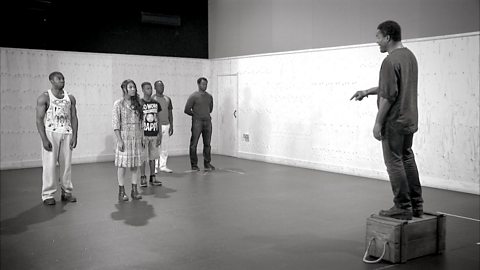
CYRIL NRI:Shakespeare dealt with gods, kings and men brilliantly. But, when any one of those steps above where they can be or should be, trouble ensues.
How do we know who goes in when? Who stabs him when–
PATERSON JOSEPH:"Speak, hands, for me!" is the first stab and that’s Casca's line, so I think we're locked into that.
CYRIL NRI:Casca starts, it tells us that Casca is the first–
JOSEPH MYDELL:I'm the first.
GBOLAHAN OBISESAN:Right.
JOSEPH MYDELL:We know that Casca indeed is supposed to make the first thrust. 'We know that Casca also is very close to Caesar,' so therefore that’s why he's able to make that first thrust. 'Caesar would not be suspicious of him being so close to him.'
CHINNA WODU:I feel like it's more Casca's waiting for the right moment.
GBOLAHAN OBISESAN:That’s right.
CHINNA WODU:Because the line "Casca, be sudden" means use the element of surprise.
PATERSON JOSEPH:Yeah.
CHINNA WODU:So he's waiting for the right moment–
JEFFERY KISSOON:When Casca starts, everybody has got to be in there.
CHINNA WODU:"O Caesar–"
JEFFERY KISSOON:"hence! Wilt thou lift up Olympus?"
ANDREW FRENCH:"Great Caesar–"
JEFFERY KISSOON:"doth not Brutus bootless still stand?"
JOSEPH MYDELL:"Speak, hands, for me!"
SCREAMING
JOSEPH MYDELL:It's so strong that line, "speak, hands, for me!" And so I take my cue from that, knowing that I sit back, I wait, and I wait for the right moment, I allow Caesar to pontificate and puff himself up - and then.
JEFFERY KISSOON:From all these brave, honourable men - the blow is a behind the back blow.
CHINNA WODU:Exactly.
JEFFERY KISSOON:Which says something about the strength of Caesar, that he has to be behind him–
ANDREW FRENCH:Well it's Caesar, it's no small thingto stab Caesar.
JOSEPH MYDELL:Oh no, no.
ANDREW FRENCH:Better make sure it works!
JOSEPH MYDELL:Absolutely.
JEFFERY KISSOON:Yeah but it means he's also like a raging bull, whatever. He's capable of defending himself it seems.
JOSEPH MYDELL:"Speak, hands, for me!"
SCREAMING
HEAVY BREATHING
JEFFERY KISSOON:"Et tu, Bruté?"
PATERSON JOSEPH:'"Et tu, Bruté?" And you Brutus? Are you going also going to kill me? 'One of the most famous lines in all of Shakespeare isn't it?' It's like Caesar is saying "I loved you all. And I thought you all knew that I loved you. But you, especially you Brutus."
JEFFERY KISSOON:In our production… his only hope-- because he's still standing there, he hasn’t gone down, he's very strong, they've all stabbed him, and his only hope would be Brutus, who's like a son to him.
PATERSON JOSEPH:So well if… the person that I loved the most is going to kill me then I'd rather die than live.
JEFFERY KISSOON:'"Et tu, Bruté?" "Then falls Caesar."
SCREAMING
JEFFERY KISSOON:'In our production, Caesar,' he covered his head and Brutus stabbed him in the private parts.
PATERSON JOSEPH:And there is no more violent act that I can think of. 'It's a very visceral act, the stabbing of Caesar in that way.'
CHINNA WODU:"Liberty! Freedom!" "Tyranny is dead! Run hence, proclaim, cry it about the streets."
CYRIL NRI:"Some to the common pulpits, and cry out, liberty, freedom, and enfranchisement!" The freneticism is shown in the language, in its jagged languagein not quite having the plan in – Nobody quite knows when to act. And as with these things, it goes way over the top.
GBOLAHAN OBISESAN:There's no self-respecting human being within the audience who would see them going at this savage act and go, "Oh my god, I completely support the way they carry out their actions."
PATERSON JOSEPH:It is a play that… that touches heart strings, it's not about the intellect it's about how do you feel about this, though?
GBOLAHAN OBISESAN:As an idea, it sounded brilliant. The way it's carried out - it's savage.
The actors use the clues in the text to build their unique interpretation of Caesar’s murder.
PLEASE NOTE: This scene contains violence which some people may find upsetting. Teacher review is recommended prior to use in class.
This short film is from the BBC series, Shakespeare Unlocked.
Teacher Notes
Ask your students to read through Caesar's speeches, making a 'thumbs up' sign every time Caesar speaks about himself and a 'thumbs down' sign when he speaks of others.
How does this help to emphasise Shakespeare's use of language here, and his creation of character for Caesar?
Ask students to draw a staircase or escalator.
On it, they should write the words and phrases that Caesar uses about himself in what they see as the increasing order of arrogance. They could draw a graph of the tension in the scene, with a different coloured line for each character, annotating key words at each spike in tension.
A release of tension comes with Casca's words and the first blow. Laying out the scene in this schematic form should clarify the way in which Shakespeare intensifies the tension in the scene so as to bring about the point of murder.
Curriculum Notes
This short film is suitable for teaching GCSE English literature and drama in England, Wales and Northern Ireland and National 4/ 5 in Scotland.
More from Shakespeare Unlocked: Julius Caesar
Act I, Scene 2 - Cassius enlists Brutus. video
Cassius confronts Brutus about his friend’s uncharacteristic coldness.
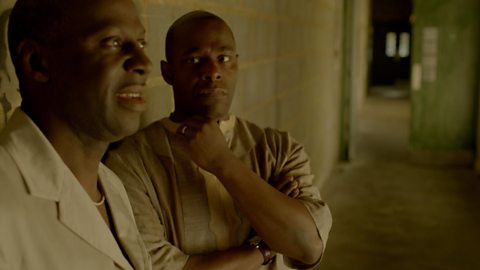
Act I, Scene 2 - Cassius and Brutus (workshop) video
The actors explore what their characters are trying to achieve in this early confrontation.
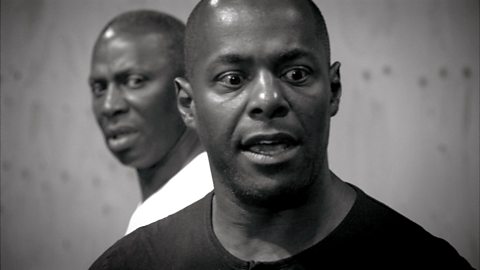
Act I, Scene 2 - Persuading Brutus (workshop) video
Exploring the tactics Cassius uses to persuade Brutus to join the plot to assassinate Caesar.
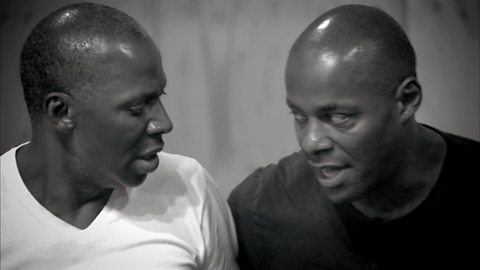
Act I, Scene 2 - Marking the words (workshop) video
The actors explore key points in Cassius’s speech about Caesar and the future of Rome.
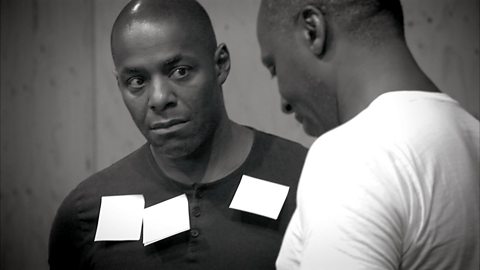
Act 3, Scene 1 - The Murder. video
Conspirators isolate Caesar on the way to the Senate and Cimber presents his petition.
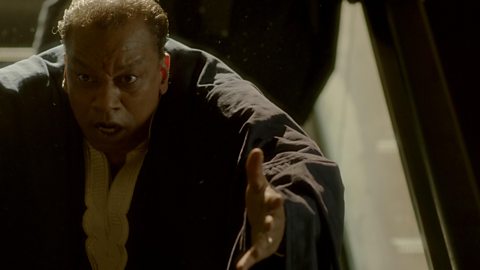
Act 3, Scene 1 - Leader or dictator (workshop) video
The actors explore the character of Julius Caesar.
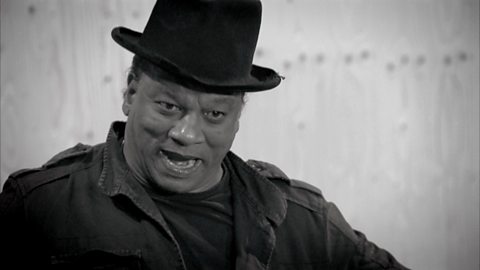
Act 3, Scene 2 - The Orations. video
Brutus explains why conspirators killed Caesar and insists they stay to hear Mark Antony.
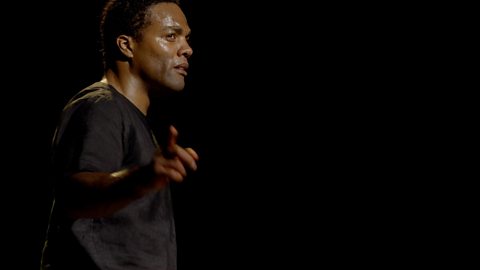
Act 3, Scene 2 - Rhetoric and politics (workshop) video
The two funeral speeches are compared, each set against the structures of rhetoric.
Act 3, Scene 2 - Brutus reasons with the crowd (workshop) video
A practical exercise as the citizens respond to Brutus’s funeral speech.
Act 3, Scene 2 - Mark Antony moves the crowd (workshop) video
The citizens explore their responses to Mark Antony’s speech.