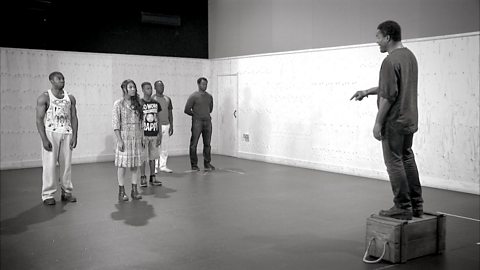
Cassius:Will you go see the order of the course?
Brutus:Not I.
Cassius:I pray you, do.
Brutus:I am not gamesome. I do lack some part of that quick spirit that is in Antony. Let me not hinder, Cassius, your desires. I'll leave you.
Cassius:Brutus, I do observe you now of late
Cassius:I have not from your eyes that gentleness and show of love as I was wont to have.
Cassius:You bear too stubborn and too strange a hand over your friend that loves you.
Brutus:Cassius, be not deceived. If I have veiled my look, I turn the trouble of my countenance merely upon myself.
Brutus:Vexed I am of late with passions of some difference, conceptions only proper to myself, which give some soil perhaps to my behaviours.
Brutus:But let not therefore, my good friends, be grieved among which number, Cassius, be you one nor construe any further my neglect than that poor Brutus, with himself at war, forgets the shows of love to other men.
Cassius:Then, Brutus, have I much mistook your passion, by means whereof this breast of mine hath buried thoughts of great value, worthy cogitations.
Cassius:Tell me, good Brutus, can you see your face?
Brutus:No, Cassius, for the eye…
BOTH:sees not itself but by reflection, by some other things.
Cassius:'Tis just. And it is very much lamented, Brutus, that you have no such mirrors as will turn your hidden worthiness into your eye that you may see your shadow.
Cassius:I have heard where many of the best respect in Rome, except immortal Caesar, speaking of Brutus and groaning underneath this age's yoke, have wished that noble Brutus had his eyes.
Brutus:Into what dangers would you lead me, Cassius, that you would have me seek into myself for that which is not in me?
Cassius:Therefore, good Brutus, be prepared to hear.
Cassius:And since you know you cannot see yourself so well as by reflection, I, your glass, will modestly discover to yourself that of yourself which you yet know not of.
Brutus:What means this shouting?
Brutus:I do fear, the people choose Caesar for their king.
Cassius:Ay, do you fear it?
Cassius:Then must I think you would not have it so.
Brutus:I would not, Cassius.
Brutus:Yet I love him well.
Brutus:But wherefore do you hold me here so long? What is it that you would impart to me?
Brutus:If it be aught toward the general good, set honour in one eye and death i' th' other, and I will look on both indifferently, for let the gods so speed me as I love the name of honour more than I fear death.
3000:03:19:16 00:03:25:04Cassius:I know that virtue to be in you, Brutus, as well as I do know your outward favor.
Cassius:Well, honour is the subject of my story.
Cassius:I cannot tell what you and other men think of this life, but, for my single self, I had as lief not be as live to be in awe of such a thing as I myself.
Cassius:I was born free as Caesar. So were you.
Cassius:We both have fed as well, and we can both endure the winter's cold as well as he.
Cassius:For once upon a raw and gusty day, the troubled Tiber chafing with her shores, Caesar said to me, "Darest thou, Cassius, now leap in with me into this angry flood." Upon the word, accoutred as I was, I plunged in and bade him follow. So indeed he did.
Cassius:The torrent roared, and we did buffet it with lusty sinews, throwing it aside and stemming it with hearts of controversy.
Cassius:But ere we could arrive the point proposed.
Cassius:Caesar cried, "Help me Cassius, or I sink!" And this man is now become a god, and Cassius is a wretched creature and must bend his body if Caesar carelessly but nod on him.
Cassius:He had a fever when he was in Spain,
Cassius:And when the fit was on him, I did mark how he did shake. 'Tis true, this god did shake! His coward lips did from their colour fly, and that same eye whose bend doth awe the world did lose his lustre.
Cassius:I did hear him groan, ay. And that tongue of his that bade the Romans mark him and write his speeches in their books "Alas," it cried, "give me some drink Titinius." As a sick girl.
Cassius:Ye gods, it doth amaze me A man of such a feeble temper should so get the start of the majestic world and bear the palm alone.
Brutus:Another general shout.
Brutus:I do believe these applauses are for some new honours that are heaped on Caesar.
Cassius:Why, man, he doth bestride the narrow world like a Colossus, and we petty men walk under his huge legs and peep about to find ourselves dishonourable graves.
Cassius:Men at some times are masters of their fates. The fault, dear Brutus, is not in our stars but in ourselves, that we are underlings.
Cassius:Brutus and Caesar - what should be in that "Caesar"?
Cassius:Why should that name be sounded more than yours? Write them together, it is as fair a name. Sound them, it doth become the mouth as well. Weigh them, it is as heavy. Conjure with them "Brutus" will start a spirit as soon as "Caesar."
Cassius:Now in the names of all the gods at once, upon what meat doth this our Caesar feed that he is grown so great?
Cassius:Age, thou art shamed!
Cassius:Rome, thou hast lost the breed of noble bloods!
Cassius:When went there by an age, since the great flood, but it was famed with more than with one man?
Cassius:When could they say till now, that talked of Rome, that her wide walls encompassed but one man?
Cassius:Now is it Rome indeed, and room enough, when there is in it but one only man.
Brutus:That you do love me, I am nothing jealous. What you would work me to, I have some aim.
Brutus:How I have thought of this and of these times I shall recount hereafter.
Brutus:For this present, I would not, so with love I might entreat you, be any further moved.
Cassius confronts Brutus about his friend’s uncharacteristic coldness.
When Cassius is reassured on this count he reveals his own fear of Caesar’s growing power, probes Brutus’s feelings on the matter, and tries to persuade him that something must be done about Caesar.
This short film is from the BBC series, Shakespeare Unlocked.
Teacher Notes
Before watching, ask your students to brainstorm what they would do if they had a friend who suddenly seemed to have grown less friendly to them, and no longer wanted to do things together as they used to.
Would they confront them? If so, how could they do this without losing their friend?
Ask students, in pairs, to discuss how they would raise with a friend the issue of a mutual friend who they think is behaving badly (if they are not sure how close their friend is to this person or how they will feel about their behaviour).
What could they do to start off the conversation in a way which will allow them to go as little or as deeply into the subject as they need?
Then watch and ask them how far the exchange between Cassius and Brutus matched their predictions.
After watching, ask students to consider the stages by which Cassius gains Brutus's confidence.
How does he move the topic on to his own concerns with Caesar?
Ask students to highlight the moments when he seems to manipulate the conversation in his desired direction.
Give students a copy of the scene, and ask them to highlight the questions in the scene.
What impression of the scene do the questions alone give?
In some respects, Shakespeare frames the scene around these questions, and their nature changes as the scene goes on, from simple questions of fact to questions which - finally - Brutus cannot answer without thinking and reflecting for a space of time.
Curriculum Notes
This short film is suitable for teaching GCSE English literature and drama in England, Wales and Northern Ireland and National 4/ 5 in Scotland.
More from Shakespeare Unlocked: Julius Caesar
Act I, Scene 2 - Cassius and Brutus (workshop) video
The actors explore what their characters are trying to achieve in this early confrontation.
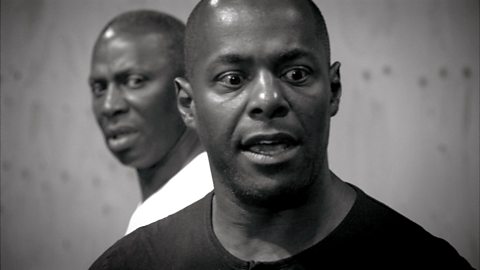
Act I, Scene 2 - Persuading Brutus (workshop) video
Exploring the tactics Cassius uses to persuade Brutus to join the plot to assassinate Caesar.
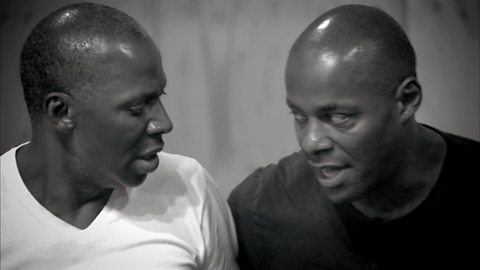
Act I, Scene 2 - Marking the words (workshop) video
The actors explore key points in Cassius’s speech about Caesar and the future of Rome.
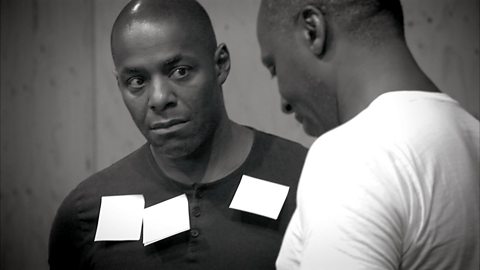
Act 3, Scene 1 - The Murder. video
Conspirators isolate Caesar on the way to the Senate and Cimber presents his petition.
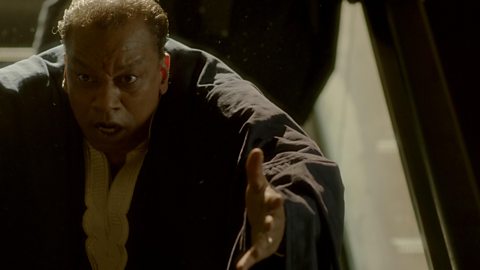
Act 3, Scene 1 - Leader or dictator (workshop) video
The actors explore the character of Julius Caesar.
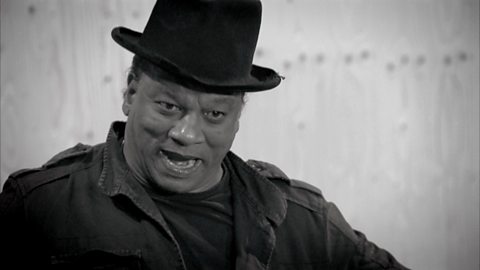
Act 3, Scene 1 - Killing Caesar (workshop) video
The actors use the clues in the text to build an unique interpretation of Caesar’s murder.
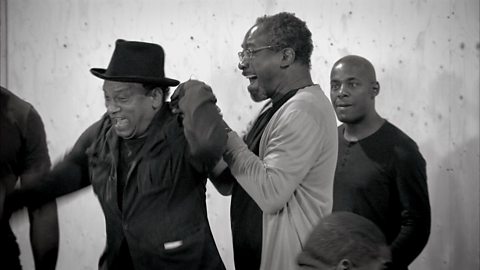
Act 3, Scene 2 - The Orations. video
Brutus explains why conspirators killed Caesar and insists they stay to hear Mark Antony.

Act 3, Scene 2 - Rhetoric and politics (workshop) video
The two funeral speeches are compared, each set against the structures of rhetoric.
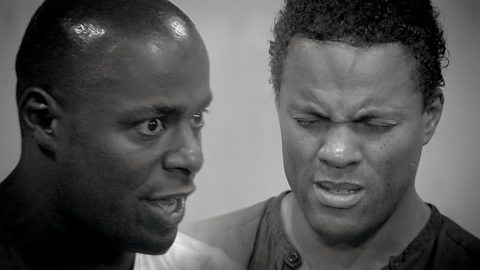
Act 3, Scene 2 - Brutus reasons with the crowd (workshop) video
A practical exercise as the citizens respond to Brutus’s funeral speech.
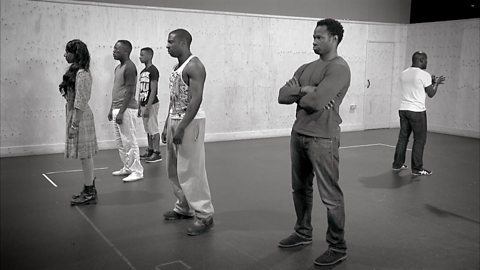
Act 3, Scene 2 - Mark Antony moves the crowd (workshop) video
The citizens explore their responses to Mark Antony’s speech.