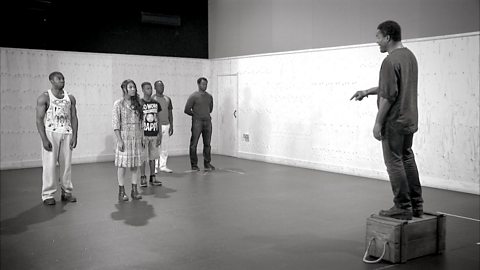
PATERSON JOSEPH:Shakespeare's written quite a poignant story of two men who-- although they're very different emotionally, one keeps his emotions, or tries to keep his emotions in control, Brutus, and another who wears his heart on his sleeve, I think the two of them complimenteach other really well.
CYRIL NRI:"Good Brutus, be prepared to hear. And since you know you cannot see yourself so well as by reflection I, your glass, will modestly discover to yourself that of yourself which you yet know not of."
CYRIL NRI:Cassius has shared the dream of the republic with Caesar and has witnessed him running ahead of the pack and taking power for himself. And he feels very strongly that something needs to be done about that.
GBOLAHAN OBISESAN:Because Cassius is the main driving force of this scene I would like to see you use that to really press Brutus.
CYRIL NRI:Charm. "Will you go see the order of the course?"
PATERSON JOSEPH:Block. "Not I."
CYRIL NRI:Warm. "I pray you do."
PATERSON JOSEPH:Avoid. "I am not gamesome."
GBOLAHAN OBISESAN:Brutus tries to remove himself from the situation as quickly as possible.
PATERSON JOSEPH:Run. "I'll leave you.
CYRIL NRI:Brutus."
GBOLAHAN OBISESAN:Cassius then, somewhat uses emotional blackmail to coax him back in.
CYRIL NRI:Accuse. "I have not from your eyes that gentleness and show of love as I was want to have"
CYRIL NRI:Pin. "You bear too stubborn and too strange a hand over your friend." Embrace. "That loves you."
PATERSON JOSEPH:What's great about it, is cause, you’re reacting almost from each thing that comes at you.
CYRIL NRI:Yeah.
PATERSON JOSEPH:In detail, as appose to I just hear the splurge of you trying to
CYRIL NRI:Yeah.
PATERSON JOSEPH:Make me feel guilty, basically.
CYRIL NRI:Because it then becomes very specific, if you find that to cajole doesn't quite get what you wanted out of the sentence, you know, you entice. Cassius says these are the reasons why he must die. This, this, this and this. He is a dictator.
GBOLAHAN OBISESAN:So, why don't we go for Brutus' pride.
PATERSON JOSEPH:Shall we do it?
CYRIL NRI:Yeah, let's have a go.
PATERSON JOSEPH:"But wherefore do you hold me here so long? What is it that you would impart to me? If it be aught toward the general good, set honour in one eye and death in the other, and I will look on both indifferently."
PATERSON JOSEPH:What' was curious about that is how much pride I could getand actually it's still there. When I play, there was always a touch of it but it was really, like, in the background and now I touch it, I really make it hit me.
PATERSON JOSEPH:"For let the gods so speed me as I love the name of honour more than I fear death.
CYRIL NRI:I know that virtue to be in you, as well as I do know your outward favour. Well… honour is the subject of my story."
PATERSON JOSEPH:The thing that Roman men had to do it their lives,
PATERSON JOSEPH:was to die with a noble name. With an honourable name. To do something. To make a mark. Now, you needed to be ambitious but you needed not to be ambitious, to be seen to ambitious, for yourself. It had to be for the Republic.
PATERSON JOSEPH:But you try and separate, I am going to do this for the Republic and, I'm doing this for my own glory from a human being.Impossible.
PATERSON JOSEPH:"I love the name of honour more than I fear death."
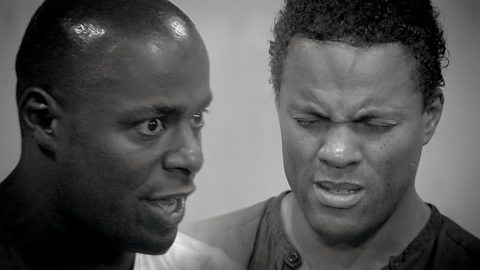
Paterson Joseph, playing Brutus, and Cyril Nri, as Cassius, explore in detail what each character is trying to achieve in this early confrontation.
This short film is from the BBC series, Shakespeare Unlocked.
Teacher Notes
As a warm-up exercise before watching the clip, introduce the idea that words and phrases can be said in a variety of ways.
Ask your students in groups to see how many ways that they can deliver a line, e.g. "Into what dangers would you lead me, Cassius" or "Then, Brutus, I have much mistook your passion" said as though proud, scared, angry, loving, joking and so on.
After watching, ask students to evaluate which emotions they think are predominant in each section.
Paterson Joseph speaks eloquently about how his exaggerated expression of pride in the exercise remained in his final interpretation.
Which elements for their lines do they think should remain in a final version?
The discussion about honour is an interesting one.
Ask students to select from the scene (by highlighting or underlining), as many words and phrases as they can that relate to the idea of honour; then to highlight or underline as many as they can that mention shame or dishonour.
Can they see a pattern? Then ask them to see if they can detect any other semantic fields in the scene (e.g. love, fear, war).
Curriculum Notes
This short film is suitable for teaching GCSE English literature and drama in England, Wales and Northern Ireland and National 4/ 5 in Scotland.
More from Shakespeare Unlocked: Julius Caesar
Act I, Scene 2 - Cassius enlists Brutus. video
Cassius confronts Brutus about his friend’s uncharacteristic coldness.
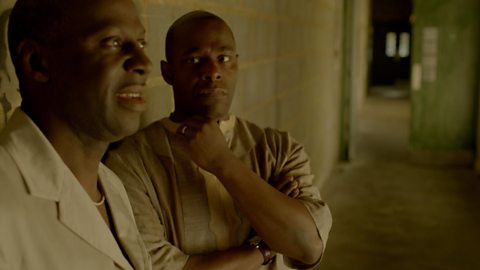
Act I, Scene 2 - Persuading Brutus (workshop) video
Exploring the tactics Cassius uses to persuade Brutus to join the plot to assassinate Caesar.
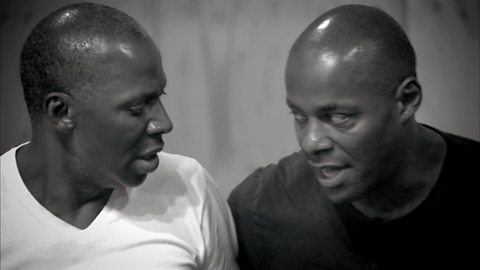
Act I, Scene 2 - Marking the words (workshop) video
The actors explore key points in Cassius’s speech about Caesar and the future of Rome.
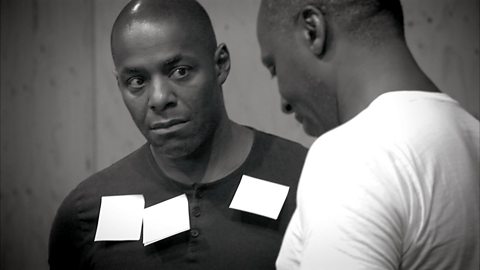
Act 3, Scene 1 - The Murder. video
Conspirators isolate Caesar on the way to the Senate and Cimber presents his petition.
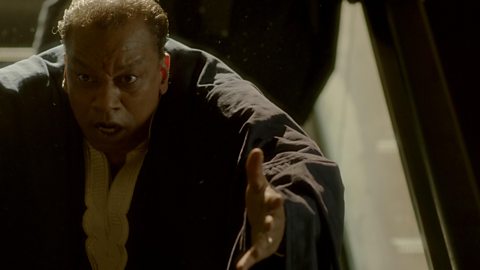
Act 3, Scene 1 - Leader or dictator (workshop) video
The actors explore the character of Julius Caesar.
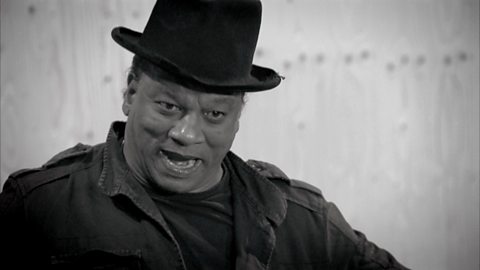
Act 3, Scene 1 - Killing Caesar (workshop) video
The actors use the clues in the text to build an unique interpretation of Caesar’s murder.
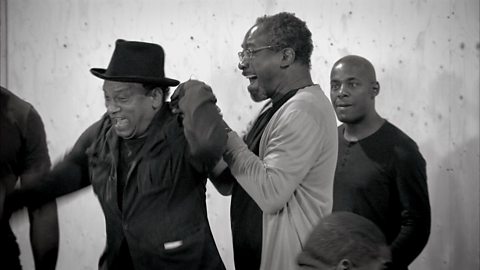
Act 3, Scene 2 - The Orations. video
Brutus explains why conspirators killed Caesar and insists they stay to hear Mark Antony.
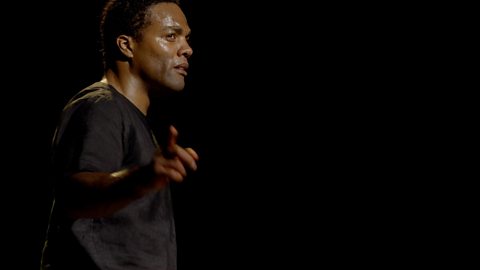
Act 3, Scene 2 - Rhetoric and politics (workshop) video
The two funeral speeches are compared, each set against the structures of rhetoric.
Act 3, Scene 2 - Brutus reasons with the crowd (workshop) video
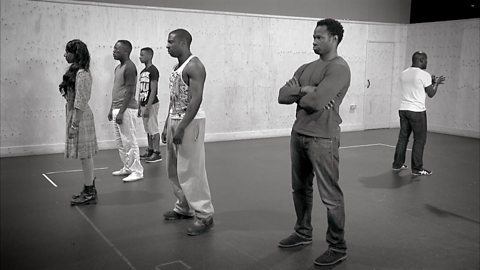
A practical exercise as the citizens respond to Brutus’s funeral speech.
Act 3, Scene 2 - Mark Antony moves the crowd (workshop) video
The citizens explore their responses to Mark Antony’s speech.