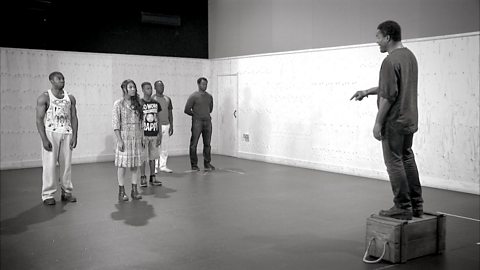
Paterson Joseph:Brutus says, "Look, why did I kill this man? I killed him to make you free. Not because I didn't like him, but because I loved you much more that I liked him." And this is political suicide admitting the truth.
Gbolahan Obisesan:We're gonna be looking at the role of the citizens during the oration after Caesar's assassination. And what would be nice is for you to stay out here and just face out, and the rest of you guys, if you just turn your backs on him and when you feel as if you're being swayed by Brutus' speech you just turn round and listen to him. Right let's do it yeah.
Jospeh Paterson:Be patient till the last. Romans, countrymen and lovers. Hear me for my cause and be silent that you may hear.
Paterson Joseph:Believe me for mine honour and have respect to mine honour that you may believe. Censure me in your wisdom and awake your senses that you may the better judge.
Paterson Joseph:If there be any in this assembly, any dear friend of Caesar's, to him I say, Brutus' love to Caesar was no less than his. If then that friend demand why Brutus rose against Caesar this is my answer. Not that I loved Caesar less but that I loved Rome more.
Paterson Joseph:Would you rather Caesar were living and die all slaves?
Paterson Joseph:Or that Caesar were dead to live all free men.
Gbolahan Obisesan:So was there a particular phrase that made you turn?
Simon Manyonda:Honour for me was the first word that really made me want to listen and the repetition of the word honour.
Samantha Lawson:For me it was more, "Hear me that you may the better judge."
Paterson Joseph:Awake your senses that you may the better judge.
Samantha Lawson:Because my character continually says, "Let us hear what they have to say. No, let us hear them." Let's hear what they're gonna say first of all before actually making that decision at the end of the forum scene.
Segun Akingbola:For me, yeah, "Would you rather Caesar live and be all slaves?"
Paterson Joseph:Would you rather Caesar were living and die all slaves?
Segun Akingbola:I hadn't thought of myself as a slave and having less liberty and freedom so that's the line that really made me think.
Chinna Wodu:The fact that he loves Rome.
Paterson Joseph:Not that I loved Caesar less but that I loved Rome more.
Chinna Wodu:He loves the people of Rome more than he loves the person needing it, so that made me want to listen a bit more.
Gbolahan Obisesan:And once you'd made your initial decision to turn to hear him was that enough to hold you?
Simon Manyonda:He lost me when he told me to listen to Antony because he had worked so because I did not want to hear him at first and then he convinced me to listen to him and then he asked me to listen to Antony and… I mean, it just didn't make any sense.
Paterson Joseph:But his actual mistake in the whole play is letting Antony speak at all.
Gbolahan Obisesan:Yeah.
Paterson Joseph:I think if Brutus had been more of a political player then he would have just gone, "Right, I've got them, I'm just gonna keep them. I'm not gonna let Antony, however rubbish I might think he is at oratory, have a go at these guys at all 'cause I've got them eating out of my hands."
Paterson Joseph:But he doesn't think that way unfortunately for him, politically.
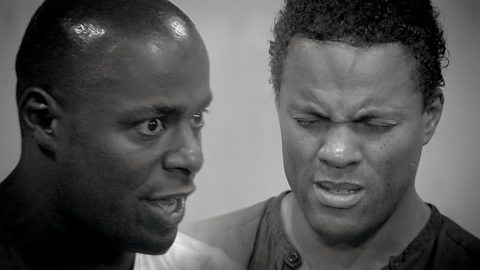
The individual and collective character of the citizens is developed through a practical exercise as they respond to Brutus’s funeral speech.
This short film is from the BBC series, Shakespeare Unlocked.
Teacher Notes
Ask your students to mark the moments when the actors move and turn to Brutus in their text.
Which words are particularly powerful, and why do they move the audience?
Can they see any words not mentioned which they think were designed to resonate with the audience?
Look at the use of repetition in this speech. Do the repeated words add pressure to the 'audience' of actors to respond to Brutus?
Curriculum Notes
This short film is suitable for teaching GCSE English literature and drama in England, Wales and Northern Ireland and National 4/ 5 in Scotland.
More from Shakespeare Unlocked: Julius Caesar
Act I, Scene 2 - Cassius enlists Brutus. video
Cassius confronts Brutus about his friend’s uncharacteristic coldness.
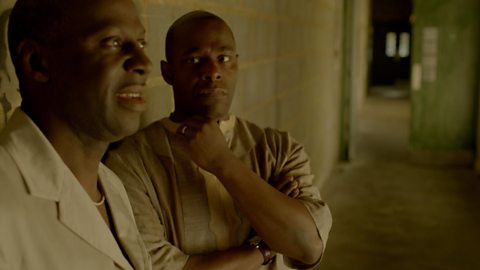
Act I, Scene 2 - Cassius and Brutus (workshop) video
The actors explore what their characters are trying to achieve in this early confrontation.
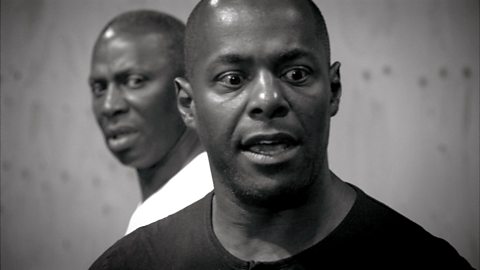
Act I, Scene 2 - Persuading Brutus (workshop) video
Exploring the tactics Cassius uses to persuade Brutus to join the plot to assassinate Caesar.
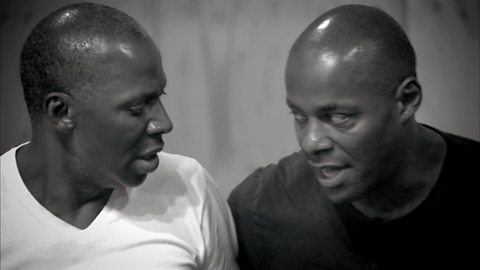
Act I, Scene 2 - Marking the words (workshop) video
The actors explore key points in Cassius’s speech about Caesar and the future of Rome.
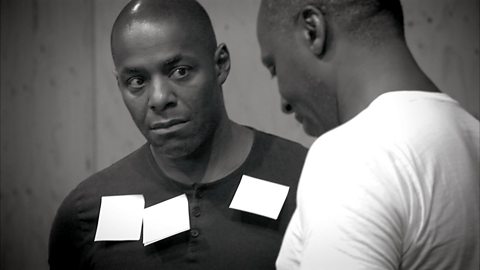
Act 3, Scene 1 - The Murder. video
Conspirators isolate Caesar on the way to the Senate and Cimber presents his petition.
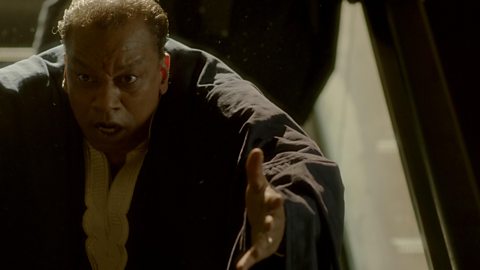
Act 3, Scene 1 - Leader or dictator (workshop) video
The actors explore the character of Julius Caesar.
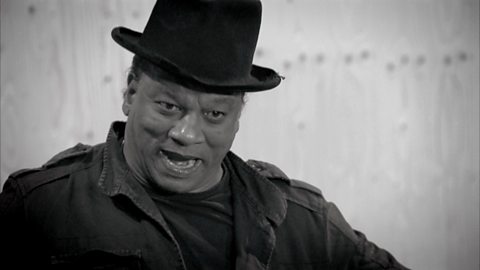
Act 3, Scene 1 - Killing Caesar (workshop) video
The actors use the clues in the text to build an unique interpretation of Caesar’s murder.
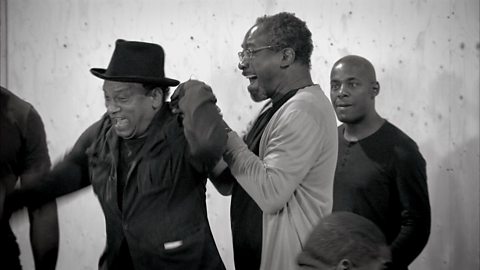
Act 3, Scene 2 - The Orations. video
Brutus explains why conspirators killed Caesar and insists they stay to hear Mark Antony.

Act 3, Scene 2 - Rhetoric and politics (workshop) video
The two funeral speeches are compared, each set against the structures of rhetoric.
Act 3, Scene 2 - Mark Antony moves the crowd (workshop) video
The citizens explore their responses to Mark Antony’s speech.