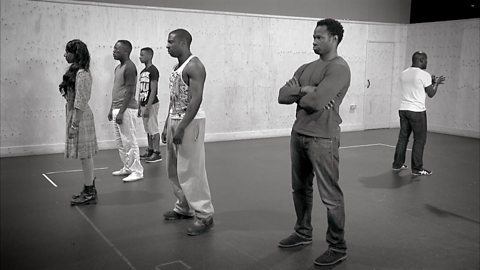
Ray Fearon:He wants them to get to mobmentality, because he wants them to actually rip the place apart, that's what it It's riots, that's what he wants.
Gbolahan Obisesan:What would be nice is to see whether we can mark those moments when what Antony's saying is affecting the citizens and they feel compelled to move closer towards him.
Gbolahan Obisesan:And if there's anything that he says that you disagree with, also taking steps back out, okay? And we're just start from this wall over here.
Ray Fearon:"The noble Brutus hath told you, Caesar was ambitious: if it were so, it was a grievous fault, and grievously hath Caesar answered it. Here, under leave of Brutus, and the rest, for Brutus is an honourable man.
Ray Fearon:So are they all, all honourable men, come I to speak in Caesar's funeral. He was my friend, faithful and just to me. But Brutus says he was ambitious, and Brutus is an honourable man. He hath brought many captives home to Rome, whose ransoms did the general coffers fill. Did this in Caesar seem ambitious?
Ray Fearon:When that the poor have cried, Caesar hath wept. Ambition should be made of sterner stuff: yet Brutus says he was ambitious, and Brutus is an honourable man."
Gbolahan ObisesanHow did that feel for you guys? Were you affected more than perhaps with Brutus? Or less so?
Chinna Wodu:Brutus's version was 'Caesar's assassination for dummies'.
Gbolahan ObisesanRight.
Chinna Wodu:And Antony's version is actually, I think you're intelligent enough to think about this a little bit more and see the truth for yourself.
Mark Ebulue:For me, I've just been talked to about Brutus and I'm pretty much on Brutus's side, I mean I'm not just going to jump straight, though he does give some very, very good valid interesting points.
Ray Fearon:"You all did see that, on the Lupercal, I thrice presented him a kingly crown, which he did thrice refuse: was this ambition?"
Mark Ebulue:I think it's the way it's constructed, he asks a lot of questions.
Ray Fearon:But it's questions that you can't answer. So he's kind of drawing it out of them. To think for themselves.
Ray Fearon:"You all… did love him once. Not without cause, what cause withholds you then to mourn for him?"
Samantha Lawson:He's not presenting the argument as black and white, he's saying, "But hang on you've seen this, you've seen this, you've seen Caesar do this and you loved Caesar once," and you're actually it's almost as though you're giving us a lot more credit from that point of view as Antony. To allow us to come up with the conclusion on our own.
Gbolahan ObisesanYeah, yeah.Samantha Lawson:Even though what you're actually doing is being very manipulative with it, but for us it feels as though we are the ones in control.
Mark Ebulue:The point that Brutus misses is that Brutus talks at people, whereas I think Mark Antony talks to people, with people.
Gbolahan ObisesanYes.
Mark Ebulue:And I think, because of that, there is a bigger connection.
Ray Fearon:Mark Antony and Caesar, they've come from nothing. And built themselves up, so they've got more of an identification, 'with the people, so obviously that is what I use to my advantage.'
Gbolahan ObisesanHow comes it feels as if there's still the distance between you and him? How come no one got right behind him to kind of say, "Hey everyone, you know, he's making a lot of sense."
Mark Ebulue:I still feel instinctively that there is more that he has to say.
Chinna Wodu:Yeah, I think I'm quite the same actually. At this point in the speech he's said, bear with me, because he's got a bit emotional so I know there's more to come. So I'm prepared to listen a bit more and find out what else he's got to say about Caesar and the conspirators.
Ray Fearon:They only got half way because Mark Antony still had a lot more work to do and Shakespeare has given him those speeches to help him get them to rise up and mutiny and revolt against Brutus and the rest of the conspirators.
The citizens explore their responses to Mark Antony’s speech.
The actors then explain why the citizens turn away from Brutus to support Antony.
This entirely alters the course of the play.
This short film is from the BBC series, Shakespeare Unlocked.
Teacher Notes
Mark Antony's speech is famous for its opening — but it is markedly similar to that of Brutus.
Focus on what makes the speeches different, using the comments made by the actors here as a starting point.
How is Antony's persuasiveness here differently structured from Brutus's speech? (The length of the speech and the interpolations of the crowd are both clues here).
Taking both speeches, look carefully at the structure of verse and prose.
Ask your students, in pairs, to turn Brutus's speech into iambic pentameter and to take Antony's speech out of verse and turn it into prose, while staying as close to Shakespeare's words as possible by using only subtraction or repetition of words already in each speech.
How does this exercise change the nature of each speech?
Curriculum Notes
This short film is suitable for teaching GCSE English literature and drama in England, Wales and Northern Ireland and National 4/ 5 in Scotland.
More from Shakespeare Unlocked: Julius Caesar
Act I, Scene 2 - Cassius enlists Brutus. video
Cassius confronts Brutus about his friend’s uncharacteristic coldness.
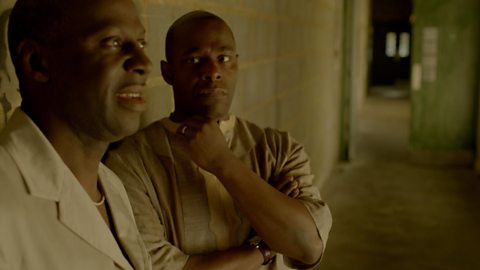
Act I, Scene 2 - Cassius and Brutus (workshop) video
The actors explore what their characters are trying to achieve in this early confrontation.
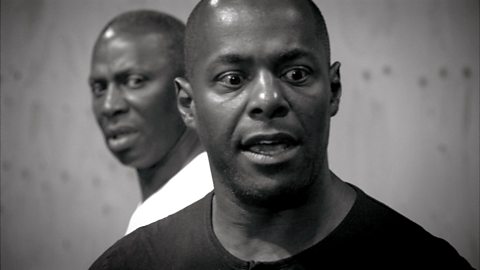
Act I, Scene 2 - Persuading Brutus (workshop) video
Exploring the tactics Cassius uses to persuade Brutus to join the plot to assassinate Caesar.
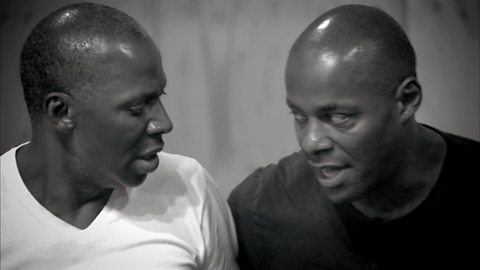
Act I, Scene 2 - Marking the words (workshop) video
The actors explore key points in Cassius’s speech about Caesar and the future of Rome.
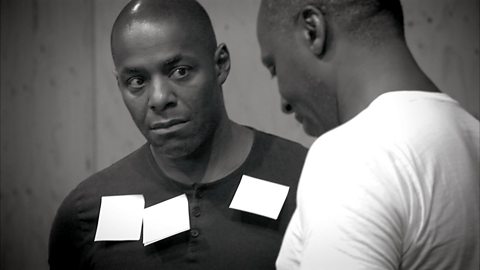
Act 3, Scene 1 - The Murder. video
Conspirators isolate Caesar on the way to the Senate and Cimber presents his petition.
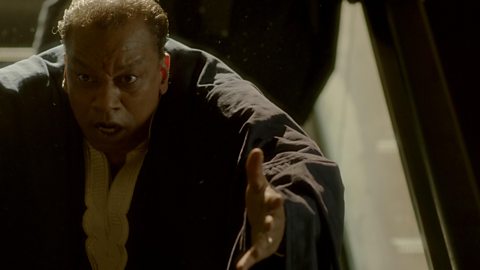
Act 3, Scene 1 - Leader or dictator (workshop) video
The actors explore the character of Julius Caesar.
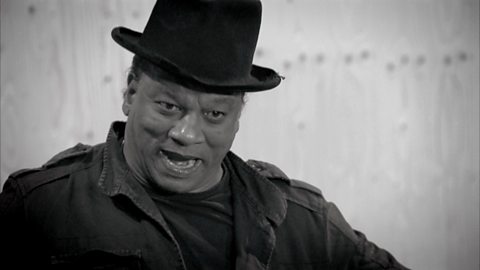
Act 3, Scene 1 - Killing Caesar (workshop) video
The actors use the clues in the text to build an unique interpretation of Caesar’s murder.
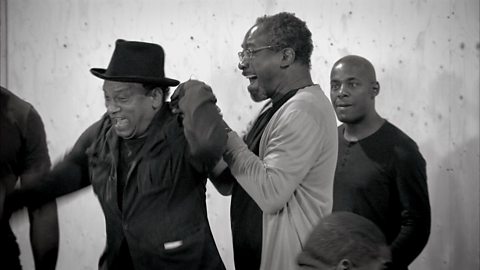
Act 3, Scene 2 - The Orations. video
Brutus explains why conspirators killed Caesar and insists they stay to hear Mark Antony.
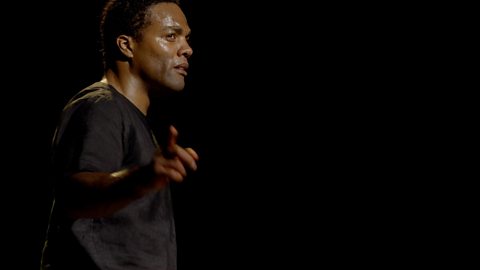
Act 3, Scene 2 - Rhetoric and politics (workshop) video
The two funeral speeches are compared, each set against the structures of rhetoric.
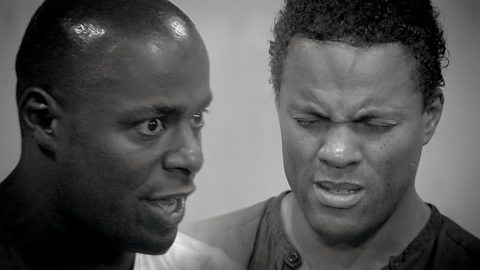
Act 3, Scene 2 - Brutus reasons with the crowd (workshop) video
A practical exercise as the citizens respond to Brutus’s funeral speech.