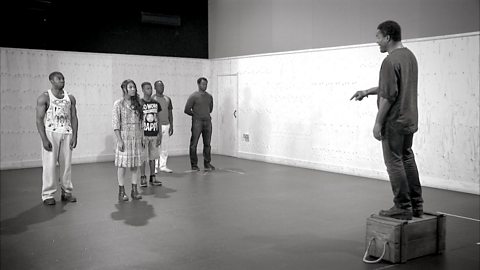
Metellus Cimber:O Caesar!
Julius Caesar:What is now amiss?
Metellus Cimber:Most high, most mighty, and most puissant Caesar, Metellus Cimber throws before thy seat an humble heart.
Julius Caesar:I must prevent thee, Cimber. These couchings and these lowly courtesies might fire the blood of ordinary men and turn preordinance and first decree into the law of children.
Julius Caesar:Be not fond, to think that Caesar bears such rebel blood that will be thawed from the true quality with that which melteth fools.
Julius Caesar:I mean, sweet words, low-crooked curtsies, and base spaniel fawning. Thy brother by decree is banished. If thou dost bend and pray and fawn for him, I spurn thee like a cur out of my way. Know, Caesar doth not wrong, nor without cause will he be satisfied.
Metellus Cimber:Is there no voice more worthy than my own to sound more sweetly in great Caesar's ear for the repealing of my banished brother?
Marcus Brutus:I kiss thy hand, but not in flattery, Caesar. Desiring thee that Publius Cimber may have an immediate freedom of repeal.
Julius caesar:What, Brutus?
Caius Cassius:Pardon, Caesar, Caesar, pardon. As low as to thy foot doth Cassius fall to beg enfranchisement for Publius Cimber.
Julius Caesar:I could be well moved if I were as you. If I could pray to move, prayers would move me. But I am constant as the northern star, of whose true-fixed and resting quality there is no fellow in the firmament.
Julius Caesar:The skies are painted with unnumbered sparks. They are all fire and every one doth shine, but there is but one in all doth hold his place. So in the world. It is furnished well with men, and men are flesh and blood, and apprehensive, yet in the number I do know but one that unassailable holds on his rank, unshaked of motion.
Julius Caesar:And that I am he let me a little show it even in this that I was constant Cimber should be banished, and constant do remain to keep him so.
Cinna:O Caesar!
Julius Caesar:Hence! Wilt thou lift up Olympus?
Decius Brutus:Great Caesar -
Julius Caesar:Doth not Brutus bootless kneel?
Casca:Speak hands, for me!
SCREAMING
GRUNTING
Julius Caesar:GASPS
Julius Caesar:Et tu, Bruté?
Julius Caesar:Then fall, Caesar.
SCREAMS
SHOUTING
GRUNTING
GRUNTS
Cinna:Liberty! Freedom! Tyranny is dead! Run hence, proclaim, cry it about the streets.
Caius Cassius:Some to the common pulpits, and cry out, "Liberty, freedom, and enfranchisement!"
Marcus Brutus:People and senators, be not affrighted. Fly not. Stand still. Ambition's debt is paid.
Casca:Go to the pulpit, Brutus!
Decius Brutus:And Cassius too.
Marcus Brutus:Where's Lepidus?
Cinna:Here, quite confounded with this mutiny.
Metellus Cimber:Stand fast together, lest some friend of Caesar's should chance–
Marcus Brutus:Talk not of standing. Lepidus, good cheer, there is no harm intended to your person, nor to no Roman else. So tell them, Lepidus.
Caius Cassius:And leave us, Lepidus, lest that the people, rushing on us, should do your age some mischief.
Marcus Brutus:Do so. And let no man abide this deed but we the doers.
Caius Cassius:Where is Antony?
Trebonius:Fled to his house amazed. Men, wives, and children stare, cry out, and run as it were doomsday.
Marcus Brutus:Fates, we will know your pleasures, that we shall die, we know. 'Tis but the time, and drawing days out, that men stand upon.
Caius Cassius:Why he that cuts out twenty years of life cuts off so many years of fearing death.
Marcus Brutus:Stoop, Romans, stoop, and let us bathe our hands in Caesar's blood up to the elbows, and besmear our swords, then walk we forth, even to the marketplace and waving our red weapons o'er our heads let's all cry, "Peace, freedom, and liberty!"
LAUGHS
Caius Cassius:Stoop, then, and wash.
Caius Cassius:How many ages hence shall this our lofty scene be acted o'er in states unborn and accents yet unknown.
Marcus Brutus:How many times shall Caesar bleed in sport, that now lies here no worthier than the dust.
Caius Cassius:So oft as that shall be, so often shall the knot of us be called "The men that gave their country liberty."
The conspirators isolate Caesar on the way to the Senate and, as they have planned, Metellus Cimber presents his petition.
Caesar’s egocentric refusal sets off the brutal assassination.
PLEASE NOTE: This scene contains prolonged violence which some people may find upsetting. Teacher review is recommended prior to use in class.
This short film is from the BBC series, Shakespeare Unlocked.
Teacher Notes
Before watching the scene, ask your students to watch out for the moment where they feel that the murder becomes inevitable.
What signs and signals does Caesar miss in terms of foreshadowing? How does he misread the mood of his companions? Is there anything that it seems he could have done to prevent his murder?
The dramatic tension that Shakespeare creates is important here - the sense of tension that suggests another outcome is possible is essential for tragedy.
After watching, ask students for their reaction to the staging.
How does the use of the escalator help to emphasise the themes of the play at this point? What other kind of staging could help to emphasise the ideas of status and power in the scene?
Curriculum Notes
This short film is suitable for teaching GCSE English literature and drama in England, Wales and Northern Ireland and National 4/ 5 in Scotland.
More from Shakespeare Unlocked: Julius Caesar
Act I, Scene 2 - Cassius enlists Brutus. video
Cassius confronts Brutus about his friend’s uncharacteristic coldness.
Act I, Scene 2 - Cassius and Brutus (workshop) video
The actors explore what their characters are trying to achieve in this early confrontation.
Act I, Scene 2 - Persuading Brutus (workshop) video
Exploring the tactics Cassius uses to persuade Brutus to join the plot to assassinate Caesar.
Act I, Scene 2 - Marking the words (workshop) video
The actors explore key points in Cassius’s speech about Caesar and the future of Rome.
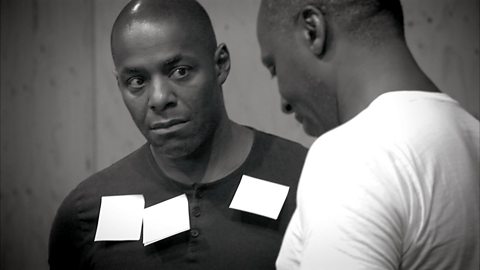
Act 3, Scene 1 - Leader or dictator (workshop) video
The actors explore the character of Julius Caesar.
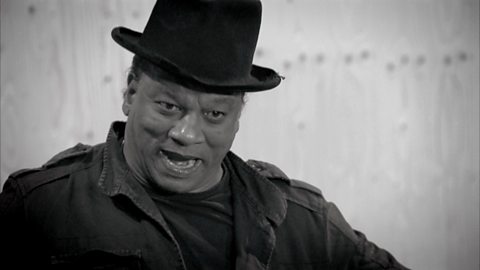
Act 3, Scene 1 - Killing Caesar (workshop) video
The actors use the clues in the text to build an unique interpretation of Caesar’s murder.
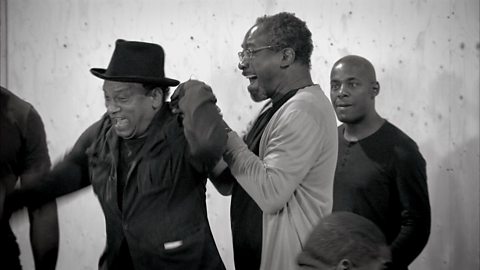
Act 3, Scene 2 - The Orations. video
Brutus explains why conspirators killed Caesar and insists they stay to hear Mark Antony.
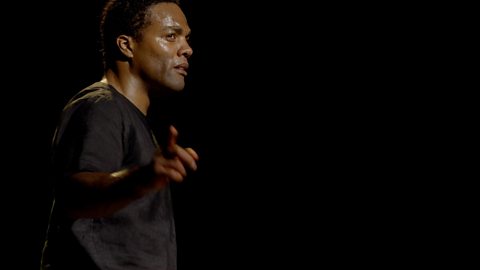
Act 3, Scene 2 - Rhetoric and politics (workshop) video
The two funeral speeches are compared, each set against the structures of rhetoric.
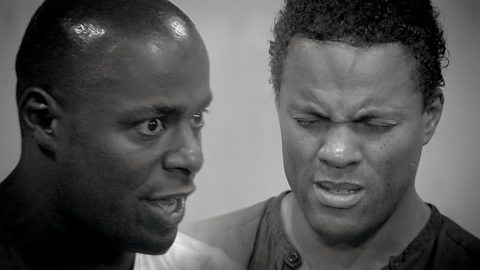
Act 3, Scene 2 - Brutus reasons with the crowd (workshop) video
A practical exercise as the citizens respond to Brutus’s funeral speech.
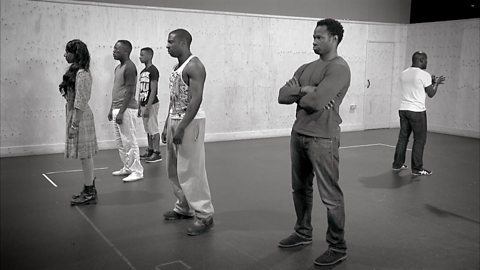
Act 3, Scene 2 - Mark Antony moves the crowd (workshop) video
The citizens explore their responses to Mark Antony’s speech.