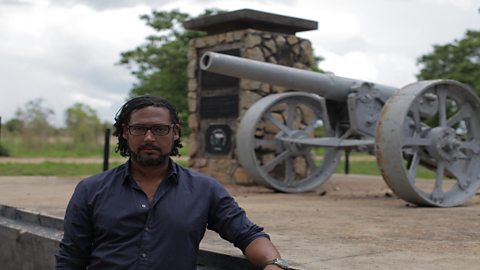
When we think of World War One we tend to picture white men in the trenches.
But more than four million black, Asian and North African men also fought in the conflict.
Many of these men were unable to write.
So if we want to unlock some of their experiences of the war we need to look beyond the written word.
I’ve come to this building in Berlin to a place that used to be called the museum of voices, what’s inside here are hundreds of recordings of the voices of men who fought in the first World War.
They came not just from Europe but from right across the world and one of them was a young Indian soldier called Mall Singh.
Here in these meticulously ordered cabinets, live hundreds of ghosts from the first World War.
Mall Singh:
There once was a man, who ate butter in his Hindustan, he also drank milk. He joined the British army, and went into the European war.
David:
It’s beautiful… The voice from another world.
Mall Singh:
Germany captured this man, he wishes to go to India…
David:
When he makes mistakes you can hear him stumble…
Yeah!
Mall Singh:
He wants to go to Hindustan. He will get the same food he had in former times.
David:
The haunting voice belongs to a 24 year old Indian soldier from the Punjab called Mall Singh, he’s telling his own story.
He was part of the India Corps that arrived in France in 1914 to fight for the British.
He’d been taken prisoner by the Germans.
At 4pm on 11th December 1916, Mall Singh was put in front of a horn microphone and told to recite his poem.
The recording brings to life the story of a man transported across continents and oceans to fight in someone else’s war.
The German scientists who made it have no interest in that.
They just wanted a sample of Punjabi dialect to further their research into different racial types.
But it’s only thanks to their obsession with racial cataloguing that a century later we have a sound archive filled with the voices of Mall Singh and hundreds of other colonial soldiers offering a rare glimpse into their experience of the war.
Santanu:
Most of these colonial soldiers were, were non literate or semi literate and they have not left us the super abundance of diariesor poems or letters that form the cornerstone of the European memory of the first World War.
So it’s necessarily a history of fragments, it’s a history of fugitive moments that has to be very carefully recovered analysed and put pressure on and because there are so few they are all the more precious.
Mall Singh:
Three long years have passed… If this man is forced to stay here for two more years, he will die.
Video summary
David Olusoga explores the story of Mall Singh, one of thousands of Indian soldiers who fought for the Allied Powers in World War One.
Singh was taken prisoner by the German army, which made audio recordings of captured Indian soldiers as part of their study into ethnic differences.
While this recording was made for sinister purposes, it has become a valuable piece of historical evidence for making sense of the contribution of Empire troops to World War One.
This clip is from the series The World's War.
Teacher Notes
This clip could be used to illustrate the differences between 'source purpose' and 'source utility': explore why the Germans recorded these voices, and contrast that with its usefulness to historians beyond that intended purpose.
Students could be encouraged to discuss why the experiences of Empire soldiers are so seldom recorded in writing, and suggest other alternatives to researching their perspectives.
These films are suitable for teaching History at GCSE in England, Wales and Northern Ireland and at National 5 in Scotland.
La Force noire - West African troops in the French army. video
David Olusoga explores the racist theories behind the French-African regiment
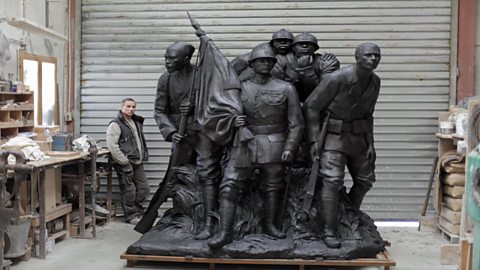
Different cultural cooperation in World War One. video
David Olusoga explores the experiences of Indian soldiers in World War One.
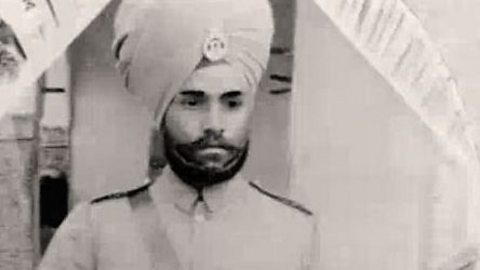
Indian deserters caught up in a Wartime strategic mission. video
The incredible journey of Jemadar Mir Mast, the British-Indian soldier who risked everything to get home.
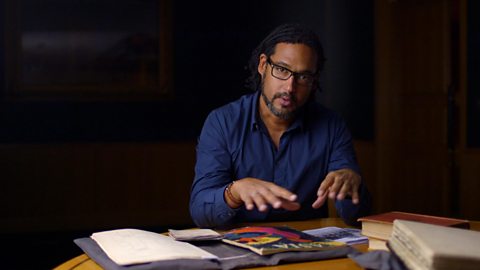
Multi-cultural Troops. video
David Olusoga explores diary evidence on the diversity of soldiers on the Western Front.
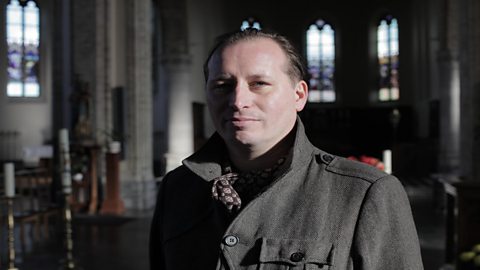
Overcoming racial stereotypes in World War One. video
Historian and film-maker, David Olusoga, explores how negative racial attitudes were challenged in France during World War One as new friendships were forged.
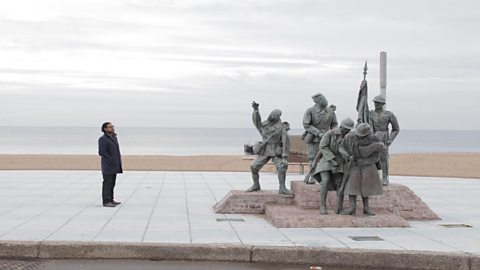
The Chinese Labour Corps in World War One. video
David Olusoga investigates the contribution of the least acknowledged group from the Empire - Chinese labourers.
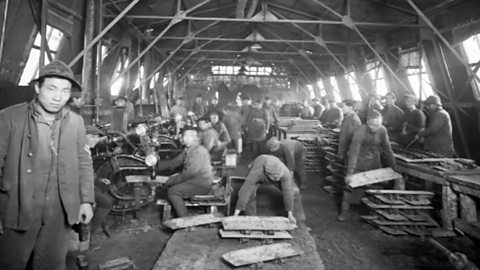
The experience of African American soldiers in Europe in WW1. video
Historian David Olusoga examines the racial prejudice experienced by African Americans in the US Army.
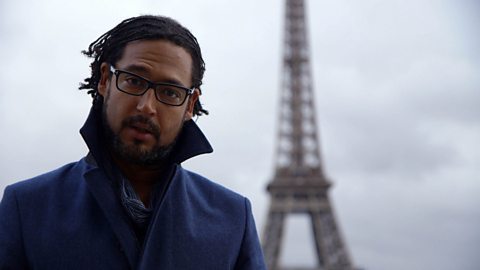
The Indian Royal Flying Corps fighter Ace. video
David Olusoga explores the racial barrier-breaking service of an Indian fighter pilot in the Royal Flying Corps.
The Imperial scope of a European War. video
David Olusoga visits Africa to explore the global scope of the World War One.