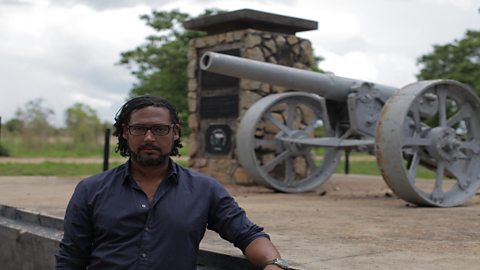
The millions of people pulled into World War One are often seen as passive victims caught up in global events.
But some stories remind us that the men who fought in the conflict often had their own agendas and were determined to take control of their own fate.
In March 1915, the British were preparing for their first major offensive on the western front, here near the village of Neuve Chappelle in France.
Half the attacking soldiers were to be Indians.
But one of those soldiers, Jamadar Mir Mast, an officer had plans of his own.
He was about to begin an epic journey that would take him all the way home to India but it began with a night time journey across no man’s land in which Mir Mast took 20 of his comrades over to the German lines and deserted to the enemy.
Mir Mast was a Muslim from a small mountain village on the border of Afghanistan and India.
He was a Jemadar, a platoon commander, in the 58th Vaughan Rifles.
Part of the India Corps who had been sent to fight in France at the start of the War.
By the spring of 1915, Mir Mast had already endured a bitter winter in the trenches, he’d seen fierce fighting and had been awarded the Indian distinguished service medal for gallantry and devotion for duty.
What I’ve got here arranged in front of me here is the paper trail, the documents left behind by Mir Mast, in archives in London, in Delhi and Berlin.
In the London Gazette is the formal announcement of Mir Mast’s Indian Distinguished Service Medal.
But by the time his award was announced, this gallant officer was already being debriefed by German officials.
These are notes from the interrogation of Mir Mast by a German official on the 7th March 1915 in Lille, in France. So this is just a few days after he’s defected and brought other defectors with him over the German lines at Neuve Chappelle.
The most important page is this one, this is a map of the Khyber Pass perhaps drawn by Mir Mast himself, it certainly comes out of his interrogation and it lists the numbers and locations the dispositions of the British and Indian troops on the Khyber Pass, a critical route between Afghanistan and British India.
So clearly having deserted to the Germans, Mir Mast was determined to prove to them just how useful he could be.
Mir Mast’s next stop was a prisoner of war camp for colonial soldiers outside Berlin.
There, the Germans were on the look out for volunteers for one of the most audacious and dangerous missions of the war.
An expedition to Kabul to persuade the Emir of Afghanistan to switch sides and join a holy war against British India.
The mission was made up of diplomats from Germany and her new ally Turkey, Indian nationalists and the volunteers from the prisoner of war camp whose local knowledge would be invaluable.
They would set off from Istanbul; heading first towards Baghdad.
From there, they’d cross the salt deserts and mountains of Persia before dropping onto the dusty plains of Afghanistan and their final destination; Kabul.
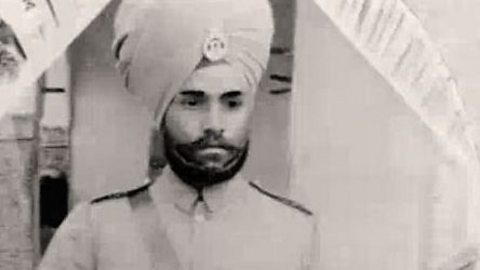
The most intriguing piece of evidence in this whole story is this photograph, we know it was taken by the Germans and it shows six Indian soldiers along with four names, one of which was Mir Mast.
He’s the guy on the far left, a guy who has set himself slightly away from the others but its his face, this guy has the face of a man who’s lived the life of Mir Mast, who’s lived between empires, who has lived a life of intrigue, it’s the face of a born survivor.
The mission set off in May 1915; dodging Russian and British patrols, running short of water and supplies, more than half of the expedition were lost to exhaustion, disease and defection.
But a core group did reach Kabul. They were eventually granted official audiences with Emir.
He weighed up his options, calculating which imperial power was likely to come out on top.
But the British were past masters of the dark arts of persuasion in this part of the world and were able to undermine all the expedition’s talk of holy war.
In the end the Emir decided to stick with the British, and the Germans schemes unravelled in the cold Afghan winter.
Mir Mast found himself on a global battlefield fighting first for the British and then for German ambitions.
But in the end he fought the war on his own terms and it looks like he won.
This document is the final piece in the jigsaw in the remarkable life of Mir Mast, this is a secret British report into the nominal role of Indian prisoners of war suspected of having deserted to the enemy, it’s from October 1918 near the end of the war.
As well as giving the regiments and the names of these soldiers this document critically also gives us the latest information that the British have received on what happened to them. And for Mir Mast and two of his colleagues what it says is these three accompanied the Turko German mission to Afghanistan and are reported to have returned to their homes in June 1915.
So there you have it, evidence that the British at least are convinced that Mir Mast made it all the way from the Western Front back to his home.
Video summary
Jemadar Mir Mast took an extraordinary risk by deserting to the German army in a bid to get back home to India.
He was one of thousands of Indian soldiers fighting with the British army on the Western Front and a platoon commander who had been awarded the Indian Distinguished Service Medal.
But in March 1915, he took fate into his own hands when he led twenty of his colleagues across no-man’s land.
Shortly after, he was appointed to a German diplomatic mission on an extraordinary journey to meet the emir of Afghanistan in Kabul.
Germany was unable to persuade the emir to support their war effort, but it appears that Mir Mast was released and allowed to return home shortly after the mission.
Teacher Notes
You could ask students to identify the range of evidence used during the investigation and analyse it for utility and reliability.
These films are suitable for teaching History at GCSE in England, Wales and Norther Ireland and at 4th Level in Scotland.
La Force noire - West African troops in the French army. video
David Olusoga explores the racist theories behind the French-African regiment
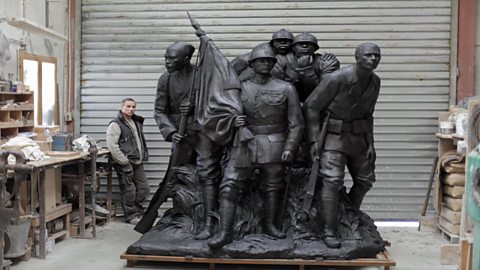
Audio evidence from Empire Soldiers in World War One. video
We hear a rare audio recording of Mall Singh, an Indian soldier captured by the Germans.
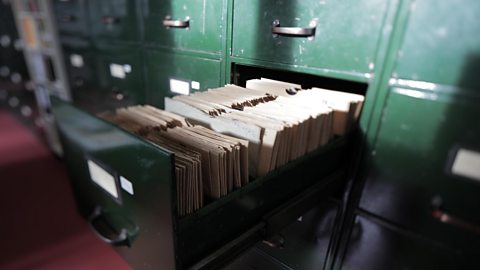
Different cultural cooperation in World War One. video
David Olusoga explores the experiences of Indian soldiers in World War One.
Multi-cultural Troops. video
David Olusoga explores diary evidence on the diversity of soldiers on the Western Front.
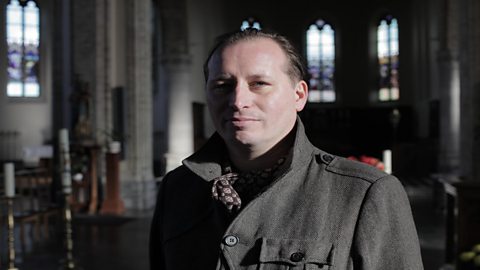
Overcoming racial stereotypes in World War One. video
Historian and film-maker, David Olusoga, explores how negative racial attitudes were challenged in France during World War One as new friendships were forged.
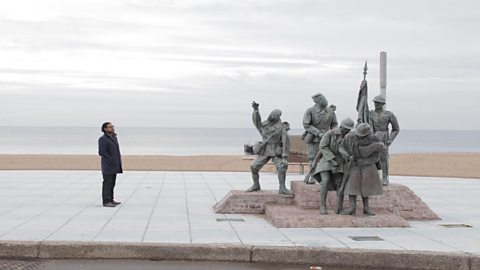
The Chinese Labour Corps in World War One. video
David Olusoga investigates the contribution of the least acknowledged group from the Empire - Chinese labourers.
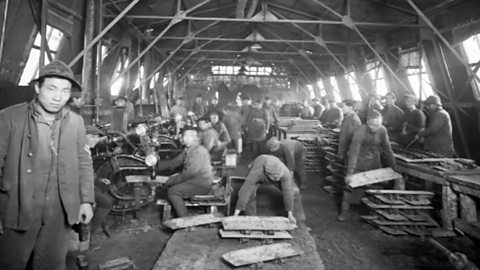
The experience of African American soldiers in Europe in WW1. video
Historian David Olusoga examines the racial prejudice experienced by African Americans in the US Army.
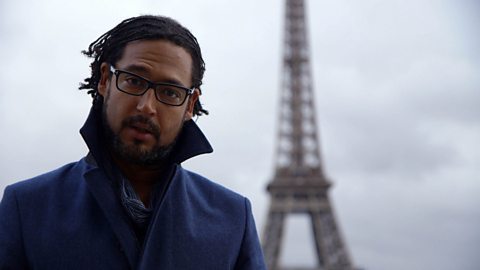
The Indian Royal Flying Corps fighter Ace. video
David Olusoga explores the racial barrier-breaking service of an Indian fighter pilot in the Royal Flying Corps.

The Imperial scope of a European War. video
David Olusoga visits Africa to explore the global scope of the World War One.