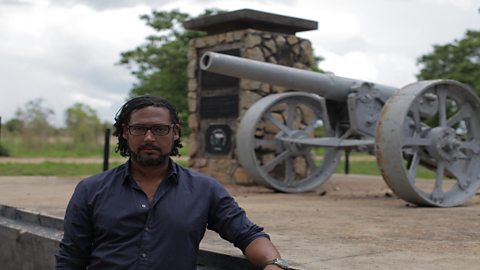
World War One pulled men from all over the globe to the Western Front…
But one of the most telling meetings between different races and cultures came not in the trenches, but in the South of France far from the bullets and artillery.
Frejus with it’s warm climate was one of those places where black soldiers, Africans recruited in the French colonies of West Africa were sent to rest and recuperate during the winter.
The French army was convinced that Africans simply couldn’t survive the cold winters of Northern France.
Frejus was also home to a young French artist who met the Africans who got to know some of these men who had come from so far away to try and save France. Her name was Lucie Cousturier.
Lucie Cousturier was a Paris based painter who moved to Frejus to escape the war.
She found a town going through a period of remarkable change.
Historian Alison Fell explains…
Alison:
Frejus was a very small town in the first World War of about 8000 people and there’s about 40,000 French African soldiers who spent the winters here.
David:
And so this small town on the Cote d’Azure suddenly has an army camp four, five times the size of it. With men from Africa.
Alison:
Absolutely, it must have been absolutely transformed and the vast majority of the population would never have seen a black man before.
David:
The population of Frejus was armed with the prejudices of the time.
So Alison what stereotypes about Africans and African soldiers were common at the time in France.
Alison:
Before the first World War the common stereotypes were of savage, cannibalistic, highly sexed, certainly for for for African men. And there was a nervousness about the presence of black African troops on French soil in the first World War.
The West African soldiers were known as tirailleur sengalese – Senegalese Infantry.
The French authorities set out to reassure their citizens that they had nothing to fear from them. They presented them as loyal, simple children.
Alison:
One of the main ways that they propagated this image was through an advert for a drink called banania. There is a very famous advertisement with a grinning Tirralleur and the slogan is, y’a bon, which was the slogan that was most associated with the Tirailleur Sengalese.
David:
At that’s part of the language, the simple version of pigeon French that the Tirailleur were taught by the French army?
Alison:
Absolutely they were taught a form of pigeon French… so y’bon in standard French would be c’est bon so it’s good.
David:
It’s like baby talk.
Alison:
It’s like baby talk, absolutely and they were taught a very very limited set of set phrases. So it also really limited their ability to, to express themselves beyond the most basic daily needs.
David:
When the black soldiers came to Lucie Cousturier’s house looking for odd jobs and scrounging for cigarettes she struck up what was for the times an unlikely friendship with them.
Roger:
They asked her perhaps for a glass of water or something like that and she invited them in and gradually she realised that all they could speak was a kind of military jargon which had been imposed on them for reasons of understanding military orders. The military were producing people who could not communicate with the people for whom they were fighting.
Alison:
She taught them French, she taught them writing and reading and erm, it was through her work with them in a way that some of these stereotypes then were unmasked as the as the racist assumptions that they were.
Lucie Cousturier:
If I have been swayed by the opinion commonly held that the intelligence of negroes develops only until the age of 13 and decreases after that I would never have set out to teach a 28 year old to read and write and one who had practised for seven years the muddled jargon of the Tirailleur.
Roger:
She really befriended them and found that underneath the different colour of skin, underneath the ignorance of the French languagethey were human beings, they had the same feelings, they had the same family attachments. They had the same total bewilderment at being in a totally alien environment.
She’s an extraordinary woman. Really quite extraordinary for her period.
Video summary
Contains scenes which some viewers may find upsetting. Discussion of racism and discrimination. Teacher review is recommended prior to use in class.
This film tells the story of French artist, Lucie Cousturier, from the South of France, who overcame the racial stereotypes and restrictions which the army imposed on Senegalese soldiers.
Using contemporary sources, academics discuss the development of the relationship between soldiers and the artist.
This clip is from the series The World's War.
Teacher Notes
Students could be encouraged to develop their source work skills, using this clip as a stimulus.
Students could conduct a further investigation and analyse contemporary evidence regarding the depiction of troops from the empires of France and Britain.
These films are suitable for teaching History at Key Stage 4 in England, Wales and Northern Ireland and at 4th Level in Scotland.
La Force noire - West African troops in the French army. video
David Olusoga explores the racist theories behind the French-African regiment
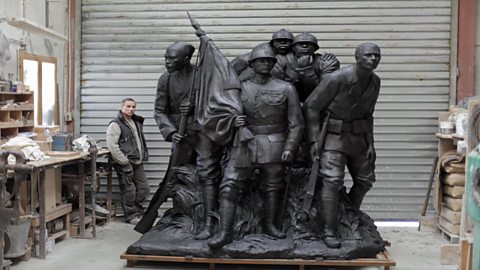
Audio evidence from Empire Soldiers in World War One. video
We hear a rare audio recording of Mall Singh, an Indian soldier captured by the Germans.
Different cultural cooperation in World War One. video
David Olusoga explores the experiences of Indian soldiers in World War One.
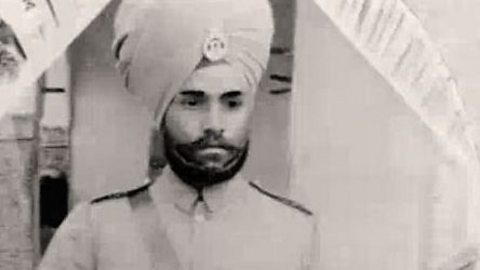
Indian deserters caught up in a Wartime strategic mission. video
The incredible journey of Jemadar Mir Mast, the British-Indian soldier who risked everything to get home.
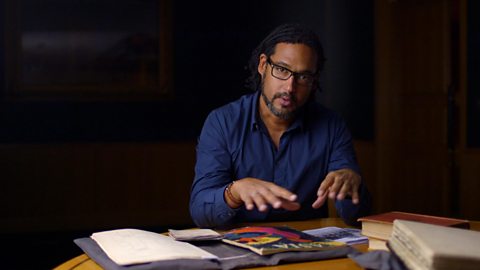
Multi-cultural Troops. video
David Olusoga explores diary evidence on the diversity of soldiers on the Western Front.
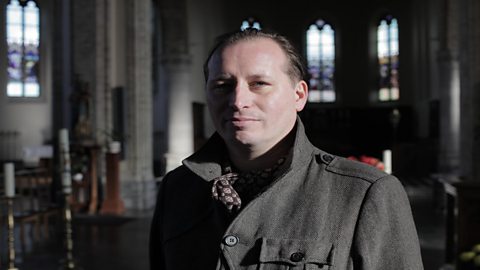
The Chinese Labour Corps in World War One. video
David Olusoga investigates the contribution of the least acknowledged group from the Empire - Chinese labourers.
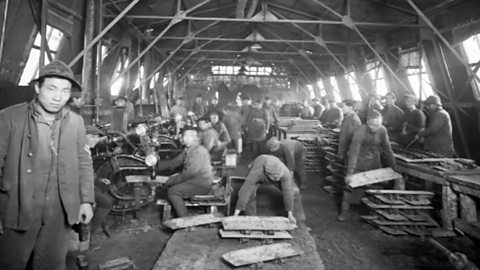
The experience of African American soldiers in Europe in WW1. video
Historian David Olusoga examines the racial prejudice experienced by African Americans in the US Army.
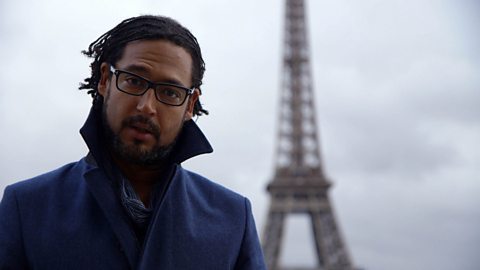
The Indian Royal Flying Corps fighter Ace. video
David Olusoga explores the racial barrier-breaking service of an Indian fighter pilot in the Royal Flying Corps.
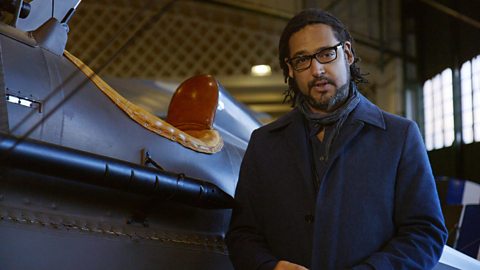
The Imperial scope of a European War. video
David Olusoga visits Africa to explore the global scope of the World War One.