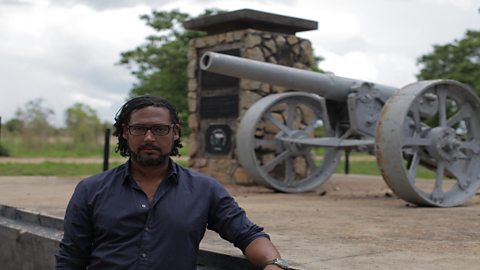
All over France you can find memorials and statues erected to remember the contributions made by French officers and soldiers in World War One.
What’s unusual about this statue is that the soldiers it commemorates are Africans.
Men brought over from the French colonies in North Africa and West Africa to fight and to die for France, the nation that had taken over their own countries by military force in the 19th century.
They were part of what was called La Force Noir, the black army and their story is one of the least known in the whole of the first World War.
Amadou Sar was one of over 120,000 West Africans recruited by France during the war.
One of the country’s great enthusiasts for African recruitment was General Mangin.
In 1910 Charles Mangin published this book, La Force Noire, the black army. It’s basically a manifesto calling for the mass recruitment for Africans into the French army.
Mangin didn’t just believe that France’s African colonies offered a vast source of fighting men.
He believed Africans had primitive natures and under developed nervous systems. He thought they didn’t feel pain like Europeans and so would make excellent soldiers.
But he also believed that some African tribes were more naturally aggressive than others.
This is a photograph of Amadou Sar and one of the reasons that he in particular is here on the western front is because his people, the Wolof tribe of West Africa, were one of those peoples that the French colonial theorists had decided were a naturally warrior people the Race Guerrre.
Troops who should lead an assault and that was their great skill that is how they should be used. Of course what that means is that Wolofs were about 3 times more likely to die in combat than white soldiers fighting in the same campaigns.
This mosque, here in the south of France, commemorates the West Africans who fought and died for France.
But not all of the men who found themselves fighting for the French Republic volunteered.
Recruitment in West Africa was outsourced to agents, to intermediaries, to men who worked to a quota system and were paid by results.
Now what this means in practice was that men were forced, coerced into the French army were in effect slaves.
Now to me it’s really difficult to think of a more bitter, more uncomfortable irony than that. That men taken from the homes, bound in chains and sent to Europe to fight for liberty and civilisation.
The monument of Le Constellation de la Doleur, the Constellation of Pain, was constructed in memory of the West African riflemen known as Tirailleur Senegalese who suffered catastrophic losses fighting for this ridge at the height of the war.
In April 1917, 20 battalions of Tiralleur Senegale were assembled here,15,000 men on the battlefield of Chemin des Dames on the Western Front.
They were deployed as shock troops in full accordance with the theories of General Mangin. This is where the idea that some Africans were natural warriors, naturally suited to the attack reached it’s conclusion with African soldiers being used as canon fodder.
But there was still another 18 months of hard fighting left until the war was finally over, did Amadou make it?
I’d like to think so. But because of who he was and where he came from because of his tribe and his race, the odds were stacked against him.
Contains scenes which some viewers may find upsetting. Discussion of racism and slavery could raise emotive issues around discrimination. Teacher review is recommended prior to use in class.
Video summary
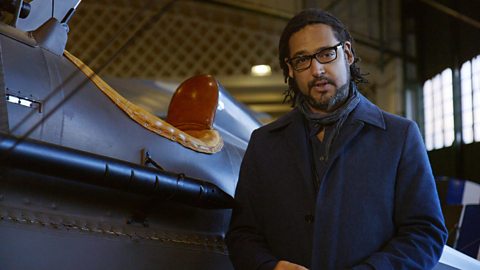
The rationale for creating a French African regiment is explained by David Olusoga.
Using contemporary film footage and photographs, one man's story illustrates the experience of African soldiers and the coercion that was used to make them fight.
This clip is from the series The World's War.
Teacher Notes
This film could be used to spark a discussion and get students researching the role and contribution of empire troops in World War One.
Students could be encouraged to work in groups and explore the different perspectives of the non-European troops, conducting their own research and presenting it back to the class.
These films are suitable for teaching History at KS4 in England, Wales and Northern Ireland and at 4th Level in Scotland.
Audio evidence from Empire Soldiers in World War One. video
We hear a rare audio recording of Mall Singh, an Indian soldier captured by the Germans.
Different cultural cooperation in World War One. video
David Olusoga explores the experiences of Indian soldiers in World War One.
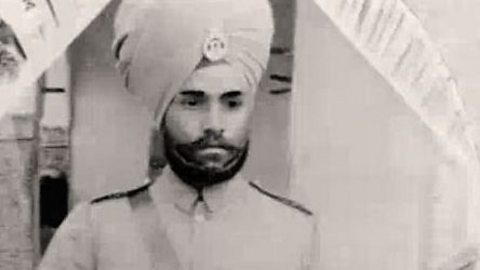
Indian deserters caught up in a Wartime strategic mission. video
The incredible journey of Jemadar Mir Mast, the British-Indian soldier who risked everything to get home.
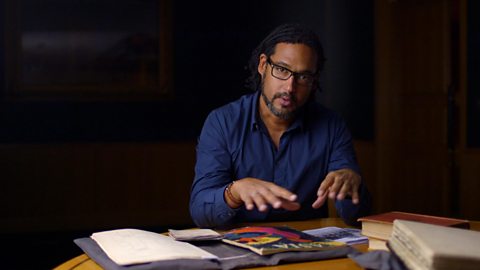
Multi-cultural Troops. video
David Olusoga explores diary evidence on the diversity of soldiers on the Western Front.
Overcoming racial stereotypes in World War One. video
Historian and film-maker, David Olusoga, explores how negative racial attitudes were challenged in France during World War One as new friendships were forged.
The Chinese Labour Corps in World War One. video
David Olusoga investigates the contribution of the least acknowledged group from the Empire - Chinese labourers.
The experience of African American soldiers in Europe in WW1. video
Historian David Olusoga examines the racial prejudice experienced by African Americans in the US Army.
The Indian Royal Flying Corps fighter Ace. video
David Olusoga explores the racial barrier-breaking service of an Indian fighter pilot in the Royal Flying Corps.
The Imperial scope of a European War. video
David Olusoga visits Africa to explore the global scope of the World War One.