In April 1917, the United States declared war on Germany.
By the end of the year tens of thousands of fresh troops were arriving in France to reinforce weary allied ranks.
This is the grave of Freddie Stowers, an American corporal who was killed in action in September 1918, taking part in the Meuse-Argonne offensive, one of the key turning points in the whole of the first World War.
What’s different about Corporal Stowers from most of the men buried in this American cemetery was that he fought his war in a French helmet, carried a French rifle, he took orders from officers who were French, and the reason for that, Freddie Stowers was an African American.
The commander of the American Expeditionary Force, General John Pershing had refused to lead black soldiers into battle.
Most of the third of a million African Americans drafted into the US Army had been sent to work behind the lines in segregated labour battalions.
There were a handful of black combat units and General Pershing’s refusal to lead them turned them into an orphaned army. The French called them les enfants Perdus, the lost children.
First the British were asked to train them in the arts of trench warfare but they said no.
But the French army welcomed them into their ranks, ranks that after all were full already of black soldiers from the French empire.
Many of the black American soldiers who came to France in the first World War were from the American south.
And what they encountered here was a society that had it’s own prejudices but was radically more tolerant and integrated than America.
In 1914, 54 black men had been lynched in the States and in the south, black people lived under a set of racial laws that were really not that dissimilar from the laws of to apartheid era in South Africa.
What astonished the black troops when they got here were the simple things: they could go to the cafes, that they could travel in the same railway carriages as whites, that they could talk to white women on the street and that’s something that could get you killed in the American South.
One soldier wrote home to his mother saying, "The only time he was ever reminded in France that he was black was when he looked at his own face in the mirror."
Something of a love affair developed between France and Black America.
The African American troops were seen as sophisticated, urbane and as irresistible as their new style of music.
Behind the lines parties sowed the seeds of France’s post war passion for ragtime and jazz.
The American military viewed this love affair with mounting horror.
French acceptance of black Americans as equals threatened to undermine the foundations of segregated America.
The music had to stop…
This is a copy of the Crisis which was the magazine of the national association for the advancement of coloured people but on page 16 there is a section called documents of the war and the most important document is this one, secret information concerning black American troops.
This was written by the French military mission on the orders of the Americans and what this is is a lit of instructions, of demands, placed on the French by the Americans on how they were expected to treat black American soldiers.
It begins,
"Although a citizen of the United States, the black man is regarded by white Americans as an inferior being. We must prevent, it says, the rise of any pronounced degree of intimacy between French officers and black officers. We must not eat with them, must not shake hands or seek to meet or talk with them outside of the requirements of military service. We must not commend too highly the black American troops particularly in the presence of white Americans. We must make the point of keeping the native population, they mean the white French population, from spoiling the negroes, white Americans become greatly incensed by any expression of intimacy between white women and black men."
But French officers had more pressing concerns and the so-called French Directive was suppressed.
In September 1918, Freddie Stowers and his regiment were involved in what became known as the One Hundred Days Offensive - the final, bloody push to drive the Germans out of France.
Early on the morning of the 26th September, Corporal Stowers and his men received orders to capture a heavily defended hill.
When the German troops appeared to surrender, Stowers led his men forward but it was a trap, the machine guns opened up and he was hit twice. But somehow he managed to lead his men and take the German positions.
He died on the battlefield; an American soldier in a French helmet.
Stowers was recommended for the highest US military accolade – the Medal of Honour.
But it would be more than 70 years before the recommendation was processed.
His sisters finally received the medal on his behalf in 1991.
Video summary
Contains scenes which some viewers may find upsetting. Discussion of racism and discrimination. Teacher review is recommended prior to use in class.
The experience of African American soldiers in France is contrasted with the prejudices faced in their own military.
New social and military freedoms acquired from serving with French military units are explored and explained by an academic.
The US military’s refusal to accept and their actions to subsequently limit these changes are discussed.
This clip is from the series The World's War.
Teacher Notes
Students could build on their literacy skills by drafting a letter to the NAACP magazine The Crisis, in the person of Freddie Stowers relating his experiences of serving in the French army and the new freedoms he has experienced.
These films are suitable for teaching History at Key Stage 4 in England, Wales and Northern Ireland and at 4th Level in Scotland.
La Force noire - West African troops in the French army. video
David Olusoga explores the racist theories behind the French-African regiment
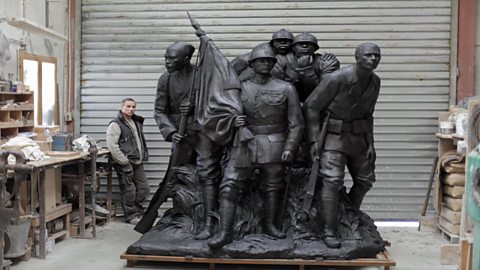
Audio evidence from Empire Soldiers in World War One. video
We hear a rare audio recording of Mall Singh, an Indian soldier captured by the Germans.

Different cultural cooperation in World War One. video
David Olusoga explores the experiences of Indian soldiers in World War One.
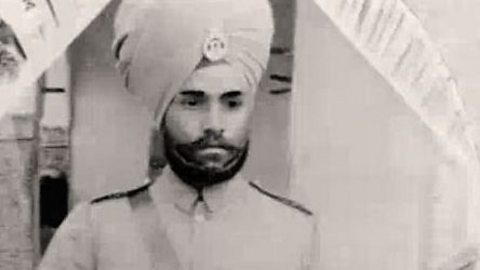
Indian deserters caught up in a Wartime strategic mission. video
The incredible journey of Jemadar Mir Mast, the British-Indian soldier who risked everything to get home.
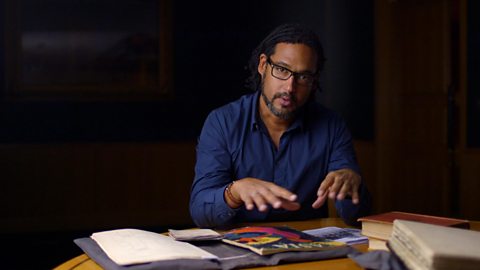
Multi-cultural Troops. video
David Olusoga explores diary evidence on the diversity of soldiers on the Western Front.
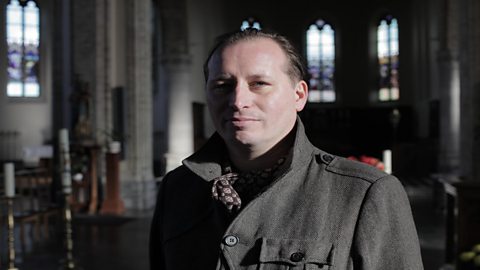
Overcoming racial stereotypes in World War One. video
Historian and film-maker, David Olusoga, explores how negative racial attitudes were challenged in France during World War One as new friendships were forged.
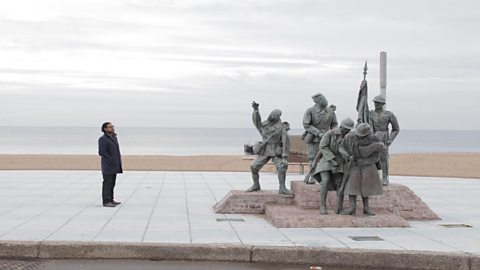
The Chinese Labour Corps in World War One. video
David Olusoga investigates the contribution of the least acknowledged group from the Empire - Chinese labourers.
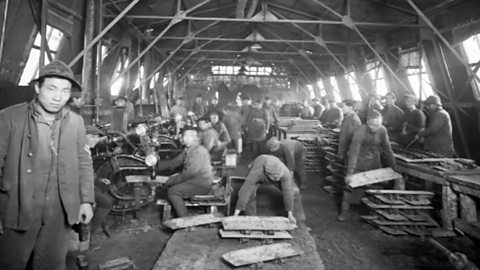
The Indian Royal Flying Corps fighter Ace. video
David Olusoga explores the racial barrier-breaking service of an Indian fighter pilot in the Royal Flying Corps.

The Imperial scope of a European War. video
David Olusoga visits Africa to explore the global scope of the World War One.