We think that we know the first World War, the trenches, the barbed wire, the shell holes, the machine guns, the gas, the high explosives, the mud and the blood of the Western Front.
But the first shot fired by a soldier in the British army was fired here in Africa, by an African just three days after war was declared.That soldiers name was Alhaji Grunshi.
He’d been born in the British colony of the Gold Coast, modern day Ghana and in 1914 he was in the British West African frontier force.
In 1914 they were attacking the Germans in their colony of Togoland.
Now from the moment that Grunshi fired that first shot the Great War became the World War.
Santanu:
More than four million non-white people from the various colonial empires fought in the first World War. Yet the colour of first World War memory still remains largely white.
It was an extraordinarily diverse war because we have: one and a half million Indians, two million Africans, four hundred thousand African Americans, one hundred thousand Chinese labourers and yet more seems to have been written on the four British first World War poets than these four million people taken together.
David:
When the colonies of Germany, Britain and Belgium went to war in German East Africa, present day Tanzania, millions of Africans paid the price as soldiers sucked into an imperial fight and as civilians caught in it’s terrible wake.
Unlike in Europe the war here wasn’t restricted to a narrow killing zone. It roamed over vast areas. Millions of men were press ganged as porters by both sides to carry equipment, food and ammunition.
They were overworked and underfed and about 20% of them died. Now that’s a casualty rate that compares to anything on the Western Front. One British official had no doubt that their treatment would have been considered a scandal, had they not been merely Africans, after all he said, who cares about native carriers.
With no supply chain the armies descended on villages like a plague of locusts, requisitioning and plundering corn, cattle and supplies.
Up to a third of a million civilians are believed to have perished in the famines that followed.
A war that began was a war between white men thousands of miles away pulled in Africans from all over the continent to fight against other Africans.
One of those men was Alhaji Grunshi.
Against all the odds, the veteran of four years of conflict, survived the war.
But a history was constructed which quietly eclipsed his and the millions of other colonial soldiers contributions and left a collective memory of a war fought in Europe between white men.
Santanu:
It’s a very exciting history but it’s also a difficult one.
It’s a painful one, it’s a history of discrimination.
But only when we work through these difficulties can we understand the fullness of the imperial character of the war.
David:
One way to understand the truly global nature of the war is to travel to a place in present day Zambia, deep in the bush, near the Chambesi river.
It was here, in the middle of Africa, that three days after the last shot was fired in Europe, African soldiers put down their weapons.
And the World’s War ended.
Video summary
Contains scenes which some viewers may find upsetting. Discussion of racism and discrimination. Teacher review is recommended prior to use in class.
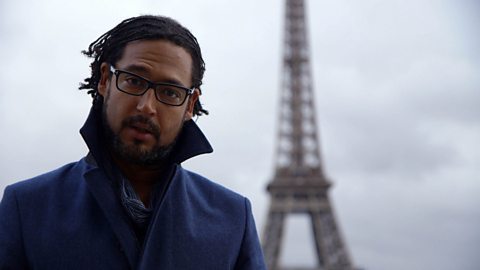
David Olusoga reflects on the global scope of World War One and the millions of non-European people who took part in the war.
He visits the starting point of the war where Alhaji Grunshi fired the first British shot fired against German troops in Togoland.
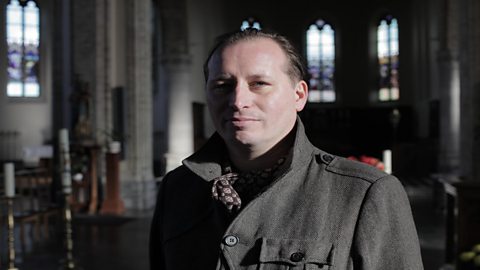
He discusses the impact of the war on Africa and we hear from historian Santanu Das who suggests that World War One is remembered as a white war despite the contribution of millions of people from the colonies of Africa, Asia and the Americas.
This clip is from the series The World's War.
Teacher Notes
This could be used as a stimulus for an investigation into the role and impact of empire citizens in the First World War.
Students could begin by mind mapping what they know about the war, and what it may suggest about traditional perspectives on the conflict.
They could then devise open and closed questions about the involvement of empire troops, to be answered at the end of their project.
These films are suitable for teaching History at Key Stage 4 in England, Wales and Norther Ireland and at 4th Level in Scotland.
La Force noire - West African troops in the French army. video
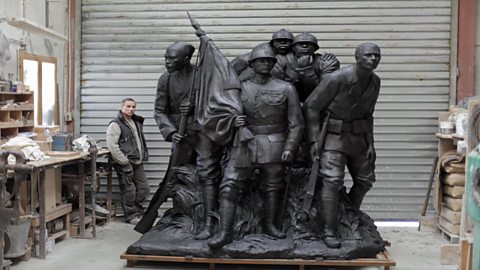
David Olusoga explores the racist theories behind the French-African regiment
Audio evidence from Empire Soldiers in World War One. video
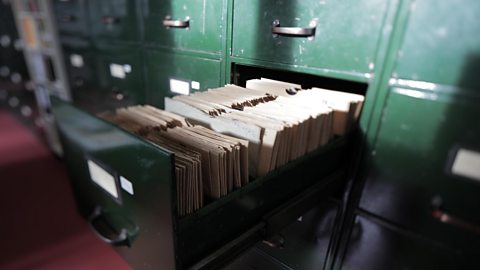
We hear a rare audio recording of Mall Singh, an Indian soldier captured by the Germans.
Different cultural cooperation in World War One. video
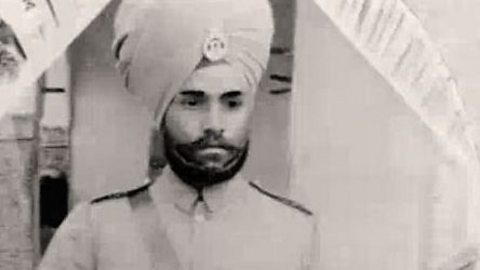
David Olusoga explores the experiences of Indian soldiers in World War One.
Indian deserters caught up in a Wartime strategic mission. video
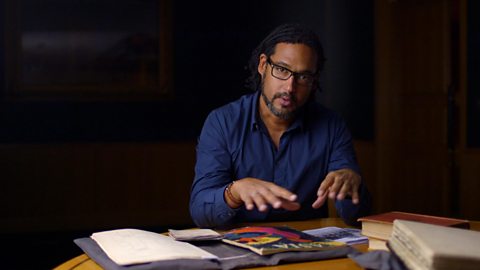
The incredible journey of Jemadar Mir Mast, the British-Indian soldier who risked everything to get home.
Multi-cultural Troops. video
David Olusoga explores diary evidence on the diversity of soldiers on the Western Front.
The Indian Royal Flying Corps fighter Ace. video
David Olusoga explores the racial barrier-breaking service of an Indian fighter pilot in the Royal Flying Corps.

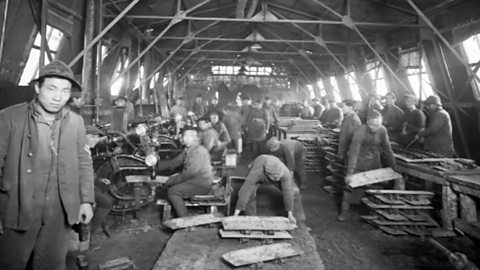
The Chinese Labour Corps in World War One. video
David Olusoga investigates the contribution of the least acknowledged group from the Empire - Chinese labourers.
The experience of African American soldiers in Europe in WW1. video
Historian David Olusoga examines the racial prejudice experienced by African Americans in the US Army.
The Indian Royal Flying Corps fighter Ace. video
David Olusoga explores the racial barrier-breaking service of an Indian fighter pilot in the Royal Flying Corps.
